


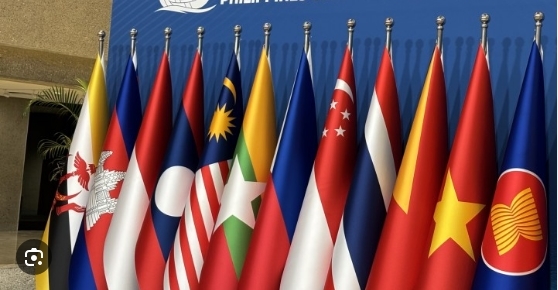
ASEAN wants more trade to happen within the region. BERNAMA recently reported the bloc's aim to lift intra-ASEAN trade to at least 30 per cent by 2030, from a level still below 25 per cent.
The usual policy response is to make borders faster. Better customs systems, electronic payments and more consistent rules are essential. But a smaller importer can clear those formal steps and still face a basic uncertainty before placing an order: who, exactly, is authorised to make the offer?
That question is easy to underestimate. A website can display a company name. A sales representative can use a corporate email address. A product page can carry a recognised brand.
None of those facts, alone, proves that the same legal entity owns the offer, controls the product information, or has authority to appoint a distributor in a particular market.
For a large buyer, legal and procurement teams may resolve those gaps through lengthy due diligence.
A small Lao or Malaysian importer has fewer people and less room for delay. The practical need is a compact seller-authority record that can be checked before money, samples or market promises move.
Build on the business ID
The ASEAN Economic Community Strategic Plan 2026-2030 calls for a regionally comparable and recognisable unique business identification number to support seamless cross-border transactions.
That is an important foundation. It can help establish that a registered entity exists and make records easier to connect across systems.
Yet a business ID answers only the first question. It does not automatically show whether the entity owns a brand, represents the owner, controls a particular product line, or can grant sales rights in Laos, Malaysia or another ASEAN market.
The next implementation step should therefore connect business identity to commercial authority. This does not require a vast new database. It requires four fields that can travel with a cross-border offer.
Four fields for one accountable offer
The first field is the legal seller. It should show the registered entity name, business identifier, jurisdiction and the official record used for verification.
Trading names and translated names can be included, but they should point back to the same entity.
The second field is the brand relationship. The offer should state whether the seller is the brand owner, a manufacturer acting for the owner, an authorised exporter, or another kind of intermediary.
If the relationship depends on a letter or agreement, the record should identify its issuer, scope and date rather than rely on an uncheckable claim of being "official".
The third field is the authority being exercised. Selling units, providing samples, appointing a distributor and promising territorial exclusivity are different acts.
A representative who can quote a price may not have authority to grant channel rights. Recording the exact act prevents an ordinary sales conversation from being mistaken for a binding market appointment.
The fourth field is the accountable contact and change status. The importer needs a named route for checking whether the authority is current, and a way to learn if it has expired, been narrowed or been revoked.
Without a change field, a document can remain convincing long after the relationship behind it has ended.
Make verification reusable
The value of this record is not a single pass or fail. It is the ability to reuse verified identity across later steps without turning an old check into a permanent assumption.
When a sample is requested, the importer can confirm that it comes from the same authorised chain. When product information changes, the responsible entity is visible.
When distribution is discussed, the scope of the representative's authority can be checked again. If a dispute arises, the record shows which claim was made, by whom and under what authority.
This would also make digital trade systems more useful to smaller firms. A unique business ID could become the anchor for verified commercial relationships, while the authority record remains narrow enough for businesses to maintain.
Governments would not need to certify every private agreement. Their role would be to make the legal identity dependable and interoperable; businesses would remain responsible for the accuracy and currency of the authority they assert.
Do not turn the record into a guarantee
A verified seller-authority record does not prove product quality, regulatory compliance, delivery performance or market demand. Those decisions require separate evidence. It also does not replace contracts or professional advice where they are needed.
Its purpose is simpler: prevent an importer from advancing because several disconnected signals looked official.
In a digital market, confidence should come from a traceable chain between the legal entity, the brand relationship, the specific authority and the person accountable for keeping it current.
ASEAN's trade targets will be measured in large numbers. For the small firms expected to create those numbers, however, the first useful measure is often binary: can the counterparty behind this offer be identified and can its authority be checked? Adding that practical layer would make regional digital trade not only faster, but more trustworthy.
Source: Bernama
Share:
<p>Time: November 2025<br /> By: WTO and International Trade Group, Legal Department – VCCI</p>
