

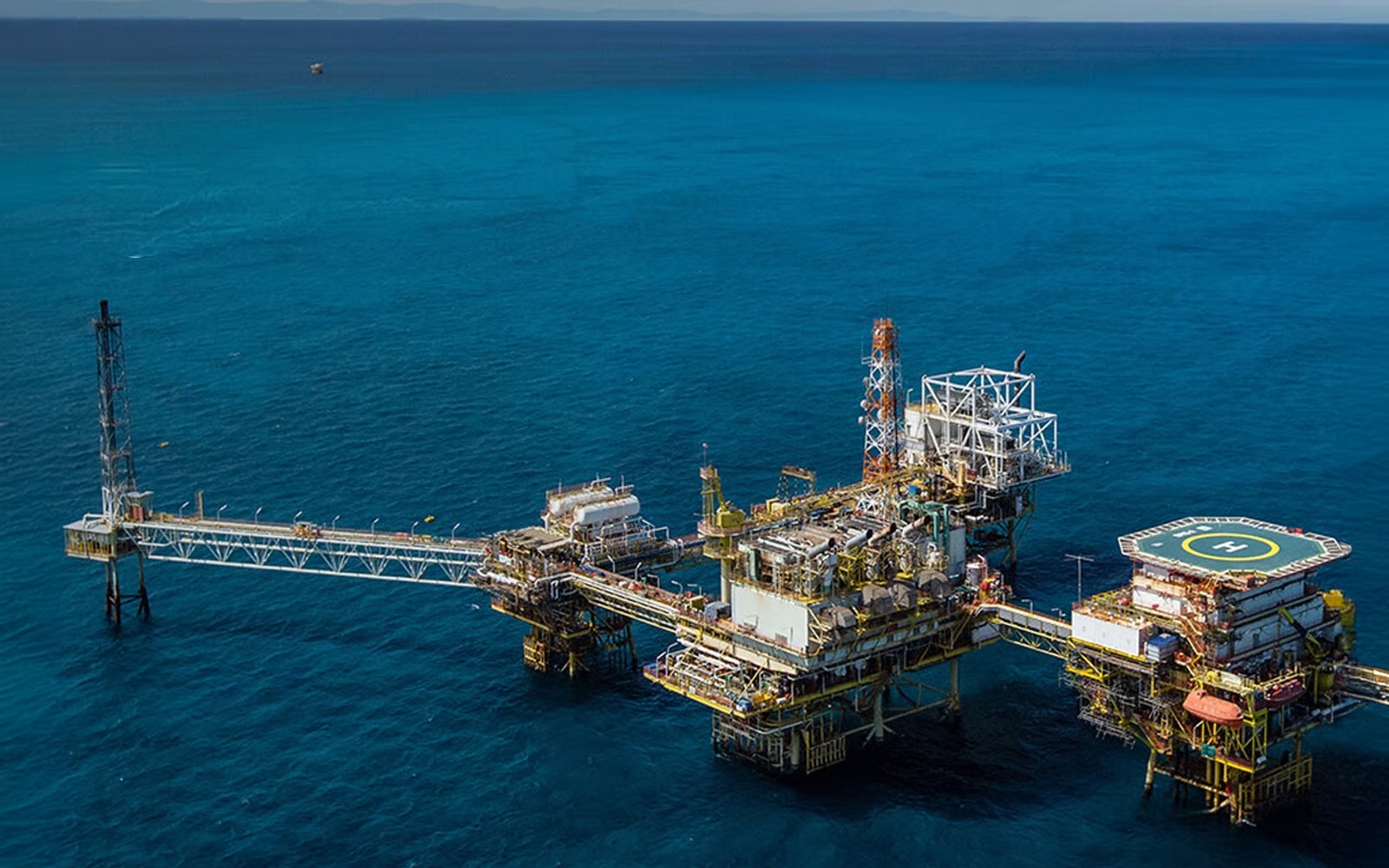
As risk turns into a commodity, it escalates the arrival of the next energy shock.
For much of the past decade, the global energy market has demonstrated remarkable resilience despite repeated geopolitical crises. Yet resilience should not be mistaken for invulnerability.
The renewed escalation of tensions involving Iran, together with continuing disruptions to Russian energy infrastructure, suggests that the global oil market may be entering a far more fragile phase than many investors currently appreciate.
The issue is no longer whether geopolitical tensions exist — they have become a permanent feature of the international landscape — but whether the global energy system still possesses sufficient buffers to absorb another major shock.
The Strait of Hormuz remains the world’s most strategically important maritime energy corridor, through which roughly one-fifth of globally traded crude oil and a substantial proportion of liquefied natural gas exports pass. Any disruption, whether actual or merely anticipated, immediately reverberates across global markets.
The economic consequences extend well beyond physical supply. Shipping costs, insurance premiums, financing costs and market volatility all rise simultaneously.
In today’s interconnected economy, uncertainty itself has become an economic variable, capable of influencing prices long before a single barrel of oil is removed from the market.
Markets price expectations, not simply oil
One of the less appreciated lessons from recent geopolitical crises is that oil prices are determined not solely by physical production but by the interaction of supply, inventories and expectations.
During the previous confrontation involving Iran, global oil prices remained relatively contained largely because governments and commercial producers were able to draw upon unusually high inventory levels.
Strategic stockpiles acted as an effective buffer, allowing markets to compensate temporarily for heightened geopolitical risks without triggering panic.
That cushion may now be considerably thinner.
If inventories have indeed been substantially depleted, the global market possesses far less flexibility to absorb fresh supply disruptions.
Commodity markets often exhibit non-linear behaviour: prices may remain relatively stable for extended periods before adjusting sharply once confidence in available inventories begins to erode.
Under such conditions, relatively modest disruptions can generate disproportionately large price movements.
Equally significant is the role of market psychology. Financial markets price expectations of future scarcity rather than current availability alone.
During earlier episodes of heightened tensions, many investors assumed that political leaders would ultimately seek de-escalation before serious supply disruptions materialised.
This tempered speculative buying in oil futures and limited upward pressure on prices.
Should investors now conclude that prolonged confrontation has become more likely, market behaviour could change rapidly.
Expectations, once altered, have the capacity to amplify price movements well beyond the scale justified by immediate physical shortages.
A new era of geoeconomic risk
The challenge facing global energy markets is further complicated by simultaneous disruptions elsewhere.
Continued attacks on Russian refining infrastructure have reduced supplies of refined petroleum products such as diesel and jet fuel, introducing additional bottlenecks into global energy supply chains.
These developments illustrate an increasingly important feature of the contemporary international economy: multiple geopolitical crises no longer occur in isolation.
Instead, they reinforce one another, creating cumulative pressures across production, transportation, insurance and financial markets.
For Malaysia, the implications are necessarily mixed. As a net exporter of hydrocarbons, higher oil prices can strengthen export earnings, improve fiscal revenues and support the commercial performance of Petronas.
At the same time, sustained increases in global energy prices inevitably raise production costs, place upward pressure on inflation and increase the financial burden borne by households and businesses.
The economic outcome therefore depends not simply on higher crude prices but on the balance between export gains and broader inflationary pressures.
More fundamentally, the unfolding situation reflects a broader transformation in the global economy.
For several decades, efficiency was regarded as the organising principle of globalisation. Today, resilience has assumed that role.
Governments increasingly recognise that energy security, strategic inventories, supply-chain diversification and maritime security are no longer purely commercial considerations but integral components of national economic strategy.
Whether oil prices ultimately experience the dramatic surge that some analysts anticipate remains uncertain.
Markets retain important adjustment mechanisms, including strategic petroleum reserves, additional production capacity, demand responses and policy interventions.
Nevertheless, the probability of a sharp price adjustment has increased. In an era defined by persistent geopolitical rivalry, the greatest risk to the global economy may not be the interruption of supply itself, but the rapid repricing of risk that accompanies it.
In today’s international political economy, uncertainty has become a strategic asset, and the price of oil increasingly reflects not only the balance between supply and demand, but also the balance between confidence and fear.
Source: FMT
Share:




<p>Time: November 2025<br /> By: WTO and International Trade Group, Legal Department – VCCI</p>
