

The trade volume of Asean is $3 trillion now and this would double in the next two decades. With a young population, there is also a demographic dividend to be harvested… So, Asean has a significant clout and we have to move beyond geo-political issues’
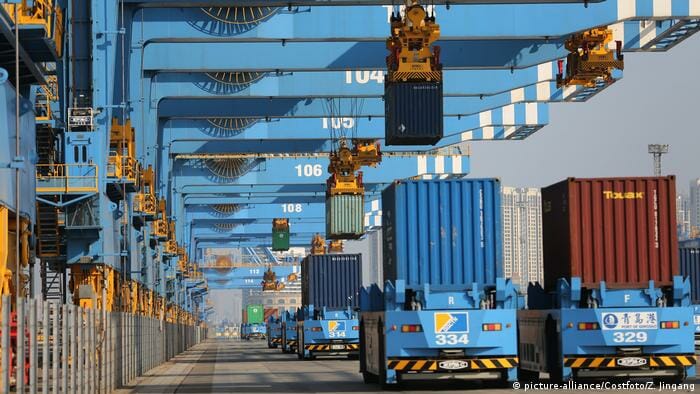
Asean experts have called for strengthening regional cooperation and intra-regional trade in the wake of rising US-China tensions and the slowdown of the economy in China.
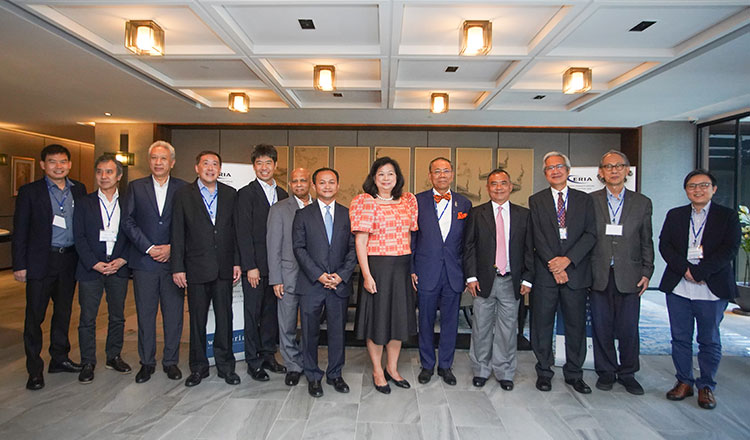
While taking part in a discussion on ‘Strengthening Asean Community in the Indo-Pacific Era,’ held as part of the 11th ERIA Editors Roundtable in Phnom Penh, recently, Chairman of the Asian Vision Institute and Senior Advisor to the Royal Government of Cambodia, Sok Siphana, said it is time the regional grouping thought about trade and investment diversification.
The roundtable was organised by the Jakarta-based Economic Research Institute of Asean and East Asia (ERIA) along with Khmer Times at Hyatt Regency Phnom Penh. It focussed on ‘Asean Vision Beyond 2025’ and discussed a range of issues from trade and commerce to the Myanmar crisis and other geo-political tensions.
Siphana, meanwhile, called to strengthen intra-regional trade in view of the uncertainties the world is going through now with the ongoing Russia-Ukraine war, rising tensions between China and the US and the slowdown of the economies in China and the European Union.
“We need to focus inwardly also now. Strengthen the trade among ourselves (Asean Member States) so that we don’t anymore overly depend on any particular country or bloc outside,” Siphana said.
“Next couple of years will be crucial as we don’t know where the China-US tensions are heading for. Also, we need to closely watch the ongoing Chinese Communist Party Congress as it will give us an idea about the country’s policy responses to the economic and geo-political challenges,” he said.
“Asean is a big market with a population of over 600 million. Why don’t we sell more to each other? We can also make use of the opportunities thrown open by e-commerce and strengthen our SMEs,” Siphana said.
Chheang Vannarith, President of the Asian Vision Institute and Chairman of the Advisory Council of the National Assembly of Cambodia, suggested that Asean should focus more on economic security in the next five years. “We need to focus on partnership-building and also work together to achieve the Sustainable Development Goals (SDGs) by 2030,” he said while pointing out that the decade ahead is the most crucial one for Asean.
Rising fundamentalism and climate change issues are some of the challenges being faced by Asean, Vannarith opined.
According to Lawrence Anderson, Senior Fellow at the S Rajaratnam School of International Studies (RSIS) and former Singapore Ambassador to Saudi Arabia and Cambodia, food, fuel and finance are three key challenges the Asean has to grapple with in the coming years.
Pointing out the serious challenges to Asean Centrality, Anderson said some of the big powers were only paying lip service to Asean and were in fact trying to weaken the regional grouping.
“There is also a trust deficiency between the US and China now and it is a threat to world peace. The rivalry is not just between the two superpowers but between their allies as well,” he said while advocating for a regional security platform for Asean to take guard of its interests.
The veteran diplomat further suggested that Asean increase connectivity to boost cooperation at all levels. “The trade volume of Asean is around $3 trillion now and this would double in the next two decades. With a young population, there is also a demographic dividend to be harvested by the region. So, Asean has significant clout and we have to move beyond just rhetoric while dealing with geo-political issues,” he said while participating in a panel discussion on ‘Asean Vision Beyond 2025: Key Challenges.’
Source: Khmer Times
Share:
<p>Time: November 2025<br /> By: WTO and International Trade Group, Legal Department – VCCI</p>
