

Khmer Times is running the third and final part of a series on ASEAN under Cambodia’s Chairmanship and the challenges it faces in the remaining months, especially with geo-political developments in the region and the world having material impacts on the region, as a whole or in part. This is the final part.
Establishment of the RCEP Secretariat
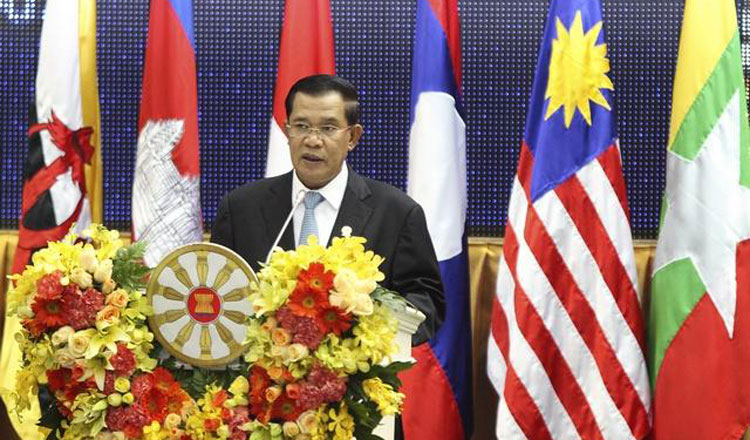
At the opening ceremony of the 55th ASEAN Foreign Ministers’ Meeting, Prime Minister Hun Sen made public Cambodia’s intention to host the Secretariat for the Regional Comprehensive Economic Partnership (RCEP) agreement.
RCEP has enjoyed some special links with Cambodia. The launch of negotiation started in 2012 under Cambodian chairmanship. And the entering into force of the RCEP was in January 2022 just at the start of Cambodia’s third chairmanship of ASEAN. So, there is some sorts of fate or destiny linked between Cambodia and RCEP.
Cambodia was among the first least developed country that had acceded to the World Trade Organization in 2004. It has one of the most liberalized legal and institutional frameworks in ASEAN in terms of trade and investment. It has proved itself to be a staunch supporter of an open, inclusive and rule-based multilateral trade system.
Now Cambodia is proposing to host the Secretariat of this important mechanism and it has even secured a plot of land in Phnom Penh for that purpose.
If approved, Cambodia and ASEAN can set an example to the world on how trade liberalization has empowered small states’ development as well as on how smaller states can play a role in enhancing multilateral trade frameworks.
Indeed, Cambodia is small, and it is a rather new member, but it has strong political will to undertake this heavy and honored responsibility.
Like the European Union, not every important offices of the EU have to be in France and Germany, who are the real powers behind the EU’s creation. The main office of the EU is in Brussels, Belgium, a small nation but one that has strong political will to shoulder the responsibility.
And not all the EU offices are in Brussels either. For example, European Parliament is in Strasbourg, France.
ASEAN should give a sense of family to each and every member state, giving roles, responsibilities and representations fairly to all member states, new or old, small or big. That is true the essence of “ASEAN: One Community”.
ASEAN Green Deal
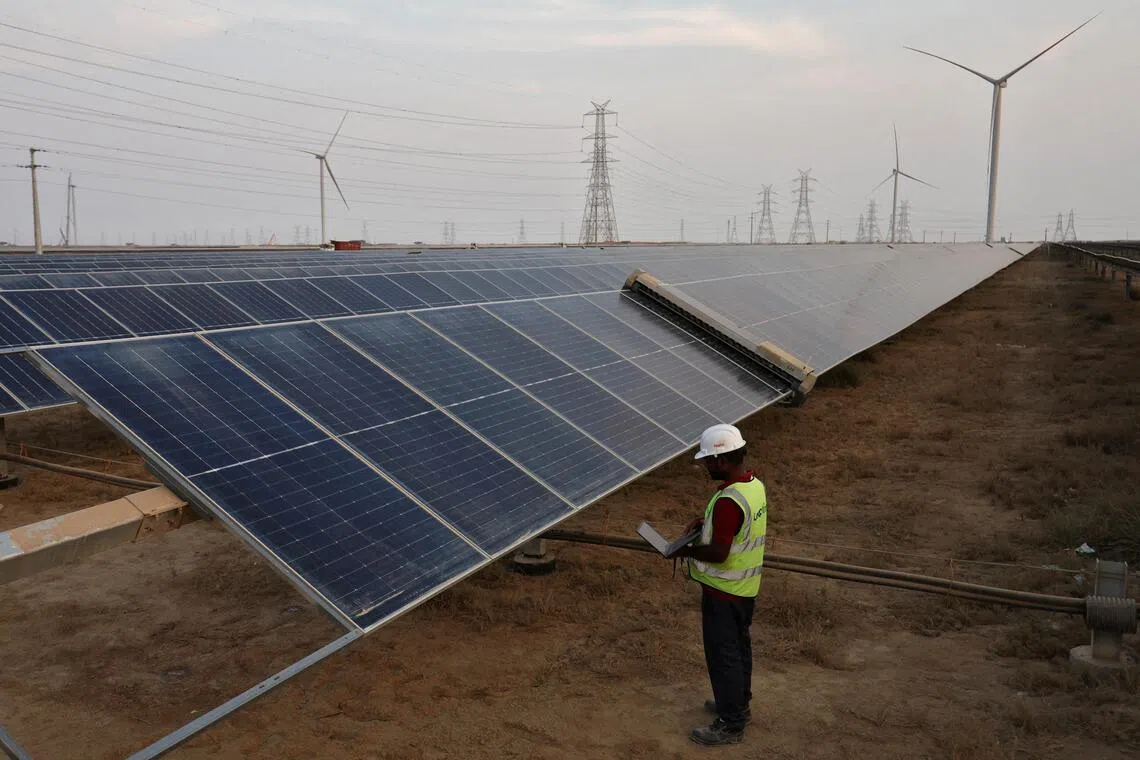
Prime Minister Hun Sen also raised an important idea on the ASEAN Green Deal.
He said that, “It would be good if ASEAN can consider establishing an overarching framework, an initiative that I would label an ASEAN Green Deal, that enables our region to make a gradual transition toward a green future that is sustainable, resource-efficient, resilient and competitive economy. It would cover a wide range of areas such as infrastructure, energy, manufacturing, consumption, agriculture, transport, environment, and finance, with technology, innovation and circularity being the enabling factors. I would welcome opinions from any ASEAN Member State on how we could make this a reality.”
Europe has adopted the so-called European Green Deal, making it as the lifeline out of the Covid-19 pandemic. The European Commission adopted a set of proposals to make the EU’s climate, energy, transport and taxation policies fit for reducing net greenhouse gas emissions by at least 55% by 2030, compared to 1990 levels.
But ASEAN does not have region-wide integrated strategies to deal with climate change yet. Indeed, sectoral bodies have tacked the issues already but the region really needs a coordinated strategy with cross-cutting and cross-sectoral coordination to create a Green ASEAN, not just in terms of environment protection and climate change per se, but also national and regional development, urbanization, economic lifeline, energy security, green development, education, or even lifestyle of the ASEAN peoples.
ASEAN should start to discuss and collect inputs how ideas can be formulated and concretized, and ASEAN does not need to follow the EU’s example. It should create its own ASEAN Green Deal, one that fits with the region’s context, distinctive characteristics, and development traits.
Source: Khmer Times
Share:
<p>Time: November 2025<br /> By: WTO and International Trade Group, Legal Department – VCCI</p>
