

India has cut import taxes on crude and refined palm oil from Southeast Asian (ASEAN) countries after a request from suppliers, a government notification said.
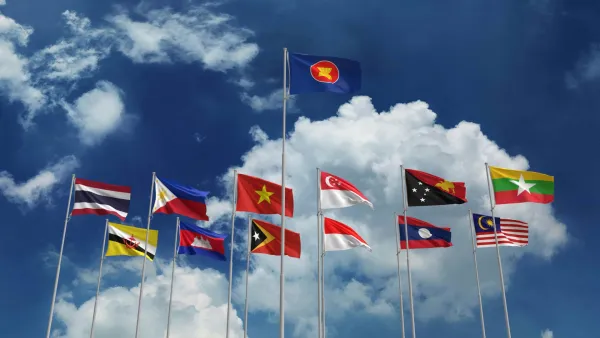
The ASEAN market is considered to have a large potential for Vietnamese enterprises, with some advantages such as cultural similarities, consumption trends suitable for Vietnamese goods, low market research costs, and easy export transactions. However, many Vietnamese goods are facing difficulties in this market. In addition, Vietnam enterprises have not yet exploited all advantages, although the tariff barriers in the area have been removed.
A trade war waged by the US is likely to deliver a further blow to China’s economy in 2019, but the Association of Southeast Asian Nations (ASEAN) may benefit from the dispute between the world’s two biggest economies, according to Japan’s Kyodo News.
Indian officials will hold bilateral meetings with a few countries, including China and some ASEAN members, in the coming days to iron out issues hindering negotiations of RCEP mega trade deal, an official said.
Prime Minister Nguyen Xuan Phuc has affirmed that Vietnam always sees the Association of Southeast Asian Nations (ASEAN) as a priority partner and a cornerstone in its multilateral diplomacy, during a ceremony to introduce the National ASEAN 2020 Committee in Hanoi on December 24.
Speaking at the Singapore Business Federation's ASEAN Outlook Conference 2018 held in January, Senior Minister of State for Trade and Industry Dr. Koh Poh Koon said that e-commerce is key focus area with Singapore assuming ASEAN chairmanship this year.
Asia, at the broad level, will lose from the United States-China trade war, but a few countries will emerge as relative winners.
On October 19, 2018, the European Union (EU) and the Republic of Singapore signed a free trade pact – the EU-Singapore Free Trade Agreement (EUSFTA) – to deepen the economic relations between the two regions.
<p>Time: November 2025<br /> By: WTO and International Trade Group, Legal Department – VCCI</p>
