

Twelve Cambodian natural fisheries and aquatic products have received approval from the General Administration of Customs of China (GACC), allowing them to be exported to the Chinese market. The approval follows the signing of a formal protocol in November last year, as confirmed by the Fisheries Administration (FiA).
This year marks the 10th anniversary of the launch of the Belt and Road Initiative. A decade of practice has demonstrated that it's a broad and prosperous way for China and the world to share opportunities and seek common development. In a more than 10-part series, China Daily finds out how the road of peace, prosperity, openness, green development, innovation and civilization will contribute more to the shared future of mankind.
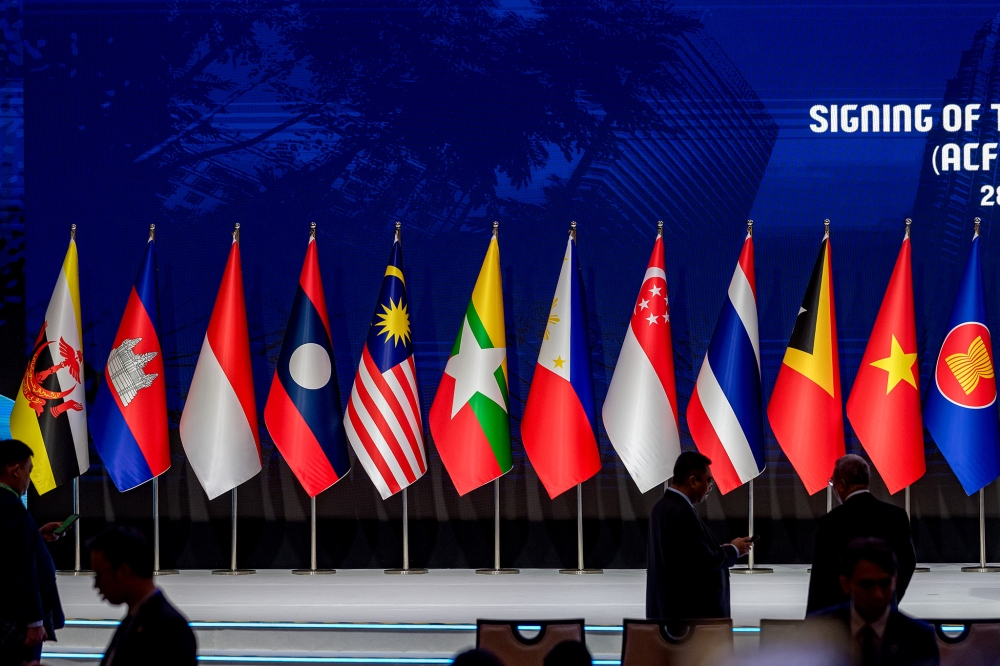
A conference to discuss progress made in preparation for Laos’ ASEAN Chairmanship 2024 was convened in Vientiane on June 1.
The ASEAN-Korea Centre (AKC) on May 30 opened an ASEAN Trade Fair in the framework of the Seoul Food 2023 (SF2003) to showcase food and beverage products from ASEAN countries and create opportunities for ASEAN companies to connect and establish business partnerships with partners from the Republic of Korea (RoK).
Seven months after the ASEAN Economic Community (AEC) was officially established, the Vietnamese market is flooded with Thai and Malaysian goods. But Vietnamese goods are still largely absent from the ASEAN market.
Leaders of the Association of Southeast Asian Nations (ASEAN) recently declared to advance regional payment connectivity and promote local currency transactions.
After two years of meeting via videoconference due to the COVID-19 pandemic, senior officials from ASEAN and China resumed their in-person meeting at the 29th ASEAN-China Senior Officials’ Consultation, during which they affirmed the two sides’ commitment to enhancing their Comprehensive Strategic Partnership.
Indonesia has lifted a 20-year-old ban on sea sand exports, a copy of a government regulation showed, a measure that could help land expansion projects in neighbour Singapore, but with concern among environmentalists about marine habitats

<p>Time: November 2025<br /> By: WTO and International Trade Group, Legal Department – VCCI</p>
