

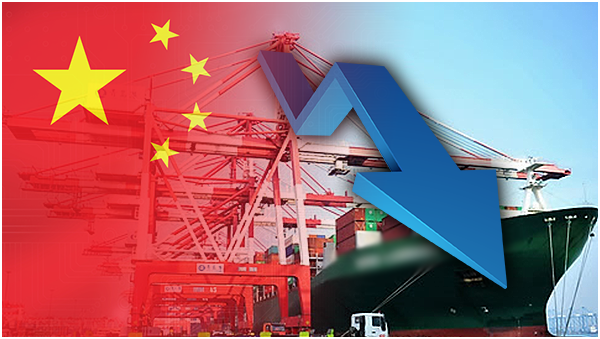
The Korea International Trade Association said in its report on June 8 that South Korean products’ share in the imported goods market of China fell from 9.9 percent to 8 percent from 2017 to 2021. “South Korea showed the highest rate of decrease among the top 10 countries in the market,” it explained, adding, “For reference, the share of U.S. products fell just 1.7 percentage points despite U.S.-China trade disputes.”
According to the association, China increased its memory chip, wireless communications component, synthetic fiber and paraxylene imports from South Korea but those products’ shares in the market fell as China imported those from more countries than before.
“In the market, the share of South Korean information and communications products such as computers, telecommunications equipment and electronic components fell from 20.5 percent to 17.9 percent from 2017 to last year, when China increased its overall import of the same products,” it said, adding, “In this segment, Taiwanese and ASEAN products’ shares rose 5.6 percentage points and 1.9 percentage points, respectively.”
The association explained that South Korea accounted for the biggest part in the market until 2019, Taiwan did so in 2020 and 2021, and this is because competition intensified, South Korean semiconductor manufacturers expanded their facilities in China, and intermediate goods and consumer goods exports from South Korea to China increased at a slow pace. For reference, intermediate goods currently make up more than 80 percent of exports from South Korea to China.
“Last year, China increased its intermediate goods imports by 50.3 percent and the same imports from South Korea by 21.7 percent as compared with 2017, and the share of South Korea in the imported intermediate goods market of China fell 2.9 percentage points as a result,” it said, continuing, “In the imported consumer goods market of China, its current share is 3 percent or so, lower than those of the ASEAN, the United States, Germany, etc.”
Source: Business Korea
Share:


<p>Time: November 2025<br /> By: WTO and International Trade Group, Legal Department – VCCI</p>
