

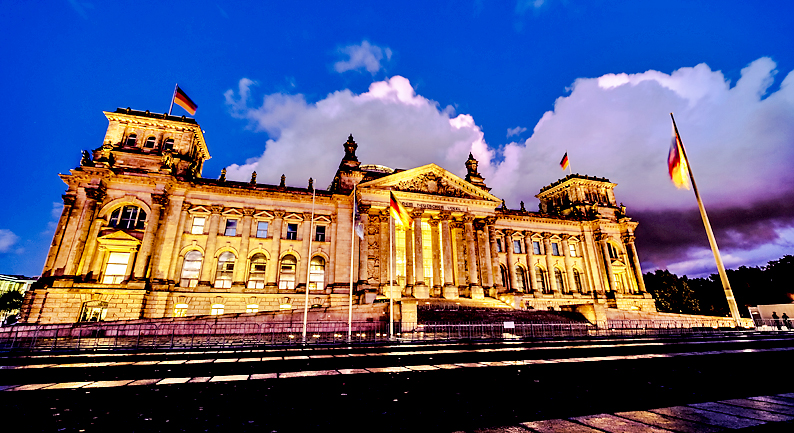
Germany and Brunei Darussalam enjoy warm relations, going back many decades. They were formalised on January 30, 1984, only four weeks after Brunei’s independence. Thirty-six years ago, on March 14, 1985 the Federal Republic of Germany opened its Embassy in Brunei Darussalam and on October 15, 1990, Brunei opened its embassy in Berlin, the Embassy of the Federal Republic of Germany in Brunei Darussalam said in a statement issued in conjunction with the Day of German Unity celebration today.
“Since then the relations have deepened, by a flow of high ranking visits in both directions, especially with His Majesty Sultan Haji Hassanal Bolkiah Mu’izzaddin Waddaulah ibni Al-Marhum Sultan Haji Omar ‘Ali Saifuddien Sa’adul Khairi Waddien, Sultan and Yang Di-Pertuan of Brunei Darussalam visiting Germany three times.
“Today, Germany celebrates its National Day for the 31st time,” said the statement. “German people celebrate the Day of German Unity with gratitude, for the national unity put an end to decades of division – a physical, literally ‘cemented’ wall built in 1961 which had cut through Germany for decades. It had also divided Europe and the rest of the world for decades.
“This year again, the COVID-19-pandemic prevents us from physically celebrating the Day of German Unity with our friends in Brunei Darussalam,” the statement added.
Instead, Ambassador of the Federal Republic of Germany to Brunei Darussalam Gerda Winkler and members of the German business community in the Sultanate have decided to join in the Brunei Darussalam Government’s efforts by making a contribution to the ‘Caring for the Needs Mission’ and ‘Drive-Through Donation Project’ organised by youth volunteers, supported by the Ministry of Culture, Youth and Sports.
It was shared that basic food packs were distributed to people in need, not least because they have been affected by the pandemic.
This is in addition to the contributions German business community members have made individually over the last 16 months.
“Under the leadership of His Majesty, Brunei was very successful in managing the COVID-19 situation during the last 15 months and will certainly also succeed in dealing with this second wave.”
In addition, about 100 Brunei students have studied in Germany over the years and Bruneian diplomats have attended courses for international diplomats in Berlin.
The embassy’s statement also highlighted that the economic relations between the two countries are close by sharing a few examples:
“Lürssen Shipyard has well established relations in Brunei since 1990. Not only did they deliver Patrol Vessels to the Royal Brunei Navy but as Muara Maritime Services they also maintain the Royal Brunei Navy Fleet and assets on Muara Naval Base in a joint venture with Darussalam Assets since 2019.
“Since 1998 Allianz is cooperating with the National Insurance Company Berhad – as a shareholder and with its know-how and expertise to provide high levels of services to the people of Brunei Darussalam.”
Also mentioned was Medetech Sdn Bhd/Medix, which represents major german medical technology companies in Brunei.
The embassy added, “thyssenkrupp Industrial Solutions is building a new fertiliser production facility in the Sungai Liang Industrial Park, planned to be handed over to Brunei Fertilizer Industries in December.
With a production capacity of 2,200 tonnes of ammonia and 3,900 tonnes of urea per day, it will be one of the biggest fertiliser facilities in Southeast Asia and will support the Brunei Government’s long-term development strategy to diversify the country’s economy.”
The statement highlighted a pivotal point in the Germany-Brunei bilateral relations, which is their strong regional angle.
“They are embedded in the wider EU-ASEAN partnership. The EU is one of ASEAN’s oldest dialogue partners and the relations were upgraded to a Strategic Partnership in December 2020.
With this commitment to multilateral cooperation made by Europe and Southeast Asia, 37 countries and 1.1 billion people will be even more closely connected by common interests – including climate protection, multilateralism and the rules-based international order.”
The embassy noted that Germany is the biggest bilateral donor to ASEAN among the EU member states, and that the current list of priorities (2018-2022) comprises 33 projects with a total volume of EUR131 million.
“In this context we applaud and support Brunei Darussalam’s strong lead as ASEAN Chair in 2021. For Brunei as for Germany multilateralism is crucial and we consider regional organisations to be an anchor for peace and stability – regionally and globally.”
Last year, the German Government adopted policy guidelines for the Indo Pacific, stressing the importance of promoting multilateral approaches, especially the ASEAN centrality.
“The current global health crisis is just another example that many problems can only be overcome if countries cooperate. Therefore, the EU and ASEAN are assisting each other as they tackle the pandemic. Germany has pledged EUR5 million to the ASEAN COVID-19 Response Fund last year and the EU has provided ASEAN with EUR800 million within the context of the Team Europe approach.”
Germany is co-founder and second largest contributor to the World Health Organization (WHO)-coordinated COVAX vaccination platform, having contributed EUR2.2 billion to the COVID-19 Tools Accelerator (ACT Accelerator) since last year, including EUR1.6 billion to COVAX. With this contribution, COVAX was and is able to provide 320 million doses of vaccines for less developed countries.
The statement added, “Germany will support developing countries with 100 million doses of vaccines from its own national contingent and it will support the building-up of production facilities for vaccines in Africa.
“Only by working together we will be able to overcome the global challenges we face and we are very much looking forward to further enhancing Germany-Brunei relations.”
Source: Borneo Bulletin
Share:
<p>Time: November 2025<br /> By: WTO and International Trade Group, Legal Department – VCCI</p>
