


The latest gross domestic product (GDP) figures show the economic recovery from last year’s Coronavirus-induced recession will not be a straight line in the Asia-Pacific, according to Moody’s Analytics Chief APAC Economist Steven Cochrane.
He said the spread of the Covid Delta variant continues to slow the pace of recovery and raises questions about the effectiveness of the region’s Coronavirus countermeasures.
“Economies in the region, including the Philippines, India, Malaysia, Singapore, Hong Kong and even Taiwan, have seen single-quarter GDP declines in the first or second quarter of this year, or the data has been significantly revised down from first estimation,” Cochrane said.
“The Philippines, Malaysia, Singapore and Hong Kong have been the most volatile: Each experienced a quarter-to-quarter decline of GDP in the second quarter of this year. And in all of these but the Philippines, the decline followed robust double-digit percent growth in the first quarter on a seasonally adjusted annualised rate basis,” he said.
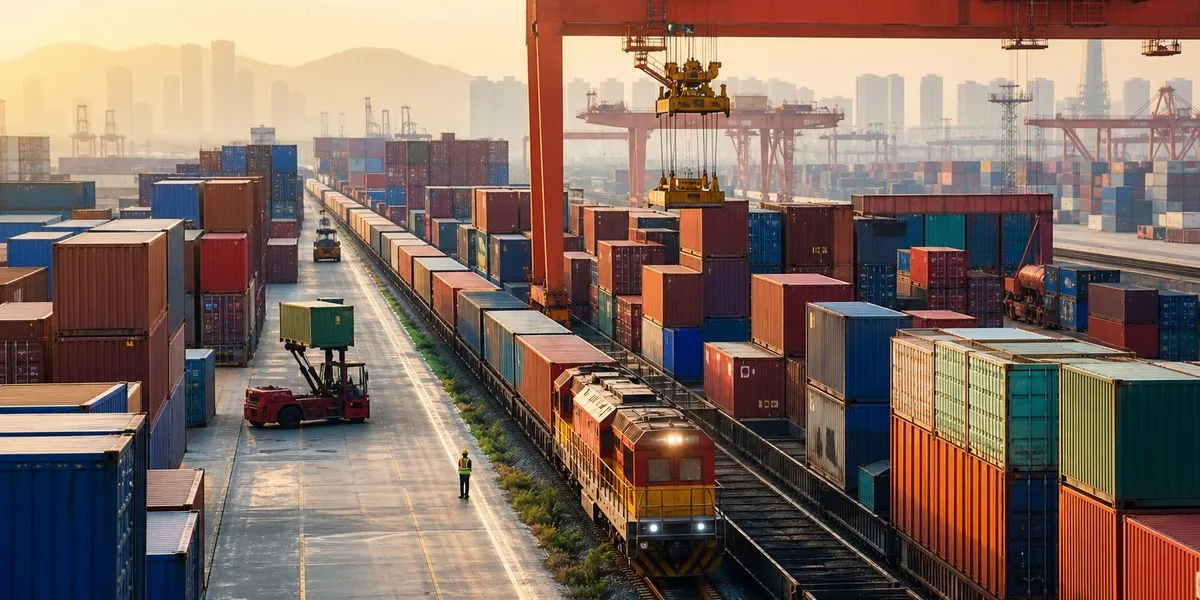
The volatility is caused by a slowdown in global trade because of pent-up demand following the worst of the pandemic that has now been sated. Trade was also hurt by the week-long shutdown of the Suez Canal when it was blocked by a giant container ship, labour shortages from Covid-19, and semiconductor shortages. For countries such as Cambodia that rely heavily on China for investment and exports, Moody’s has some bad news.
“The US economy is replacing China as the greatest near-term global growth driver,” Cochrane said. “China’s limited fiscal stimulus since the pandemic has eased and the pace of exports has slowed. China’s official Purchasing Managers’ Index shows the greatest dip below the neutral benchmark of 50 since the middle of last year,” he said. “Further, retail sales in China are lacklustre and have not yet recovered to their pre-pandemic level.”
Moody’s Analytics said exports will continue to be a lifeline to Asia-Pacific economies through next year as domestic production and consumption are limited by Coronavirus lockdowns.
“Indeed, new caseloads relative to population size are high and rising in Malaysia and Thailand as well as in the Philippines. Japan and Vietnam are not far behind,” Cochrane said.
“The various lockdowns across the region have been extended from one to several weeks and, in the case of Australia, through the end of September. The impact on the APAC economy will be deep for the current third quarter and could extend into a weak fourth quarter if the recent wave is not soon contained.”
Cochrane singles out Cambodia, Malaysia and Singapore as outperformers in the race to vaccinate their populations and says the slow pace elsewhere in the region bodes ill for other APAC economies.
Moody’s ranked APAC countries most and least at risk from Coronavirus cases and deaths.
“The three with the least risk, Singapore, China and Hong Kong, currently have few to no deaths, very few new cases of Covid-19 and high vaccination rates,” Cochrane added.
“Ranking just below Hong Kong are Cambodia and Japan. While Cambodia’s vaccination rate is rather high, its caseload is higher than the top three, and its death rate is much higher,” he said, noting that the Kingdom uses Sinovac vaccine much more than Sinopharm, Pfizer, Moderna, AstraZeneca and Johnson & Johnson vaccines.
“The uncertainties of the Delta variant are the only certain thing in the near term as economies throughout the region grapple with waves of the virus. Longer term, the region’s outlook is firmer,” Cochrane said.
“We do expect that once the economies of Southeast Asia move beyond Covid-19, they will rebound at healthy rates. Those dominated by exports, and particularly high-tech exports, economies such as Korea and Taiwan as well as China, will perform well. However, China’s growth rate will be tempered by its shrinking labour force and decelerating productivity growth,” he said.
One dark cloud on the horizon for Cambodia is its heavy reliance on tourism to drive economic growth. Cochrane said countries that depend on travel and tourism will be slow to rebound completely.
Source: KhmerTimes
Share:


<p>Time: November 2025<br /> By: WTO and International Trade Group, Legal Department – VCCI</p>
