

At the height of the US-China trade war, Washington and Beijing tried to disconnect from each other’s supply chains, leaving only Vietnam, a state in many regions, with a significant increase in inward investment and outward shipments. did.
As Canberra now seeks an independent international investigation into the Chinese origin of the Covid-19 pandemic, regional states are also profiting as trade between Australia and China intensifies.
This has led Beijing to impose laborious high tariffs on Australian commodities, from barley to beef, sugar and wine, among other controversies. Given Australia’s widespread dependence on the Chinese market, Beijing probably believed that the decision would lead to Canberra’s rapid withdrawal.
However, while trade with China has plummeted, soaring exports to other Australian states have made up for much of the loss in many regions (as well as soaring global commodity prices).
Most of the exports are to the United States, United Kingdom and India, but Southeast Asian countries are also incorporating more Australian products.
According to a report by the Australian Chamber of Commerce released on June 4, the majority of exporters believe that normal trade with China is “impossible”, with trade in Vietnam, Indonesia, Malaysia, etc. He said he needed to pivot to the country.
Australia’s barley exports to Southeast Asia are reportedly increasing, especially to Thailand, which swallows beer.
Australia’s steam coal exports hit a eight-year low in March as a result of China’s tariff and supply problems. No coal was exported to China between January and March. This is the first time in almost 20 years.
However, according to Australian Customs data, Australia’s coal exports to Vietnam in 2020 increased to 20.34 million tonnes, up from 15.7 million tonnes in the previous year.
Overall, bilateral trade between Vietnam and Australia in the first four months of 2021 was US $ 3.63 billion, up 33.85% year-on-year, according to comments from the Consulate General of Vietnam, Nguyen Dan Tan. It was worth it.
Meanwhile, Southeast Asian countries are also benefiting from increased trade with China due to the trade war with Australia.
Indonesia’s share of China’s total coal imports rose from 46.9% in early 2020 to 69.2% in early 2021. This was mainly due to the $ 1.5 billion deal signed with an Indonesian coal supplier last November.
No one imagines Southeast Asia could replace China as Australia’s export market. According to the Australian Ministry of Foreign Affairs and Trade, bilateral trade with China was worth $ 235 billion in 2019, about twice the value of $ 123.7 billion in trade with ASEAN countries that year.
By comparison, Australia’s trade with European countries was slightly higher than that of ASEAN, worth $ 127.5 billion in 2019.
However, the trade war between Australia and China has regained attention in Canberra regarding the importance of the Southeast Asian market, and recent sector analysis shows that the region could play a much greater role in Australia’s cotton, coal and wine industries. It suggests that there is sex.
Australia’s trade with Southeast Asia includes major trade agreements such as the Trans-Pacific Partnership Comprehensive and Progressive Agreement (CPTPP), which Brunei, Malaysia, Singapore and Vietnam are members of, and the ASEAN-Australia-New Zealand Free Trade Agreement. I am benefiting from it. Trade area (AANZFTA).
The latter will come into effect in 2010 and will eliminate almost all tariffs by 2025, with negotiators planning to hold a virtual meeting last month to update the agreement on the latest WTO rule changes.
In a recent Vietnam briefing by investment analyst Dezan Shira & Associates, Vietnam is an ideal market for Australian exporters, with the world’s fastest growing middle class and wine consumption between 2018 and 2019. He said it was up 173.6%.
Australian wine exporters were hit particularly hard after China imposed a 200% tariff until 2025.
But they can expect tariff cuts in the coming years. For wine imports, the CPTPP tariff is currently 32%, but will drop to 27% in January 2022 and gradually drop to 0% from 2028. Under AANZFTA, tariffs will drop from 80% to just 20% from the beginning. next year’s.
In addition to increased trade, the trade war between Australia and China has also refocused Canberra’s mind on the importance of closer diplomatic relations with Southeast Asia.
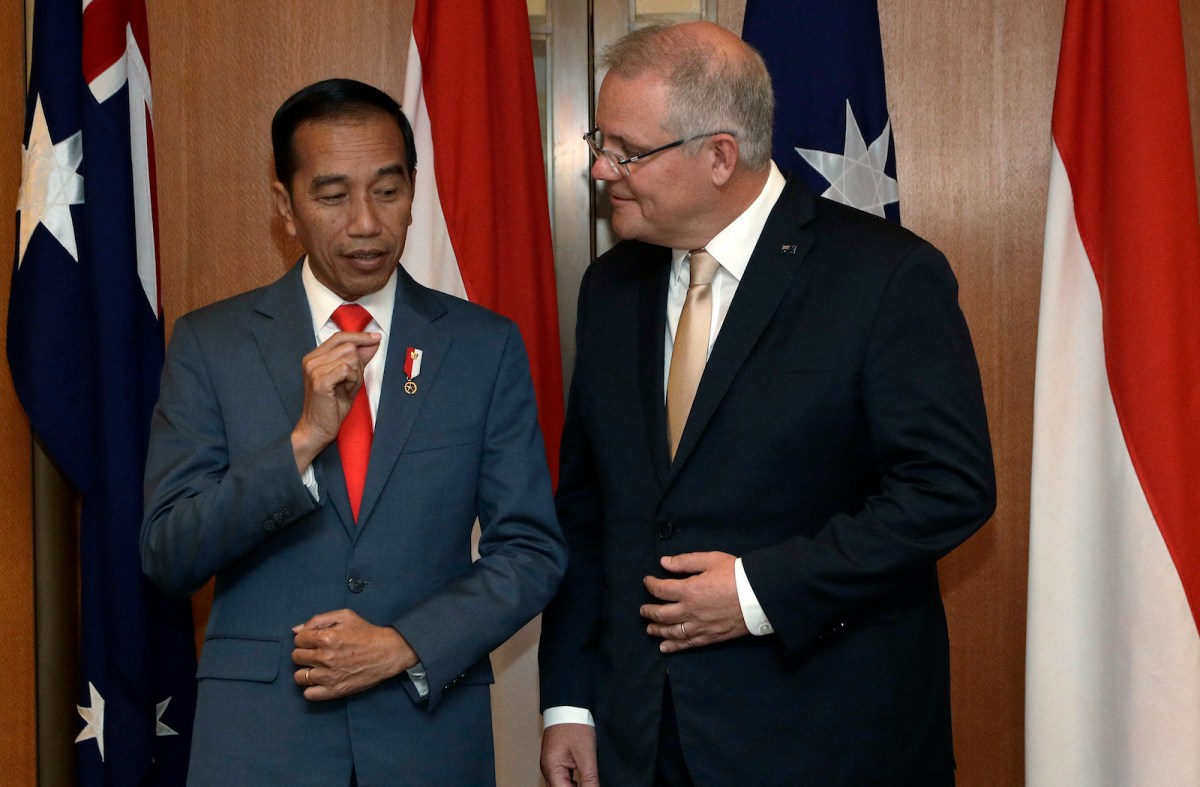
At a virtual summit with Indonesian officials last year, Australian Prime Minister Scott Morrison said both sides had a level of “trust that only supports true friendship,” and Indonesian President Joko Widodo made Australia his own. “A real friend.”
Although still under negotiation, a closer economic partnership agreement between Indonesia and Australia will soon be agreed. With regard to trade in commodities, the agreement expects more than 99% of Australia’s exports to enter Indonesia under tariff-free or incentives by 2020. Virtually all Indonesian exports to Australia face zero tariffs.
Last year, Australia planned to open a new infrastructure office in Bangkok and a liaison office in Naypyidaw until the Myanmar military coup in February put it on hold.
In the latest Southeastern survey published by the ISEAS-Yusofuishak Institute in Singapore, respondents were asked: Do they trust?
About 7.5% say Australia, which is higher than South Korea and India. Australia seems to be the third most popular “middle power” in the region, after Japan and the EU.
In Southeast Asia, the increased attention of Australia will bring economic benefits.
Melissa Conley Tyler, a researcher at the University of Melbourne’s Asia Institute, wrote in February that the trade war with China has strengthened Australia’s sentiment that it cannot be ignored. [Southeast Asia] Faced with intensifying competition between the great powers.
"At the end of last year, Canberra announced a number of new development assistance packages to the region, including a $ 1.5 billion loan to Indonesia for budgetary support and tens of millions of dollars for pandemic support.
“This suggests that the government is aware that current investment is too low to reach Australia’s strategic goals,” Tyler wrote.
The Australia-China trade war benefits both sides for ASEAN.
Source: Illinois News
Share:


<p>Time: November 2025<br /> By: WTO and International Trade Group, Legal Department – VCCI</p>
