

The continued ravaging by the coronavirus pandemic of many parts of the world has meant that many activities that were previously held physically now have to relocate online. I came to Manila in 2019 to attend the economic forum organized by this newspaper and was thoroughly impressed by the warm Filipino hospitality. I then vowed to myself that I would do my best to attend the forum every year, which of course was also an excuse to visit Manila. But alas, the pandemic hit and persisted, such that for the second year in a row I could not come to the Philippines.
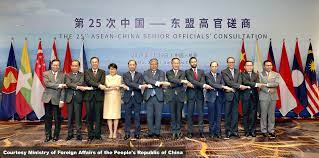
So, like many other commentators, I am nowadays relegated to presenting my views on current and international affairs mostly in webinars instead. Well, this year marks the 30th anniversary of the establishment of a dialogue mechanism between China and the member states of the Association of Southeast Asian Nations (Asean). A friendship association from the Fujian province of China decided to hold an online forum to commemorate this milestone in multilateral ties and to explore how younger generations could collaborate more in entrepreneurship and innovation. They saw fit to invite me to deliver online a more or less keynote speech to the forum participants from almost all Asean countries.
I set out in my speech to emphasize that when China and Asean member states decided to establish such a dialogue mechanism 30 years ago, both sides did so with a high degree of enthusiasm and expectations. This was of course not the first time that the two sides engaged with each other. Way back in 1974, the year of my birth, Malaysia became the first Asean member state to establish formal diplomatic relations with China, and in the years since then, many other Asean member states followed suit. And trade and investment involving both sides were starting to blossom.
I also pointed out to the mostly young participants that after all, by the early 1990s, both China and most Asean countries were poised to take off as emerging markets for goods and services worldwide. China was entering another stage in its reform and opening-up process, and Asean countries were also busy with their industrialization process from an agriculture-based economic background. China has grown by leaps and bounds since then and was impressively able to eradicate abject poverty earlier this year. Both sides felt that there was something more they could do together that was mutually beneficial.
I felt that it was great that both sides did not disappoint each other. Trade and investment between Asean and China have deepened and broadened even further since then. The dialogue mechanism later evolved into the China- Asean Free Trade Agreement. Indeed, free trade, with its reduction or removal of tariffs and non-tariff barriers for goods and services from and into both sides, became the hallmark of the Asean -China relationship. Asean as a whole has recently become China's largest trading partner, and China has long been the largest trading partner both for Asean as a whole and for most Asean countries. It is the largest trading volume in the world and is something to be treasured.
I also pointed out to the participants that in more recent years, Asean has unveiled its Asean Economic Community (AEC) to establish a common market and production base throughout the whole of Asean. At almost the same time, China rolled out the Belt and Road Initiative (BRI) to bridge the developmental gap from Asia to Africa and Europe and beyond. AEC and BRI could build synergy with each other, so that the comprehensive Asean-China cooperation, which has worked so well over the past decades, could achieve new heights that are mutually beneficial. The recently concluded Regional Comprehensive Economic Partnership (RCEP) is one such lofty project, where Asean and China worked hand in hand in bringing together some other major economies in the region to create an even larger free market and production base for all.
I had to of course impress upon the mostly young forum participants that the future of Asean-China cooperation rests undoubtedly on the younger generations of both sides. As a basis for such cooperation, the young people from both China and Asean countries should get to know each other better. And there is perhaps no better way than educational interactions with each other. This can be done in several dimensions. At the very least, there should be more student exchanges at various levels, from elementary to secondary and tertiary, between China and various Asean countries. Moreover, students from both sides should be encouraged, by means of sponsorships and scholarships, to study at each other's universities and institutes. Wherever possible, universities from both sides should establish branch campuses in one another just as Xiamen University did in Malaysia. University graduates from both China and Asean should also go to each other's companies for internships in order to learn more about each other's working culture.
I also emphasized that much could be done in promoting cooperation in entrepreneurship and innovation between the younger generations of China and Asean countries. Business and talent matching of young entrepreneurs and innovators should be regularly and systematically conducted to meet mutual needs. Environmental preservation and sustainable development, to name but one sector, could see tremendous opportunities for both sides to join hands in coming up with innovative and workable solutions. In addition, Asean countries, which are themselves important BRI participants and have cultural affinity with many other BRI participants which are situated further away, could partner well with China in jointly developing new opportunities in the latter.
And I made a somewhat daring proposal in my speech, that all RCEP member states should work toward simplifying or eliminating visa requirements to further encourage the free flow of human talents that would eventually benefit all. And as a first step toward this goal, China and Asean countries should simplify or even eliminate their visa requirements so as to set a practical example for the other RCEP countries.
But I tried to be realistic in pointing out to the participants that we must nevertheless take into consideration that most, if not all, of the above proposals cannot materialize at present due to the coronavirus pandemic, which continues to plague not only most of the Asean countries, but RCEP countries as well. We note with appreciation that China has more or less overcome the pandemic's onslaught. We hope that China can share with us its valuable experience and best practices in this regard. Assistance in any and all forms from China to combat the pandemic is indeed very much welcome.
In summary, I reiterated that China and Asean have come a long and fruitful way in building up a comprehensive relationship with each other. It is time, especially for the younger generations on both sides, to take these close ties to ever higher and mutually beneficial grounds.
Ei Sun Oh
Source:Manila Times
Share:
<p>Time: November 2025<br /> By: WTO and International Trade Group, Legal Department – VCCI</p>
