

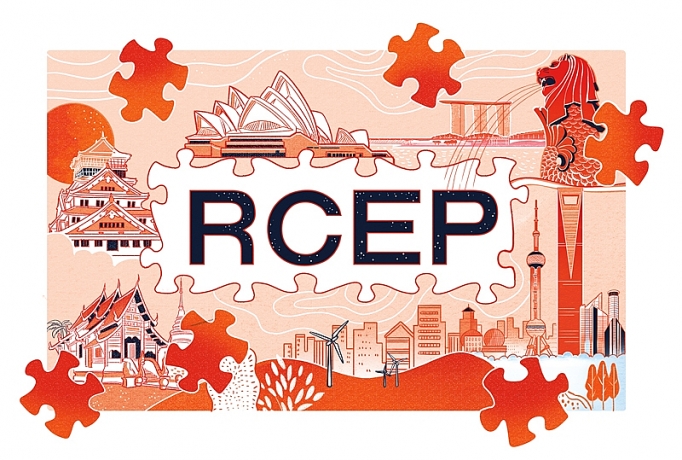
On 4 November 2019, India decided to opt out of the Regional Comprehensive Economic Partnership (RCEP) pact. All the 15 countries decided to conclude the RCEP trade agreement and have kept the door still open for India to work on a bilateral basis on the pending issues. The RCEP is a proposed free trade agreement (FTA) between the 10 member states of the Association of Southeast Asian Nations (ASEAN—Brunei, Cambodia, Indonesia, Laos, Malaysia, Myanmar, the Philippines, Singapore, Thailand, Vietnam) and its five FTA partners (China, Japan, South Korea, Australia and New Zealand). The RCEP is aimed at lowering tariffs and barriers to the trading of goods and services among these 15 countries. The negotiations on the RCEP began in November 2012 at the ASEAN Summit in Cambodia and all the 15 countries plus India worked through all the chapters for seven years. The 15 nations aim to sign the RCEP trade pact in early 2020.
With the country facing an economic slowdown coupled with high unemployment rates, declining private consumption and rural distress, it would have been risky for India to open up the markets to cheaper goods from China and with low priced agricultural commodities from the ASEAN countries. For joining the RCEP, India would have had to eliminate tariffs for around 90% of items from ASEAN, South Korea and Japan and 74% from Australia, China and New Zealand. Though the RCEP would have substantially increased India’s access to these 15 countries, the domestic employment generating sectors, such as agriculture, dairy and textiles would have been severely affected by cheaper goods from these nations. Though India is the largest dairy producer in the world, the dairy industry needs tariff protection against cheap import of dairy powder and cheese from New Zealand and Australia. Similarly, the steel and chemical industries are concerned about cheap imports from China. The question that arises is: How long will Indian industries need tariff protection to compete with the RCEP countries? Staying out of the RCEP provides an opportune time for the policymakers to reflect on the competitiveness of our domestic industries. There should be renewed vigour on enhancing the competitiveness so that the local industries are able to compete globally and not within the local boundaries. The only difference is that competitiveness should not be measured within the boundaries of the country, but on a global scale.
The RCEP is an extremely large market comprising 20% of the global gross domestic product (GDP) and accounts for three billion people. Staying out of the RCEP means that India’s exports to such markets would be subject to high tariffs, whereas the member countries have an advantage of exporting their products freely amongst themselves. New potential trade opportunities on goods and services through South East Asia, which has huge growth, are lost for the Indian economy without the RCEP. Due to the interlinkages among the various trade segments of the RCEP nations, economic complementarities get generated, which can be tapped by joining the trade agreement. It would be in India’s interest to integrate with the successful regional value chains (RVCs) of the RCEP region as these interlinkages play an important role in the growth of the economy besides providing enormous gains in exports. India is the world’s third largest consumer market behind the United States and China, which is why the RCEP nations would like India to be on board.
The economies of East Asia, such as Japan, Korea, China, Taiwan, and Singapore have witnessed tremendous growth in recent years, which is an important factor as to why India consciously upgraded its “Look East Policy” to the “Act East Policy.” The focus of the “Look East Policy” was to shift India’s trading focus from the Western countries and neighbours to the booming South East Asian countries, while the focus of the “Act East Policy” is to increase economic and security integration with the countries of South East Asia and East Asia. India’s “Act East Policy” would be incomplete without it joining the RCEP, which is a mega-regional FTA.
Source: EPW
Share:


<p>Time: November 2025<br /> By: WTO and International Trade Group, Legal Department – VCCI</p>
