

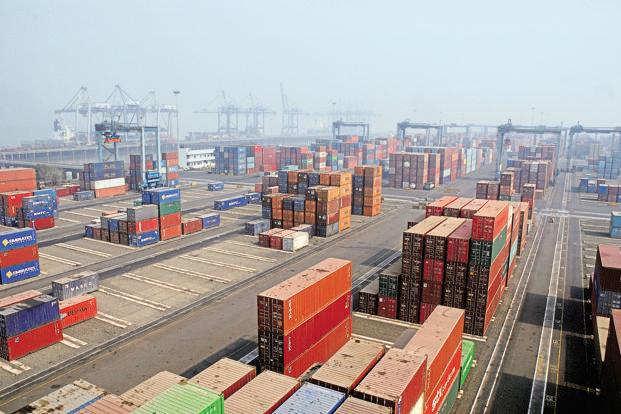
“#India now needs to make a careful calculation. It will have to pay a short-term economic price for joining #RCEP, but at the same time, if RCEP were formed without India, then the Indo-Pacific idea would be dead,” read a recent tweet by Kishore Mahbubani, former Singapore diplomat, author, and the city-state’s leading expert on strategic affairs.
Mahbubani’s view is shared by most member-states of the Association of Southeast Asian Nations (Asean), which see the proposed Regional Comprehensive Economic Partnership (RCEP) as a catalyst for deepening the partnership with India.
In January, at the Asean-India Pravasi Bharatiya Divas (non-resident Indian) conference, Singapore’s foreign minister Vivian Balakrishnan said RCEP offered a “historic opportunity to set up the world’s largest trade bloc”.
“India will be positioned as the largest country in terms of population and the largest source of growth with its middle-class for the next 20 years. And because India remains young, for the next two-to-three decades, this is a historic opportunity for India. If you add India, and Asean, as well as the countries of Australia, China, Japan, Korea and New Zealand, it (RCEP) covers nearly half of the world’s population, one-third of global GDP and 40% of world trade. These are historically unprecedented opportunities,” Balakrishnan said.
The Singapore foreign minister also pointed out that India’s consumer market is set to become the world’s fifth largest by 2025, and Asean was poised to become the fourth largest.
“Yet today, India accounts for only 2.6% of Asean’s total trade, and only 3% of Asean tourist arrivals…huge potential exists in trade, tourism and other areas. We need to take advantage of our shared historical and cultural heritage and build on this to grow our links,” he had added.
Trade between India and Asean has jumped manifold over the past two decades to reach $58 billion in 2016, but despite the robust growth, it is nowhere close to the target of $100 billion that had been set for 2015.
There are concerns India’s reservations about opening the doors wider to foreign competition could delay RCEP.
Last year, Indian foreign secretary S. Jaishankar, in comments made to a parliamentary committee on commerce, called for “observance of due restraint and not conclude trade arrangements which are not to our medium-term advantage”.
RCEP has been in the works since 2012, and has missed three deadlines. A slew of recent developments has led to renewed hope that the latest deadline—2018-end—may be feasible.
First, Singapore Prime Minister Lee Hsien Loong told reporters last week in New Delhi that all Asean leaders “spoke forcefully” about getting the trade deal in place by the year-end.
“Prime Minister (Narendra) Modi responded and said yes, India would like to do that, too, and they will exert efforts to come to that conclusion,” Loong said.
Singapore has also reiterated its long-held position that it can be an honest facilitator in getting the deal in place.
“As chairman (of Asean this year), we are not the leader, we are sort of the coordinator. And, as an honest broker-coordinator, we will bring Asean together and try and work out an arrangement and agreements which will command consensus,” Lee said.
Prime Minister Modi recently defended globalization at the World Economic Forum (WEF) in Davos, when he called upon world leaders to embrace more open trade policies.
“Forces of protectionism are raising their head against globalization. Their intention is not only to avoid globalization themselves but also to reverse its natural flow,” Modi said in his inaugural address at the WEF.
Experts are divided on the timeline being met.
The Indian government may find it tough to sell a trade deal to the public before the general election due next year, said Christian de Guzman, vice-president, senior credit officer, Moody’s Investors Service.
“As noted, several deadlines have already been missed, and the conclusion of RCEP negotiations does not seem to be a strong domestic political imperative for a number of countries notwithstanding official pronouncements in forums such as last week’s Asean-India summit. Indeed, some countries with elections scheduled for this year and next may find it difficult to pass RCEP or any corresponding domestic reforms if the liberalization in trade, services, or investment is seen to be controversial,” he said.
There have been concerns in India that the country has not benefitted significantly from the existing India-Asean trade in goods agreement that has been in place for the past seven years. During this period, India’s trade deficit with Asean surged to $9.56 billion in 2016-17 from $4.98 billion in 2010-11.
The RCEP that is being negotiated has failed to address India’s calls for greater market access in services, especially related to allowing its professionals to undertake short-term work in member countries.
In addition to its strong support for the RCEP, Singapore has been a vocal advocate of an Asean-India Air Transport Agreement, which will expand air links between cities across both regions.
De Guzman of Moody’s said that such an agreement should be seen “against the broader context of the liberalization of the trade in services, which has the potential to spill over to an expansion in the trade in goods.”
“For example, the trade in intermediate inputs in the electronics supply chain is often conducted via air…a comprehensive treatment of expanded economic cooperation—rather than one that focuses piecemeal on individual sectors—can be more beneficial to the countries involved, and can even spur domestic reform,” he said.
Source: LiveMint
Share:


<p>Time: November 2025<br /> By: WTO and International Trade Group, Legal Department – VCCI</p>
