

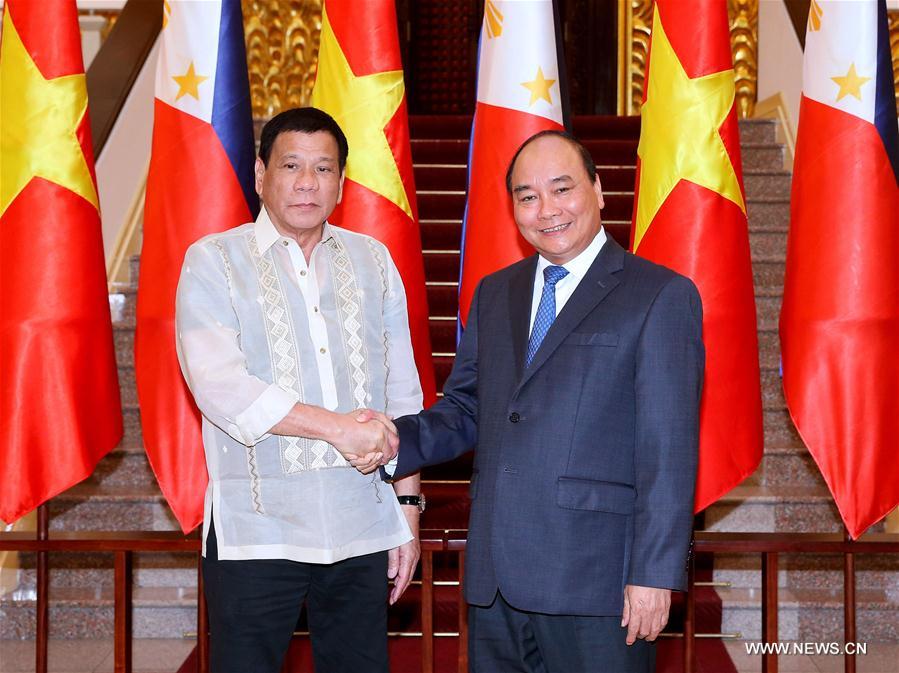
Trade Undersecretary Ceferino S. Rodolfo said Vietnam is in discussions with the Philippine government for the sourcing of textiles.
“Vietnam has ramped up its production capacity for textiles in anticipation of the TPP, but since [the trade deal] will now be without the US, we’re discussing sourcing possibilities,” Rodolfo, who is also managing head of the Board of Investments, told reporters after the recent convening of the Vietnam-Philippines Joint Trade Committee.
The Philippines was once regarded as among the “victims” of the TPP due to its failure to become a party to it. The country’s export receipts was expected to suffer cuts as TPP member Vietnam would expand its access to the US market, particularly for electronics and garments.
Tariffs on Vietnamese garments exports to the US were expected to go down to zero, from the current 17 percent to 32 percent, if Washington had not withdrawn from the TPP.
With the US exit from the trade arrangement, member-countries that had initially banked on reaping the benefits of wider access to the American market are now looking at other options to maximize investments already made in the textile manufacturing sector.
According to Rodolfo, the Philippine garments manufacturing sector is not competitive due to the scarcity in raw hides and other textiles in the country.
With Vietnam supplying this and other textiles, he said the Philippines can build up its garments manufacturing supply chain, create more jobs, and export more products to the US and the European Union (EU).
“In campaigning for investors, we could say, with the sourcing collaboration with Vietnam, textile companies investing may not just look to supply the domestic and export markets but also the 100-million consumer market of Vietnam,” Rodolfo added.
However, this would depend on Washington agreeing to expand the coverage of its preferential trade scheme, dubbed as the Generalized System of Preferences (GSP), as articles of clothing and apparel are heavily protected in the US.
The US-GSP allows duty-free treatment of 3,500 tariff lines from beneficiary countries, such as the Philippines.
Rodolfo also said the Philippines can take advantage of the EU’s own GSP scheme.
“In the EU-GSP+, we can source from a free-trade agreement [FTA] partner of the EU. Vietnam is already in the legal scrubbing phase of their FTA with the EU so that’s ok when it comes into force,” he said.
Vietnam is the Philippines’s 12th trading partner, its 12th export market and 12th import supplier in 2016.
The Philippines has a trade deficit with Vietnam. Some Philippine firms have also invested in Vietnam, citing competitive production costs.
June 14, 2017
Source: Business Mirror
Share:
<p>Time: November 2025<br /> By: WTO and International Trade Group, Legal Department – VCCI</p>
