

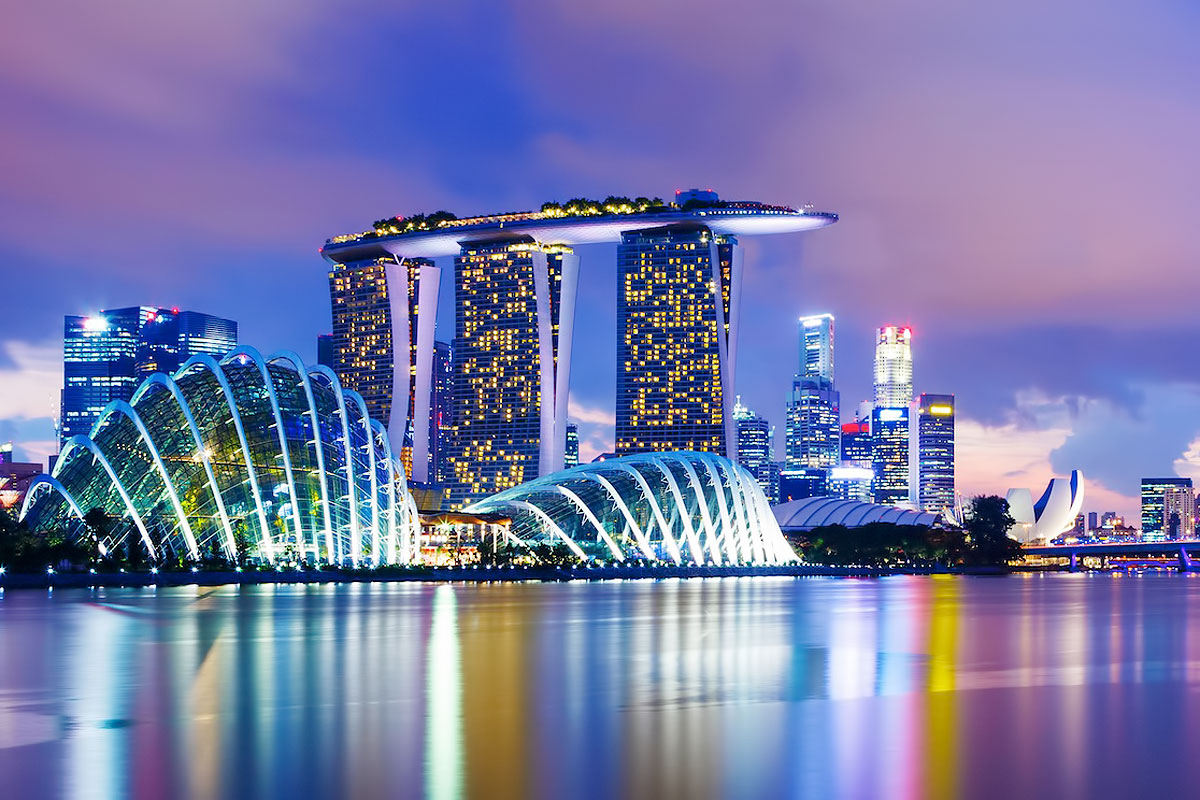
Singapore ranks first in Asia and seventh worldwide in the latest Global Innovation Index (GII) 2017, a study co-authored by Cornell University, Insead and the World Intellectual Property Organization (WIPO).
Globally, Switzerland retained its No. 1 position as the most innovative country in the world, unchanged from 2016, followed by Sweden and Netherlands at second and third place respectively.
In a joint press release on Thursday, the study’s publishers note that among the Asean grouping, Singapore is a top performer in most of the indicators, retaining its No. 1 global position in innovation input.
The city state has also advanced in the innovation output category to 17th place globally, up three positions from a year ago.
A few notable exceptions which Singapore did not excel in are ICT services exports and expenditure on education, where the Philippines and Vietnam lead, respectively.
Thailand’s strengths include creative goods exports and gross domestic expenditure on R&D (GERD) financed by business, where it places fifth and sixth globally.
On the other hand, the organisations note that Vietnam shows the second best rank of the region in expenditure on education. It also performed well in labour productivity growth, economy-wide investment, and foreign direct investment net inflows.
Malaysia especially ranks well in high-tech imports and exports, university/industry research collaboration, as well as graduates in science and engineering.
This year’s theme for GII is “Innovation Feeding the World”, which looks at innovation carried out in agriculture and food systems.
“We are already witnessing the rapid, worldwide emergence of ‘digital agriculture,’ which includes drones, satellite-based sensors and field robotics,” said Bruno Lanvin, Insead Executive Director for Global Indices.
“Now there is an urgent need for ‘smart agriculture’ to optimise supply and distribution chains and foster creative new business models that minimize pressure on land, energy and other natural resources – while addressing the needs of the world’s poorest.”
Now in its tenth edition, the GII 2017 provides detailed metrics on 81 indicators for 127 economies, which represent 92.5% of the world’s population and 97.6% of global GDP.
Source: The Edge Market
Share:



<p>Time: November 2025<br /> By: WTO and International Trade Group, Legal Department – VCCI</p>
