

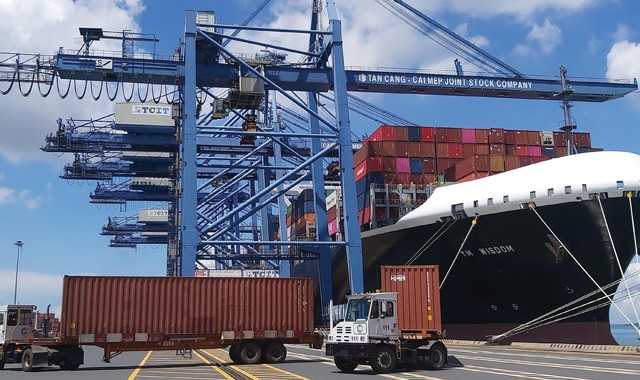
In 2026, the Republic of Korea became the fourth country after the U.S., China and Germany to achieve USD 1 trillion in annual exports. This proud milestone came despite a host of geopolitical and geoeconomic vulnerabilities. As a divided nation caught between major powers, South Korea has had to contend with the threat of North Korea's nuclear program and the intense rivalries among superpowers. And as a resource-poor state, it has remained heavily dependent on imports for the vast majority of its energy, minerals and raw materials.
Above all, however, the reason our economy has emerged as a global trading power and leader in high-tech industries is its effective use of free trade and open international markets. Trade with the 21 member economies of the Asia-Pacific Economic Cooperation (APEC), which accounts for 61% of global GDP, comprises 73% of our trade. Additionally, the Association of Southeast Asian Nations (ASEAN), another key economic partner, accounts for 16%. Thus peace and prosperity in the Asia-Pacific including ASEAN, along with robust cooperation and trade in the region, are central to our national interests.
But the global landscape of a "post-post-Cold War" era has created a highly unfavorable environment for our diplomacy and trade. The U.S.-led, rules-based, liberal and open international order is faltering, while protectionism and superpower politics are seeing a comeback. Northeast Asia, where our nation is situated, is seeing high geopolitical tension characterized by overlapping security risks such as the strategic rivalry between the U.S. and China, friction between China and Japan, and the threat of North Korea's nuclear program. Furthermore, no comprehensive framework for regional multilateral security cooperation has taken root in Northeast Asia.
Under these circumstances, multilateral cooperation systems in East Asia including ASEAN and the broader Asia-Pacific are crucial diplomatic and economic safety nets for our country. It was against this backdrop that President Lee Jae Myung attended ASEAN and APEC events in November.
The Lee administration has set a foreign policy vision of being a "globally responsible power," with a methodology centered on "pragmatic diplomacy driven by national interests." This approach seeks to advance the core national interests of sovereignty, peace, security and prosperity without constraint by ideology or geopolitical blocs, while actively pursuing multilateral and regional diplomacy to foster coexistence and shared prosperity on a global and regional scale. From this perspective, the results of President Lee's latest visits can be summarized into four key areas.
First, his trips broadened the basis for multilateral and regional cooperation. Seoul secured support for the implementation of a comprehensive strategic partnership with ASEAN and held the first Mekong-Republic of Korea (ROK) Summit in six years. In multilateral forums such as the ASEAN Plus Three, East Asia Summit and APEC, Seoul took an active lead in developing solutions to shared challenges. Agenda related to artificial intelligence (AI) and responses to demographic shifts that we raised last year at the APEC meeting in Gyeongju, Gyeongsangbuk-do Province, were also discussed at the summit this year in Shenzhen.
Korea also agreed to host an ASEAN-ROK Commemorative Summit in 2029 to mark the 40th anniversary of dialogue relations between the two sides, with a continued commitment toward achieving the goals of USD 300 billion in annual trade and people-to-people exchanges involving 15 million individuals.
Second, we expanded economic and trade cooperation and boosted supply chain security to prepare for the risk of market and supply chain fragmentation stemming from geopolitical competition. A key achievement was the conclusion of follow-up negotiations on services and investment of our bilateral free trade agreement with China, a process that took nearly nine years, to lay the institutional foundation for companies from both countries to enter each other's markets and expand the service sector of both sides.
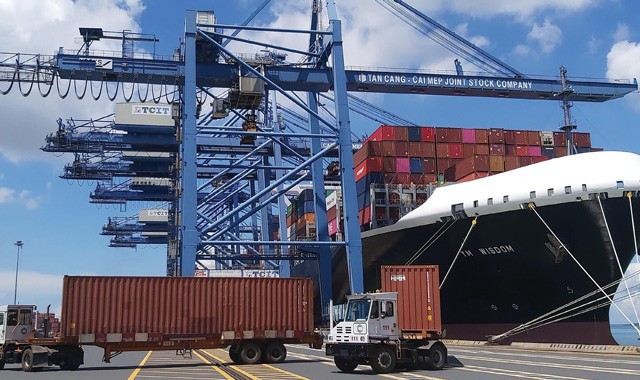
Also noteworthy were efforts to upgrade our free trade deal with ASEAN and talks on supply chain cooperation for critical minerals in the Mekong region. At the ASEAN Plus Three Summit, leaders adopted a statement on strengthening resilience in energy and food security and another on ensuring stable maritime logistics. At APEC, we reaffirmed our commitment to maintaining trade in essential goods and bolstering supply chain resilience. Our nation lacks natural resources and is highly dependent on imports and exports, so the stability of maritime logistics and the resilience of supply chains for energy, food and critical minerals are vital to our economic security.
Third, we strengthened responsible diplomacy by contributing to the resolution of common regional challenges. Through investigative cooperation with ASEAN police, we bolstered the foundation for cracking down on transnational crimes such as online fraud and protecting our nationals abroad. Within the APEC framework and guided by the principles of openness, innovation and cooperation, we proposed the launch of the Asia-Pacific AI Center and sharing advances in AI and strategies for demographic shifts. Leveraging our expertise and institutional capabilities to help resolve common regional issues is a core aspect of our role as a globally responsible power.
Fourth, we expanded the scope for diplomacy for peace on the Korean Peninsula through bilateral and multilateral engagement with key regional powers. We restored relations with China, reaffirmed continued shuttle diplomacy with Japan, and spoke to the leaders of the U.S. and Russia. Beijing also expressed its support for easing inter-Korean tensions and fostering dialogue between North Korea and the U.S., pledging to play a constructive role.
Through our bilateral alliance with the U.S. as the core pillar of our foreign and security policy, we sought a pragmatic diplomacy driven by national interests in relations with China, Japan and Russia. At an unprecedented trilateral summit, the leaders of the U.S., China and Russia agreed to pursue dialogue to reduce nuclear risks and prevent nuclear proliferation, something that could be a useful point of reference for Seoul as it seeks to halt Pyongyang's nuclear program and mitigate the nuclear risks it poses.
With wars fought in various hotspots, geopolitical competition and superpower politics are intensifying globally. Against this backdrop, this year's ASEAN and APEC summits, which reaffirmed a commitment to regional cooperation for coexistence and prosperity while identifying key areas for collaboration, carried major political and diplomatic weight.
Moving forward, we face the task of turning the accords reached at these summits into projects that deliver tangible results, while strengthening the inclusivity and resilience of regional cooperation. Multilateral and regional diplomacy for mitigating the risks of geopolitical rivalry and fostering peace and stability are both a means for us to safeguard our core national interests and fulfill our responsibilities as a globally responsible power.
Source: Korea Net
Share:
<p style="text-align:justify">By: Multilateral Trade Policy Department</p>
