

European businesses admitted that their confidence in the ASEAN region had melted down following US tariffs, according to a survey.
Companies — including those coming from the European Union (EU) — have been keeping a close eye on US President Donald Trump’s tariff salvo that began in April 2025.
As Trump keeps coming up with ways to keep his tariff regime in place, his every move has affected how European businesses perceive ASEAN, as its members face double-digit tax hikes. The EU-ASEAN Business Council recently asked around 150 European business leaders to gauge whether they still had faith in operating in Southeast Asia amid an undying tariff campaign.
“81% [respondents] say the US tariff uncertainty has reduced their business confidence to some degree,” the council’s report reads.
Roughly 45% of the respondents reported being “somewhat less confident”, while the confidence level had dropped one level lower for the other 28%. As many as 7% of the businesses were “much less confident”.
However, this meant the tariff fears had spiked over the past year. Only half of the respondents had expressed negative sentiment toward Trump’s trade policies when asked the same question in the 2025 survey.
The US tariffs had prompted some firms to mull recalibrating their supply chains, although 62% admitted to having no such plans as they avoid potentially costly or complex operational changes. But for those who do consider some changes, they see Southeast Asia — particularly Viet Nam and Indonesia — as the most attractive destination for the expansion plans.
“The [ASEAN] region has strong fundamentals that make it an attractive supply chain hub — market heft, a strategic location, and regional connectivity,” EU-ASEAN Business Council Executive Director Chris Humphrey said.
“Addressing regulatory and cross-border frictions will strengthen market integration, allowing businesses to derive greater value from ASEAN’s combined scale and encouraging more commercial activity.”
The ASEAN members have faced different levels of US tariffs, as seen in the latest duty hikes of either 10% or 12.5% over alleged lax enforcement of forced labor. Members like Singapore, Thailand, and Viet Nam face the 12.5% tariff, while Indonesia, Malaysia, and Cambodia get the lower-end rate. The US has capped its tariffs on EU goods at 10%.
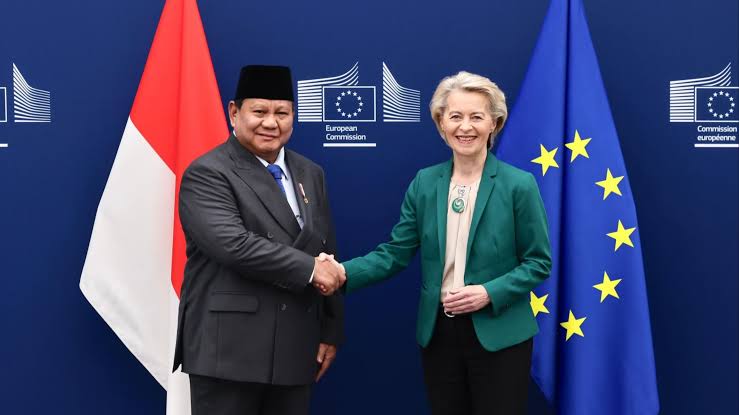
Indonesia already has a free trade agreement with the EU that is bound for entry into force early next year. The deal is expected to bring a better regulatory environment and major tariff elimination for European businesses.
Indonesia’s investment scene is currently dominated by Asian investors, particularly those coming from Singapore and China. Senior economic minister Airlangga Hartarto had also called the trade pact a “game changer”, citing that it could “unlock new investments”.
Source: Jarkata Globe
Share:
<p>Time: November 2025<br /> By: WTO and International Trade Group, Legal Department – VCCI</p>
