

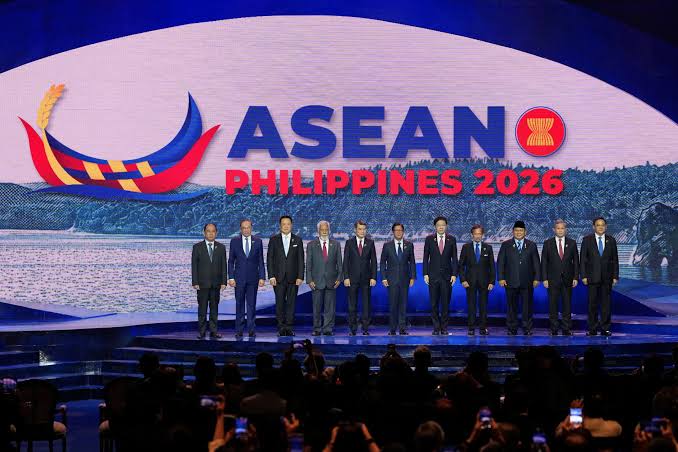
The US war on Iran exposed Southeast Asia’s heavy dependence on Middle Eastern oil, pushing leaders to issue an unprecedented Leaders' Statement, propose a new crisis response protocol and reaffirm the bloc’s 2026–30 renewable energy targets at the May 2026 48th ASEAN Summit. Yet longstanding obstacles predating the crisis — fossil fuel dependence, steep financing gaps, fragmented grid codes and the absence of a regional carbon market — remain unaddressed. ASEAN must convert these aspirations into milestones ahead of the November summit, lest its member states keep setting their own pace.
When ASEAN leaders met in Cebu for the 48th ASEAN Summit in May 2026, the Iran war loomed large. ASEAN countries were staring down soaring fuel bills, broken supply routes and looming budgetary pressures. The summit not only delivered its standard Chair’s Statement but also an unprecedented Leaders’ Statement on the Middle East crisis, that signalled a shift towards collective crisis management.
Crucially, leaders stressed the need to preserve ‘the unimpeded flow of energy and essential goods … to safeguard economic stability and strengthen resilience’ and pushed for an ASEAN-wide response. An ASEAN Foreign Ministers’ crisis protocol was also advanced to ensure ‘a coherent, timely and coordinated regional response’ to shocks.
Energy dominated the summit’s practical outcomes. The Philippines, in the Chair, pushed to fast-track the ASEAN Petroleum Security Agreement and urged its ‘earliest possible’ ratification. ASEAN also pledged to ‘safeguard regional energy security and resilience through strengthened cooperation’, citing the importance of supply diversification, biofuel blending, electric vehicle adoption and renewable deployment.
The summit saw energy cooperation win political backing. It re-committed to the 2026–2030 ASEAN Plan of Action for Energy Cooperation (APAEC) and leaders endorsed aspirational 2030 goals to cut energy intensity by 40 per cent and have renewables constitute 30 per cent of total primary energy supply and 45 per cent of installed power capacity. They also praised progress on the ASEAN Power Grid, which links national grids for cross-border electricity trade. Building upon ASEAN’s 2025 Regional Investment Action Plan which seeks to attract foreign direct investment for green technology, energy ministers committed to expanding regional renewable energy trade.
But what does the ASEAN response to the Iran crisis say about its capacity to deliver?
On the positive side, ASEAN did deliver the first coherent response to the Iran war at the leaders’ level, though Philippine Foreign Secretary Maria Theresa Lazaro urged ASEAN to ‘strengthen … crisis coordination and institutional readiness’. Yet it will be measured by whether the proposed crisis protocol is actually operationalised before the next shock, not by how the summit statements describe it.
Yet some states are still falling back on coal and subsidies. Southeast Asia is among the world’s most exposed regions to an oil shock, with over 60 per cent of its imported crude coming from the Middle East. The Philippines, which imports 90 per cent of its oil from the region, declared a national energy emergency and handed out fuel subsidies. And despite being an oil producer, Malaysia still relies on the Middle East for 70 per cent of its crude oil supply and has also raised subsidies. The Philippines and Thailand moved to temporarily increased coal power generation to meet demand.
While the crisis added urgency to ASEAN’s energy transition, the challenges behind it were not new. Fossil fuels still account for around 80 per cent of Southeast Asia’s primary energy consumption and cleaner energy alternatives continue to face financing and operational barriers. The ASEAN Power Grid alone will require an estimated US$21 billion a year between 2026 and 2030. The flagship Laos–Thailand–Malaysia–Singapore power integration project, concluded in 2023, moves only 200 megawatts against peak regional demand in the hundreds of gigawatts.
Regulatory fragmentation compounds the financing gap. Differing grid codes, tariff structures and the absence of a regional carbon market make cross-border renewable trade harder to scale. The transition is also uneven across member states — Viet Nam has built around 18 gigawatts of solar capacity on the back of earlier feed-in tariffs, while Indonesia still generates about 65 per cent of its electricity from coal. Because APAEC’s targets are aspirational and non-binding, member states can only move at the pace their own fiscal space and domestic politics allow.
Strengthening ASEAN’s energy transition will require closing financing and coordination gaps. Blended finance offers a workable model — the ASEAN Catalytic Green Finance Facility has drawn US$1.8 billion in co-financing commitments to derisk green infrastructure projects and the ASEAN–UK Green Transition Fund works along similar lines. Concessional public capital can make projects bankable before private investment is crowded, but this needs to operate at a far greater scale. ASEAN can build on national carbon markets already piloted by some member states to harmonise grid codes and move towards a regional carbon pricing framework, making cross-border power and carbon trade more routine.
Having identified the risks at Cebu, ASEAN faces the much harder task of implementation ahead of the 49th ASEAN Summit in November 2026. This will require translating APAEC’s 2030 goals into interim, monitored milestones so that gaps surface early rather than at the deadline, and giving the proposed crisis protocol a standing coordination function on energy security rather than leaving it to ad hoc ministerial meetings after each shock. It also means setting co-financing targets for the ASEAN Power Grid and green finance facilities, paired with faster domestic permitting, so that investment pledges translate into interconnectors and generation capacity on the ground.
The Philippines’ chairmanship is now being judged less on digital integration or connectivity than on whether it has strengthened ASEAN’s capacity to manage geopolitical and economic shocks. The November ASEAN summit will be a chance for President Ferdinand Marcos Jr to demonstrate that the Philippines has delivered more than just declarations.
Source: East Asia Forum
Share:


<p>Time: November 2025<br /> By: WTO and International Trade Group, Legal Department – VCCI</p>
