

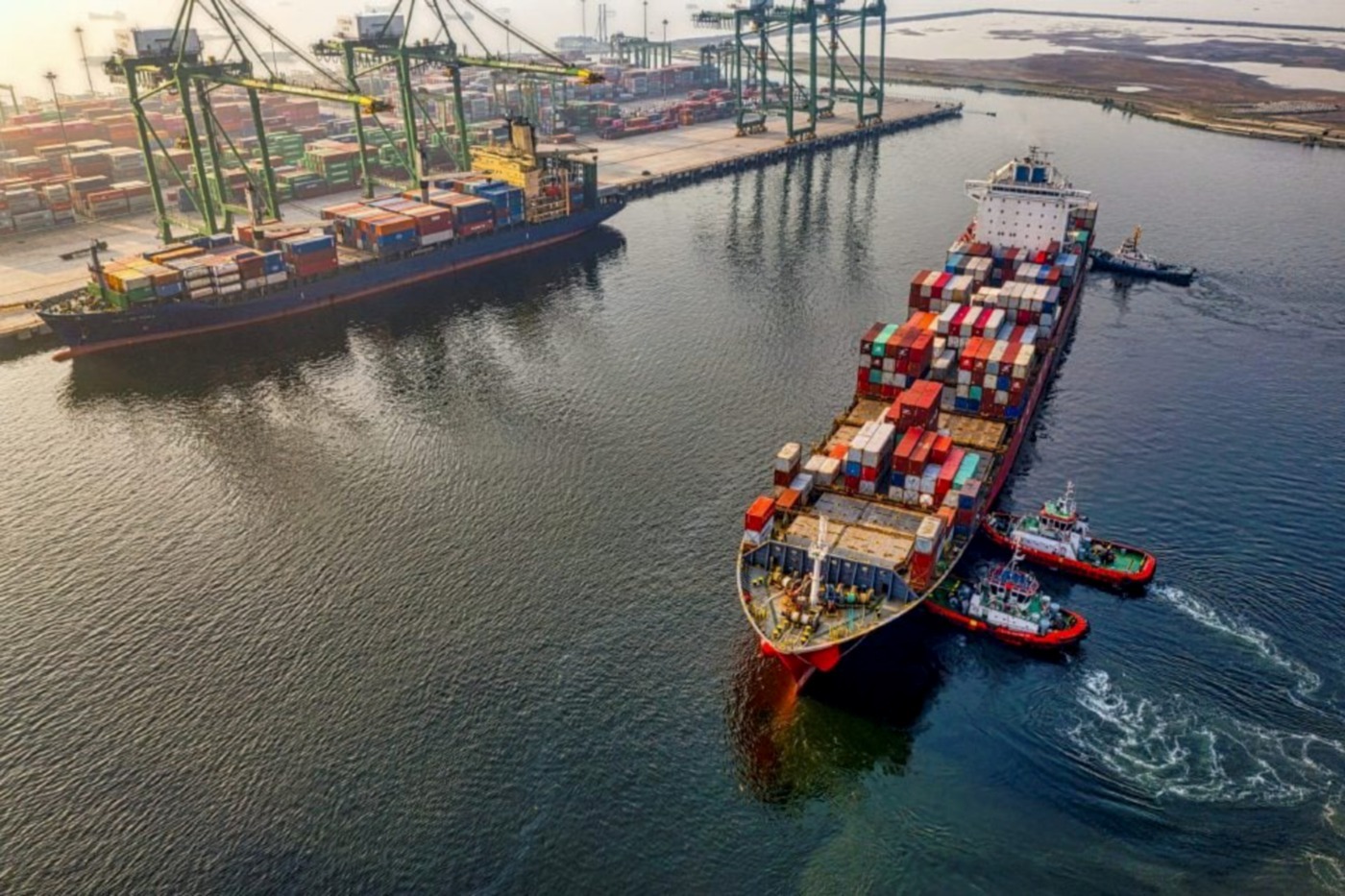
The United States' 10 per cent baseline tariff on Malaysia's products risks being reviewed if Washington finds that the country has excess industrial capacity, or is being used as a channel for products from countries with excess capacity.
Economists pointed out that the US could raise its baseline tariff on Malaysia, depending on the outcome of the investigation, risking Malaysian exporters' competitiveness in the world's largest market.
The US is expected to announce the findings of its excess-capacity investigation involving Malaysia within three to four weeks, Investment, Trade and Industry Minister Datuk Seri Johari Abdul Ghani said yesterday.
He said the investigation was nearing completion, with Malaysia continuing to engage US authorities over the definition of excess capacity.
Economist Dr Geoffrey Williams said the US had the right to protect its trade interests, just as any country does, noting that Malaysia had historically been protective of its domestic industries, particularly through the use of non-tariff barriers to trade.
After the previous round of US President Donald Trump's tariffs were scrapped by the US Supreme Court, the Office of the United States Trade Representative (USTR) switched to looking at non-tariff barriers or other advantages that its trading partners have.
"One of these is excess capacity," he told Business Times.
Williams said the USTR defines "structural excess capacity" as industrial production capacity that is underused or exceeds domestic needs but is kept running through government support.
He said such overproduction could result in large trade surpluses that hurt US factories and jobs.
"The US looks at state subsidies, cheap loans, low wages and state-owned businesses that artificially boost factory output.
"These are all potential risk areas in Malaysia, where all of these factors are common," he said.
Williams said some Malaysian companies, or foreign companies operating in Malaysia reportedly using foreign workers under forced-labour conditions, enjoy unfair labour costs advantages than their American counterparts.
Meanwhile, government-linked companies (GLCs) are also highly protected in the domestic market, he said.
Petrol and diesel subsidies also provide Malaysian companies an added advantage compared with its peers and competitors, said Williams.
"So, yes, there is a big risk and the 10 per cent baseline tariff could be raised," he said.
However, Williams said the US remained relatively generous towards Malaysia, with bilateral trade and Malaysia's trade surplus with the US at record levels.
Meanwhile, Universiti Teknologi Mara Business Management Faculty senior lecturer Dr Mohamad Idham Md Razak said any finding that Malaysia had excess capacity, or that Malaysian exports were being used as a channel for products originating from countries with excess capacity, could result in additional trade measures.
He said these could include higher tariffs or tighter import requirements, which would increase the cost of Malaysian products in the US market and reduce their competitiveness, particularly in sectors highly dependent on the US market.
"The impact would also extend beyond exporters, as higher trade barriers could affect investment decisions, production planning and Malaysia's position within regional supply chains," he said.
However, Idham cautioned against assuming that a finding of excess capacity would automatically mean Malaysia had deliberately created overcapacity.
He said the distinction between genuine Malaysian production and third-country inputs or products incorporated into Malaysian exports would be important.
"Malaysia should therefore ensure that the US has clear and transparent data on the origin, value-added and production processes of Malaysian exports," he said.
Idham said Malaysia should be concerned about the investigation but cautioned against being overly alarmist about the possibility of the US including third-country capacity in its assessment.
He said Malaysia could potentially be judged not only on its own industrial capacity but also on whether its trade and manufacturing ecosystem provided a route for products from countries with excess capacity to enter the US market.
"This is particularly important for Malaysia because we are deeply integrated into global supply chains. At the same time, this integration is also one of Malaysia's strengths," he said.
Malaysia needed to demonstrate that its manufacturing involved genuine domestic value addition, investment, employment and production, rather than simply serving as a transshipment or re-export platform.
"Malaysia therefore needs stronger traceability and documentation across supply chains to distinguish Malaysian production from third-country products," he said.
Idham said this would be important not only for the current US investigation but also for Malaysia's long-term credibility as a trusted manufacturing and trading hub.
On the 10 per cent tariff, he said there was a possibility that the investigation could affect Malaysia's current tariff position, although it was too early to assume that the country will be imposed with higher tariffs.
Therefore, he said, the investigation created a degree of uncertainty for Malaysian exporters.
Idham said Malaysia's priority should be to engage constructively with the US, provide credible evidence that its industrial capacity was driven by genuine market demand and investment, and demonstrate that Malaysian exports were not being used to circumvent trade measures against third countries.
"The 10 per cent tariff advantage is commercially significant, so Malaysia should protect it while simultaneously diversifying export markets to reduce excessive dependence on any single market," he said.
In his keynote address at the 43rd Majeca-Jameca Joint Conference, Johari said Malaysia had already addressed the forced labour issue, but the definition of excess capacity remained an area requiring further engagement, particularly because the US assessment could include capacity originating from third countries.
He said the process was expected to take another three to four weeks before undergoing legal clearance ahead of an official announcement.
"For now, we stay where we are today," said Johari. .
The current 10 per cent tariff formed part of broader US trade action involving 60 economies under Section 301 of the Trade Act 1974, with Malaysia among 17 economies placed under the lower tariff rate.
The remaining economies are subject to a 12.5 per cent tariff, he said.
Johari said Malaysia had stepped up engagement with the US to explain that the country did not have excess industrial capacity.
Source: NST
Share:

<p>Time: November 2025<br /> By: WTO and International Trade Group, Legal Department – VCCI</p>
