

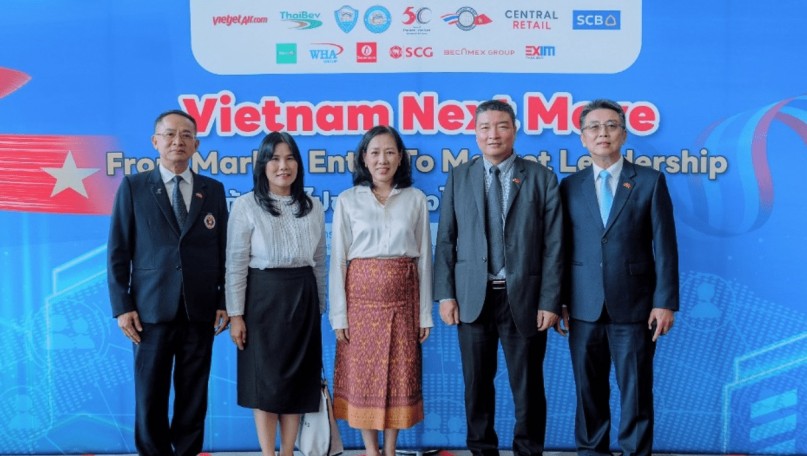
Despite global economic volatility, trade relations between Viet Nam and Thailand have continued to grow, becoming a positive example of intra-ASEAN economic cooperation. As the two countries work toward their target of US$25 billion in bilateral trade, they are expanding cooperation in investment, logistics, and supply chains, creating new opportunities for businesses.
Toward US$25 billion trade value
Viet Nam and Thailand are among each other’s top trading partners in Southeast Asia. Bilateral trade continues to grow, reflecting deeper economic integration between the two countries. According to the Customs Department, two-way trade exceeded US$22.08 billion in 2025, up 9% year over year. This growth continued in the first six months of 2026, with bilateral trade reaching US$13.36 billion.
Trade is not only growing in volume but also becoming more balanced. In the first six months of 2026, Viet Nam’s exports to Thailand reached US$5.64 billion, up 35.5% year over year, while imports from Thailand totaled US$7.71 billion, up 22%. Export growth outpaced import growth, helping narrow Viet Nam’s trade deficit and reflecting the stronger competitiveness of Vietnamese products in the Thai market.
Manufacturing remains the main driver of this growth. Viet Nam’s export structure is shifting toward higher value-added products, including computers, electronic products and components, machinery and equipment, mobile phones, steel, and chemicals.
This shift shows that Viet Nam-Thailand trade is moving beyond simple goods exchange toward deeper integration in regional manufacturing supply chains. Thailand remains an important supplier of machinery, equipment, and components for Viet Nam’s manufacturing sector, while Vietnamese companies are gradually expanding their role in regional value chains through exports of manufactured products to Thailand.
Removing trade barriers
To achieve the goal of raising bilateral trade to US$25 billion, Viet Nam and Thailand are working not only to maintain trade growth but also to remove trade barriers. As tariffs within ASEAN continue to decline, administrative procedures, technical standards, and market connectivity are becoming increasingly important factors affecting business competitiveness.
Current barriers mainly involve sanitary and phytosanitary (SPS) measures and technical barriers to trade (TBT). For many of Viet Nam’s key exports, including agricultural products, processed foods, and supporting industries, businesses must meet strict requirements on quarantine, traceability, labeling, and quality standards before entering the Thai market. Thailand is also advancing its Bio-Circular-Green (BCG) Economy model, raising expectations for environmentally friendly packaging, sustainable production processes, and product traceability.
To address these challenges, the two countries are strengthening cooperation to simplify customs clearance, facilitate formal import and export activities, and improve transparency in goods movement. According to experts, meeting technical standards will not only help businesses expand their market share in Thailand but also improve their competitiveness and enable Vietnamese products to access more demanding international markets.
Alongside policy efforts, Vietnamese businesses are also expanding their presence in Thailand. VinFast is one example, introducing its electric vehicle lineup to the Thai market while gradually expanding its distribution network. According to VinFast Thailand, the company plans to extend its network to major cities, strengthening the presence of a Vietnamese brand in one of ASEAN’s key markets.
Leveraging regional cooperation
Alongside efforts to remove trade barriers, Viet Nam and Thailand are making use of regional cooperation mechanisms to strengthen production linkages and improve competitiveness. The Regional Comprehensive Economic Partnership (RCEP) and the ASEAN Free Trade Area (AFTA) continue to support trade flows, expand regional rules of origin cumulation, and encourage businesses in both countries to participate more deeply in regional value chains.
In addition to these trade agreements, the East-West Economic Corridor (EWEC) is expected to further improve logistics connectivity among Viet Nam, Laos, and Thailand. The corridor will not only shorten transport times and reduce logistics costs but also create new opportunities for cooperation in agriculture, processing industries, and supporting industries, strengthening regional supply chain integration.
With a stronger foundation for cooperation and significant market potential, the goal of raising bilateral trade to US$25 billion is within reach. As global supply chains continue to restructure, effectively using trade agreements, improving logistics connectivity, and removing technical barriers will be key to expanding cooperation, enhancing competitiveness, and strengthening Viet Nam’s and Thailand’s roles as leading economies in ASEAN.
Source: Huong Ly, Business Forum
Share:


<p>Time: November 2025<br /> By: WTO and International Trade Group, Legal Department – VCCI</p>
