

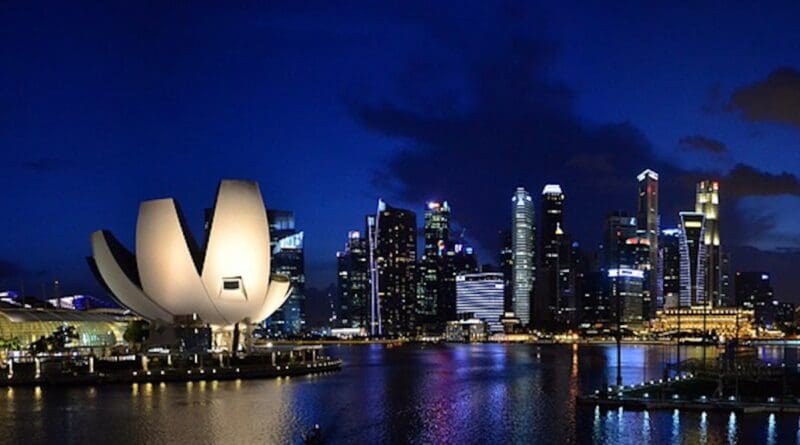
The South China Sea remains a major flashpoint that tests ASEAN’s cohesion and relevance as a regional security actor, with ongoing naval and coast-guard confrontations risking miscalculation and undermining the rules-based order that Singapore depends on for its trade and strategic resilience.
Internal divisions among ASEAN members have stalled progress on a binding Code of Conduct with China; Singapore can help by promoting shared principles such as freedom of navigation, non-militarisation and peaceful dispute settlement under international law.
To remain credible, ASEAN needs stronger collective maritime governance, practical cooperation (joint patrols, surveillance and incident response) and partnerships with external actors, with Singapore positioned to act as agenda-setter, mediator and champion of a stable, open maritime order.
The South China Sea is likely to remain a contentious area in the region until 2026 and beyond. Naval confrontations, coast guard confrontations and associated diplomatic confrontations are likely to continue to test the Association of Southeast Asian Nations (ASEAN) and undermine its credibility as a cohesive regional body. The South China Sea issue is, in essence, a test of the relevance of ASEAN in the security architecture of Asia today. Singapore will be deeply sensitive to any deterioration of ASEAN’s internal cohesion and to any weakening of ASEAN’s external role. A weakening of ASEAN would expose and marginalise Singapore in the matters of greatest importance to both regional and global parties. In essence, the rules-based-order of today, as championed by Singapore, must remain credible.
The South China Sea is in the heart of Asia, and is a critical body of water for the economic development of Asia. About a third of the world’s shipping traffic passes through the South China Sea. For a city-state such as Singapore, whose total trade volume exceeds three times the country’s Gross Domestic Product, any disruption to trade through the South China Sea would affect the port, the logistics and financial sectors. There has been an increase in militarisation in the South China Sea with China creating artificial islands and deploying military assets to them.
Freedom-of-navigation operations by the United States and other countries in the South China Sea have also increased. Both China and the United States claim that their actions in the South China Sea are defensive in nature. However, there is always a risk of miscalculation, and this is further compounded by the lack of confidence in international law and the increasing unpredictability of unilateral actions by countries in the South China Sea. Therefore, it is in the interests of Singapore to work to ensure that the waters of the South China Sea remain open and stable, despite the competing interests of the great powers.
The attempts of ASEAN to deal with the South China Sea issue have not yet been consistent. The Declaration on the Conduct of Parties in the South China Sea (DOC) was signed by ASEAN in 2002. Since then, ASEAN has been trying to negotiate a Code of Conduct (COC) with China. All efforts so far have ended in failure. The main reason for the lack of progress is the internal divisions within ASEAN. Claimant states such as Vietnam and the Philippines take a hard-line stance, while non-claimant states such as Indonesia and Malaysia want to remain neutral on the issue. Unless ASEAN presents a united front, it risks being marginalised by external parties. In this regard, Singapore has a crucial role to play. Although all ASEAN member states are unlikely to agree on the issue of sovereignty in the South China Sea, there are a number of principles that they can all agree on. These principles include the freedom of navigation, the absence of militarisation, and the need for any disputes to be settled through international law. By promoting these basic principles, Singapore can help to give ASEAN a sense of purpose in dealing with the South China Sea.
The South China Sea is fast becoming a focal point of conflict in the region as China continues to assert its historical claims over the territory of other states in the region, while at the same time rejecting what it sees as external interference in these matters. The US and other powers are meanwhile attempting to uphold the international rules-based order by conducting their own freedom of navigation operations and other activities in the area. ASEAN must therefore find a way of balancing its desire to remain neutral in these conflicts with the need to take a stance on them. By strengthening collective maritime governance, ASEAN can begin to define the terms of engagement in the South China Sea. In this regard, the role of Singapore as a neutral broker in dialogues between states and as a mediator of disputes between them is particularly significant.
Ensuring trade routes and energy security is critical and immediate for Singapore, given that its global hub status could be severely impacted by even the slightest disruption to these critical components of trade. Thus, it is in Singapore’s interests to support ASEAN, within the framework of regional and global stakeholders, in maritime cooperation and in issues of digital governance and of ensuring supply chain resilience.
Furthermore, establishing maritime cooperation within ASEAN, such as conducting joint patrols, joint surveillance and coordinated response to incidents of piracy and environmental crimes on the high seas, will also help to reinforce the credibility of ASEAN as a single, cohesive entity. Completing the Code of Conduct with China and establishing a rules-based regime of behaviour for parties to the disputes in the South China Sea will also serve to underscore the organization’s relevance. ASEAN should also strengthen its relations with external parties such as Japan and the European Union, in order to build up its capacity as well as to gain access to new technologies. This will enable ASEAN to maintain its autonomy in dealing with external issues. Singapore can play an important role in all of this by serving as an agenda-setter, a mediator and a guarantor of the rules-based order of behaviour.
The South China Sea represents a focal point for the evolving landscape of Asia’s development. It is in this space that the core issues of Asia’s development – issues of sovereignty, access to resources, and issues of power – are being contested. Hence, stability in the South China Sea is critical for the development of the region as a whole. The current tensions therefore represent a dual challenge for two key themes of our analysis. On the one hand, the South China Sea represents a challenge to ASEAN’s centrality in regional order-making. On the other hand, it also represents a challenge to Singapore’s strategic resilience. If ASEAN is to remain relevant, then the organisation must become one and speak with one voice. And for Singapore to remain a vital hub for the region, the country must help shape ASEAN’s responses to current and future challenges within several institutional frameworks, thus transforming it from a passive convener to an active shaper of stability.
Source: Eurasia Review
Share:



<p>Time: November 2025<br /> By: WTO and International Trade Group, Legal Department – VCCI</p>
