

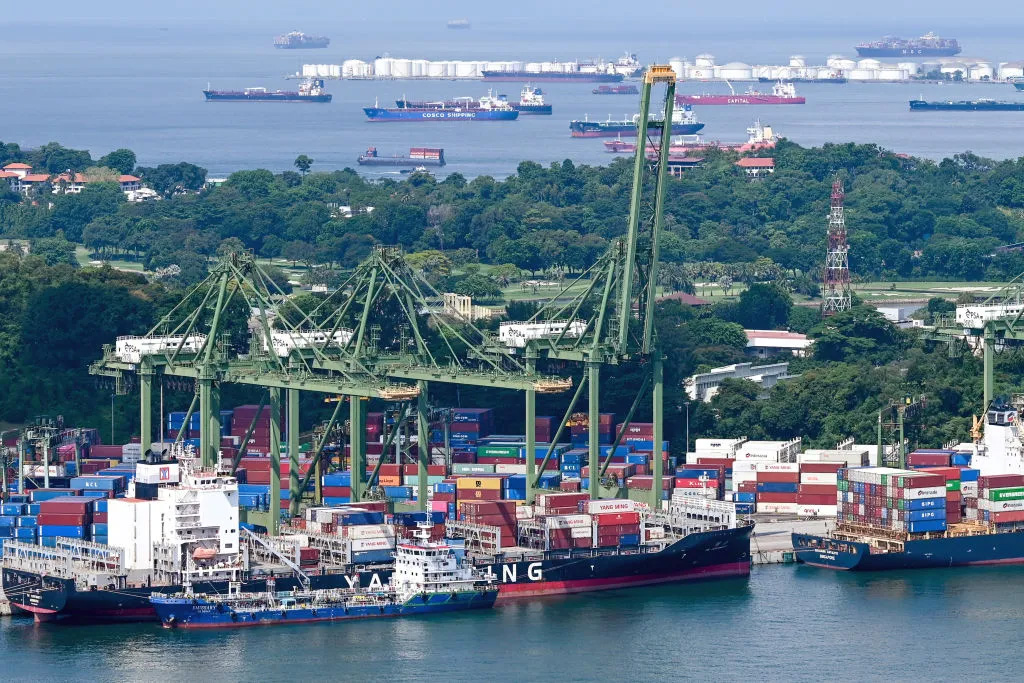
The Section 301 forced-labour tariff flagged in the June note has now been confirmed and took effect on July 24 , lifting Singapore’s effective US tariff rate to 12.5%. The constructive investment case for Singapore holds, with the unresolved overcapacity probe remaining the key variable to watch.
The final structure mirrors what was proposed in June. Singapore sits in the 12.5% tier alongside the majority of the 60 investigated economies.
The Office of the US Trade Representative (USTR) confirmed the lower 10% tier for countries already enforcing prohibitions on forced-labour imports, committed to doing so under an Agreement on Reciprocal Trade (ART), or operating a partial compliance regime. These included the UK, Canada and India.
On the other hand, Japan, South Korea and Switzerland were capped at 12.5% under their separate trade agreements with the US. Carve-outs for fuel, food and fertilisers were also confirmed, alongside exemptions for autos, metals and pharmaceuticals, which are covered by separate, industry-specific Section 232 tariffs.
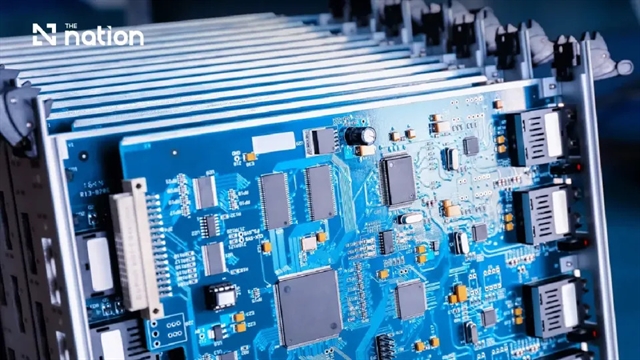
Crucially for Singapore, carve-outs also apply to semiconductors, certain electronics and aerospace products — the exact categories driving Singapore’s artificial intelligence (AI)-related export strength.
In short: Little in today’s confirmation changes the facts on the ground versus our June assessment. The main development is that a proposal has become policy — the magnitude and scope were already known.
The Overcapacity Probe is Still the Swing Factor
Our June article identified the Section 301 overcapacity investigation — which names Singapore alongside 15 other economies — as the more significant forward risk, given it remained open-ended with outcomes ranging from tariffs to a negotiated settlement to no action at all. That remains true today. Today’s confirmation was specific to the forced-labour track; the overcapacity probe has not yet produced a tariff proposal and its resolution timeline remains unclear.
Singapore’s mitigating case on that front is unchanged: The US runs a goods trade surplus with Singapore, not a deficit, putting Singapore at odds with the surplus-based framing that underpins the overcapacity investigation.
This holds up regionally too: Taiwan, South Korea, Japan and Malaysia all ran large goods trade surpluses with the US in 2025 — US$146.8 billion (RM600 billion), US$56.4 billion, US$63.9 billion and US$30.8 billion respectively — putting Singapore in a more defensible position, or making a less obvious target, should bilateral trade balances become a significant factor in the investigation’s outcome.
That said, Section 301 investigations weigh a broader set of criteria, including subsidies, state support, industrial policy and transhipment risk. Singapore has also previously faced scrutiny over transhipment, so this should not be read as an automatic exemption.
Singapore’s Investment Story Remains Intact
Markets had time to digest this outcome — USTR previewed the results in June, and today’s implementation confirmed rather than surprised. While the tariff adjustment is now locked in, it does not represent a structural break in Singapore’s growth trajectory.
The structural tailwinds we highlighted for Singapore are intact: The AI infrastructure capex cycle continues to support Singapore’s electronics and precision engineering clusters, and capital reallocation toward jurisdictions with regulatory stability continues to flow through Singapore’s financial and insurance sectors.
Singapore banks remain relatively insulated, as earnings are driven primarily by domestic and regional lending, wealth management and treasury income. Any impact is therefore more likely to be indirect, through softer loan growth or weaker fee income if risk sentiment deteriorates.
Similarly, Singapore Real Estate Investment Trusts (S-REITs) are driven predominantly by domestic property fundamentals and interest rate expectations, leaving them with limited direct exposure to tariffs. Their performance is likely to remain more sensitive to the path of interest rates and occupancy trends than to changes in global trade policy.
(Note: It is worth distinguishing between the two tracks here. The confirmed forced-labour tariff explicitly exempts semiconductors and certain electronics, meaning the AI-driven export growth detailed below is largely untaxed under the current 12.5% rate. The overcapacity investigation is a separate matter — it is specifically targeted at semiconductor and electronics manufacturing capacity, which is why that segment carries the primary exposure to that probe rather than to the tariff already in effect.)
The greatest exposure lies among industrial and semiconductor-related companies — the same businesses benefitting from the AI investment cycle. These companies would be most vulnerable if the overcapacity investigation were to broaden, given its specific focus on semiconductor and electronics manufacturing.
However, many of these companies continue to benefit from structural demand driven by AI infrastructure investment, which provides an important offset to near-term trade uncertainty.
More broadly, Singapore’s export momentum across the AI supply chain remains resilient and increasingly broad-based. Singapore’s exports to Taiwan and the US have continued to post exceptional growth throughout 2026, reinforcing our view that global AI investment remains firmly intact.
Electronic non-oil domestic exports (NODX) to Taiwan has grown unevenly but powerfully, reaching a fresh high of +278.2% year-on-year (YoY) in June, while electronic NODX to the US has been similarly explosive over the same period, peaking at +303.0% YoY in May before easing to +228.9% YoY in June. South Korea has also grown strongly, from +69.4% in January to a peak of +214.1% YoY in April before moderating to +145.9% YoY in June.
Taiwan overtook the US as the fastest-growing destination in June. This is best read as the AI-driven export boom broadening across multiple markets.
Beyond the export growth trends above, Singapore’s aggregate exposure to this tariff is also structurally limited: The US has historically absorbed only a minority of Singapore’s total exports (a 10-year average of 14%), with Asia accounting for the majority (10-year average: 65%).
This is reinforced at the product level: With semiconductors, electronics and other exempt categories excluded, it is estimated that only about one-third of Singapore’s domestic exports to the US will actually be subject to the new tariff — meaning the effective hit to Singapore’s export base is smaller still than the headline 12.5% rate.
This is because the 12.5% tariff applies only to the US-bound leg of Singapore’s trade; its aggregate impact on the broader economy is inherently constrained by how small that leg is relative to total exports, providing a structural buffer against the tariff’s economy-wide impact.
We, therefore, maintain our constructive view on Singapore. The confirmed tariff was anticipated and does not alter the investment case; the overcapacity investigation remains the item to monitor most closely going forward.
This underpins our unchanged Straits Times Index (STI) target price (TP) of 5,987 by end-2028, based on 15 times financial year of 2028 (FY28) price-to-earnings, reflecting upside potential of 7.3% at the close on July 23, alongside an average dividend yield of approximately 4.2%.
The STI’s strength is supported by multiple earnings drivers rather than a single theme. While AI-related electronics and industrials continue to benefit from structural demand, Singapore banks and capital markets provide additional, independent sources of support.
Capital markets add a separate, strengthening thread: Securities Daily Average Value (SDAV) reached S$2.1 billion (RM6.65 billion) in June 2026, and the Money Authority of Singapore (MAS) expanded the Equity Market Development Programme (EQDP) from S$5 billion to S$6.5 billion at Budget 2026, with roughly S$2.6 billion still to be deployed in the second half of the year.
The broader index continues to benefit from diversified sources of growth, supporting our constructive long-term outlook.
Source: TheMalaysianreserve
Share:

<p>Time: November 2025<br /> By: WTO and International Trade Group, Legal Department – VCCI</p>
