

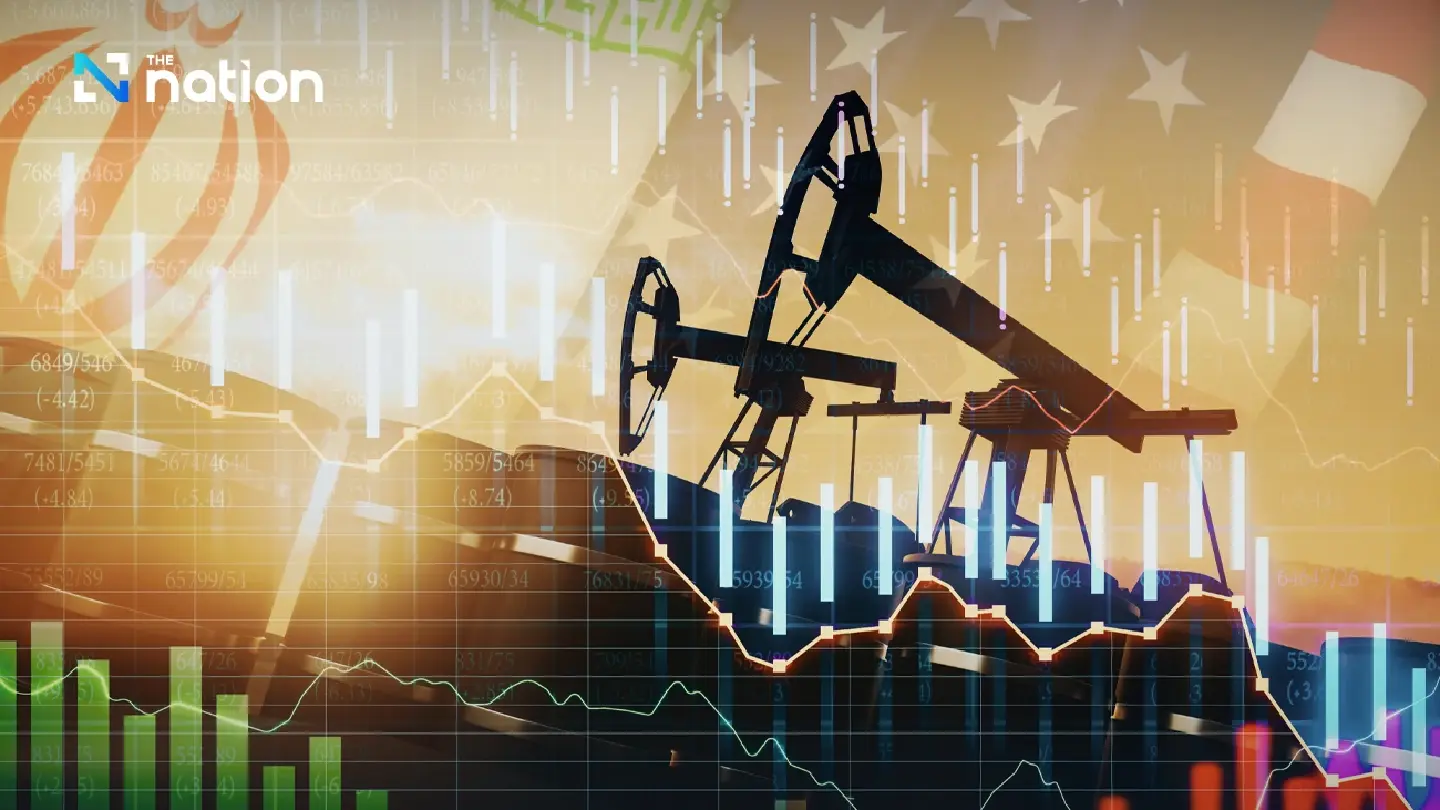
NESDC warns that a prolonged Middle East conflict could hit Thailand through energy prices, supply chains, exports, tourism and financial markets.
The National Economic and Social Development Council (NESDC) has warned that a prolonged conflict in the Middle East could affect Thailand through five major economic channels, led by energy prices, production costs, trade, tourism and financial-market volatility.
In its report on Thailand’s economic performance in the first quarter of 2026 and the outlook for the full year, the NESDC said the conflict could pose a growing risk to energy security, particularly for countries that rely heavily on energy imports from the Middle East.
Higher energy and commodity prices, including fertiliser, petrochemical products and plastics, have risen to multi-year highs in several countries, including Thailand. Such volatility has increased pressure on production costs in both the agricultural and industrial sectors and could further fuel inflation.
The NESDC identified five key areas through which the impact could be transmitted to the Thai economy: energy supply and prices, production supply chains, international trade, tourism, and money and capital markets.
Energy prices under pressure
The degree of energy impact varies from country to country, depending partly on the level of reliance on imports from the Middle East. Asian economies, including Thailand, have a relatively high dependence on energy from the region.
Thailand imported 46.8% of its energy from the Middle East in 2025, including 59% of total crude-oil imports and 24.3% of total natural-gas imports.
Rising global oil prices have placed upward pressure on refined oil prices in Thailand, although the government initially moved to cap domestic energy prices to ease the impact.
The NESDC said Thailand’s household demand was likely to be more affected than that of other economies in the region because energy accounts for about 14% of Thailand’s consumer price index, the highest share in the region.
Higher oil costs could also feed through to production sectors with a high share of oil-related costs, including fisheries, mining and quarrying, chemicals, electricity and water supply, and basic metals. Other affected sectors include chemical fertiliser production, construction, wholesale trade, concrete products and cement.
These sectors could face higher production costs, which may eventually be passed on to consumers through higher goods and service prices, the agency said.
Source: TheNation
Share:


<p>Time: November 2025<br /> By: WTO and International Trade Group, Legal Department – VCCI</p>
