

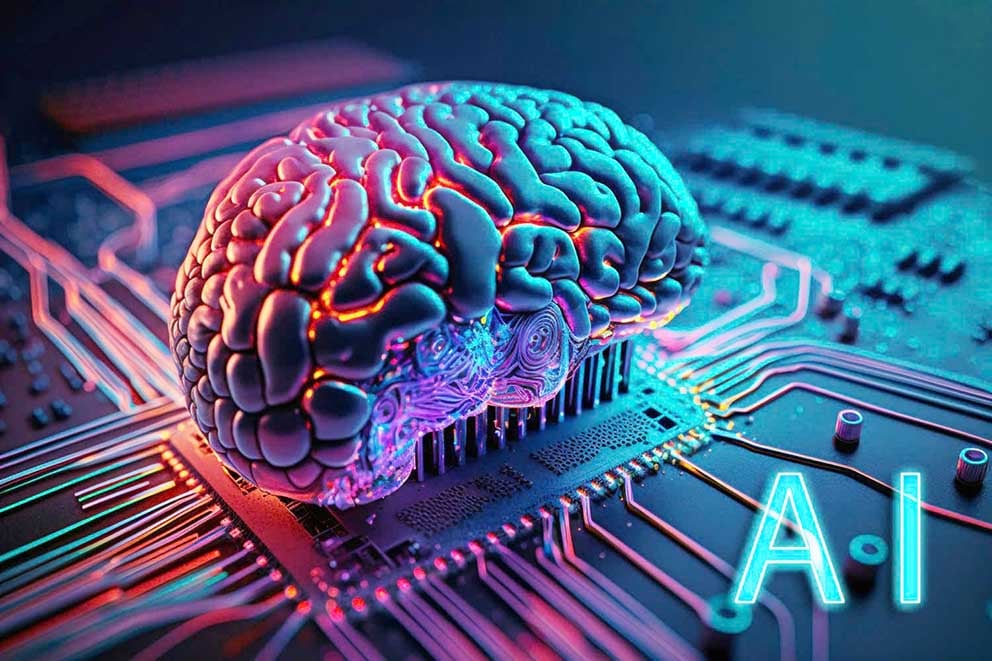
Although AI (artificial intelligence) is developing rapidly, in the future, the real advantage will not belong to those who possess the most advanced AI tools, but to those who still maintain the ability to think for themselves, make independent decisions, and remain rooted in core values amidst a world that is changing too rapidly.
There was a time when AI (artificial intelligence) was considered a novelty, but now it has become an indispensable "assistant" in almost every aspect of work and life. AI can write reports, draft policies, analyze documents, and support the processing of massive workloads at incredible speeds. In a young, ambitious region like Southeast Asia, which is rapidly digitizing, it's easy to see the application of AI as a key driver of progress.
But technology is never the ultimate destination. The important thing isn't what AI can do, but what humans will become as they become increasingly dependent on it. Across ASEAN, performance is increasing faster than the capacity for direction. Automation is developing faster than the educational , ethical, and critical thinking foundations needed to control AI. And in this whirlwind, we risk losing qualities that no algorithm can replace: imagination, judgment, and human resilience.
ASEAN's advantage in the AI era will not lie in computing power. From the beginning, what has always been the region's strength has been its people.
When everything is readily available, imagination easily fades away.
Each generation needs to be creative in its own way. Before the explosion of the internet and social media, imagination was a natural part of growing up and learning.
Today, students around the world are increasingly relying on AI for writing, expressing themselves, and processing ideas. This convenience saves time, but it also creates a fine line between using the tool and becoming dependent on it.
When people no longer have to grapple with their own thoughts, they gradually lose faith that they can create something original.
This is particularly noteworthy in Vietnam. Approximately 78% of internet users in Vietnam have used at least one AI platform in the last three months, with students leading the way at 92%. This is a positive sign of openness to technology, but it also raises a big question: is AI helping young people think more deeply, or is it gradually replacing that thinking process?
On the positive side, AI can become a tool to spark curiosity and aid in idea discovery . But the value of technology shouldn't lie in completely eliminating effort. Creativity still requires contemplation, experimentation, skepticism, and even spaces for humans to think outside the box, beyond what machines can predict.
More information does not necessarily mean more knowledge.
AI can provide answers very quickly, but it doesn't question the assumptions behind the question. True learning, on the other hand, always comes from critical thinking, debate, and reflection.
ASEAN is entering a phase where information is becoming redundant, but the ability to distinguish right from wrong and think independently is more important than ever. Numerous studies show a widening gap between the level of AI adoption and the actual readiness, particularly in ethical and critical thinking aspects.
Vietnam is a prime example of this paradox. An AWS survey in September 2025 of 1,000 Vietnamese business leaders revealed that 55% viewed a lack of digital skills as the biggest barrier to expanding AI adoption, while only 24% felt their current workforce was capable of meeting the new demands. The technology is ready. The ambition is there. But what's missing is the human capacity to use both correctly and effectively.
That's also why Asian perspectives on AI governance are increasingly important. Many East Asian countries continue to emphasize values such as harmony, norms, and trustworthiness when discussing AI. These are not simply cultural values, but a reminder that technology cannot be separated from people and the values it serves.
AI can copy content, but it cannot create identity.
AI is becoming increasingly adept at mimicking voice, recreating patterns, and generating content that looks very "real." But mimicry doesn't equate to authenticity.
What makes a person memorable rarely lies in perfection. It's their life experiences, personal perspectives, emotions, contradictions, and humanity—things that machines can't truly possess.
For Vietnam, the story of identity in the AI era is even more thought-provoking. According to the World AI Index 2025, Vietnam ranks 6th out of 40 countries in terms of awareness and readiness for AI, and for the first time, it is in the global Top 10. Even more noteworthy, Vietnam ranks 3rd globally in terms of trust in AI. This signals a strong openness to the technology. However, high trust coupled with a lack of critical thinking could become a weakness rather than an advantage.
In a world where AI can generate countless pieces of content in seconds, originality becomes even more valuable. The future will not belong to those who possess the fastest tools or the largest amount of data, but to the people and societies that preserve what machines cannot replicate: authenticity, cultural depth, empathy, and human judgment.
Conclude
AI will continue to grow faster, smarter, and more deeply ingrained in our lives. That is irreversible. But the biggest question of this era has never been solely about technology; it lies with humanity itself.
Are we developing with the same level of proactiveness and awareness as technology is advancing?
In the future, the real advantage will not lie with those who possess the most advanced AI tools, but with those who retain the ability to think for themselves, make independent decisions, and remain rooted in core values amidst a rapidly changing world.
Because progress is measured not only by what machines can do instead of humans, but also by whether humans continue to cultivate qualities that machines can never replace.
Ultimately, the biggest challenge of the AI era lies not in the technology, but in humanity itself.
Source: Vietnam.vn
Share:

<p>Time: November 2025<br /> By: WTO and International Trade Group, Legal Department – VCCI</p>
