

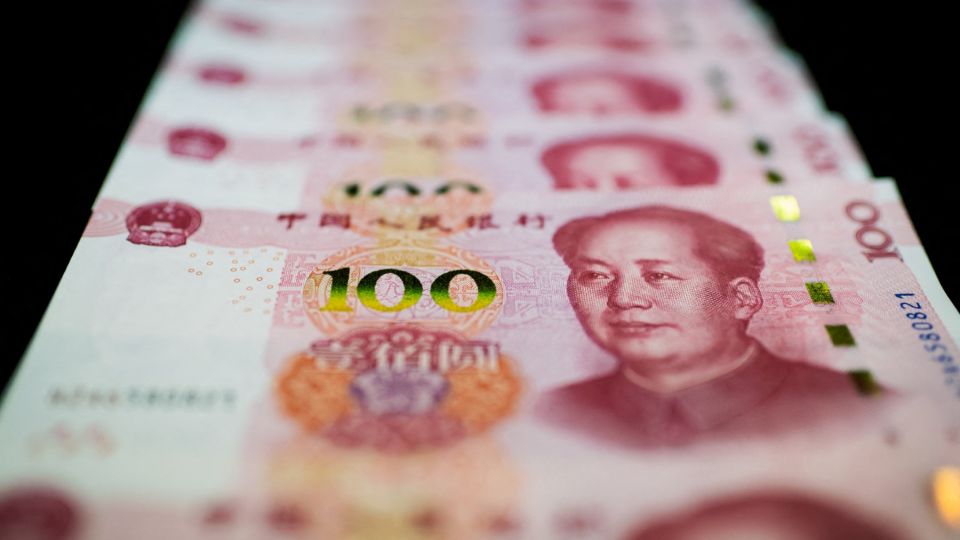
Last year, the government also began issuing renminbi-denominated debt through so-called dim sum bonds, which are similar to panda bonds but are marketed mainly in Hong Kong.
The government is planning to issue renminbi-denominated bonds in mainland China, known as panda bonds, this year as part of its financing diversification strategy.
Finance Minister Purbaya Yudhi Sadewa said in a media briefing on Tuesday that the target was to start issuance in the second half of this year.
“One of the directives from Bapak President Prabowo Subianto is to diversify global financing sources,” Purbaya was quoted as saying by Kompas.com.
He said the interest rate on panda bonds was “cheap, only 2.3 percent”, and therefore “we can press down our cost of capital”.
The minister held a meeting with China’s Finance Minister Lan Fo’an on the sidelines of the 2026 Spring Meetings of the International Monetary Fund and the World Bank Group in Washington DC, last week.
In the meeting, the Chinese minister said his government was planning to issue bonds in Indonesia, which Purbaya said was a form of “reciprocity” by virtue of the panda bonds issuance plan.
“China is our largest trading partner, the result of that talk is very positive. I think, going forward, our relationship with China in terms of international trade will still be good,” said Purbaya.
He went on to say that the issuance plan became part of the negotiation strategy with United States investors, whom he also met during the visit. The minister said he explained that Indonesia could come up with other financing routes, for instance via bonds issuance, if Western investors did not want to get on board.
Purbaya said the approach increased Indonesia’s leverage and would boost demand for Indonesian bonds.
Jakarta has been mulling the issuance of panda bonds since 2019 on account of the renminbi’s rising prominence in international trade, but the policy has yet to be realized.
Last year, the government also began issuing renminbi-denominated debt through so-called dim sum bonds. Much like panda bonds, these instruments are issued by non-Chinese entities, but they differ in where they are sold. Panda bonds are issued in mainland China, while dim sum bonds are marketed mainly in Hong Kong.
The government raked in 6 billion yuan (US$879.5 million) in the first batch of dim sum bonds issued last October. The offer was oversubscribed by three times the issuance size.
The bonds were rated Baa2 by Moody’s, BBB by S&P and BBB by Fitch and are to be listed on the Singapore Exchange (SGX-ST). Bank of China, HSBC and Standard Chartered acted as joint lead managers for the transaction.
Indonesia issued a series of foreign-currency bonds last year, including dual-currency US dollar and euro bonds in January and October, Islamic bonds in July, yen-denominated samurai bonds in June and Australian dollar-denominated kangaroo bonds in August.
The government is looking to finance the budget via Rp 689.1 trillion ($40.1 billion) debt issuance this year, 2.68 percent of the country’s gross domestic product. The deficit had reached 0.53 percent of GDP by the end of February.
The US-Israeli war on Iran, which has ratcheted up global oil prices and consequentially resulted in more spending on fuel subsidies, has pushed up the government’s latest deficit projection to 2.9 percent of GDP for the full year.
Source: Asianews
Share:



<p>Time: November 2025<br /> By: WTO and International Trade Group, Legal Department – VCCI</p>
