

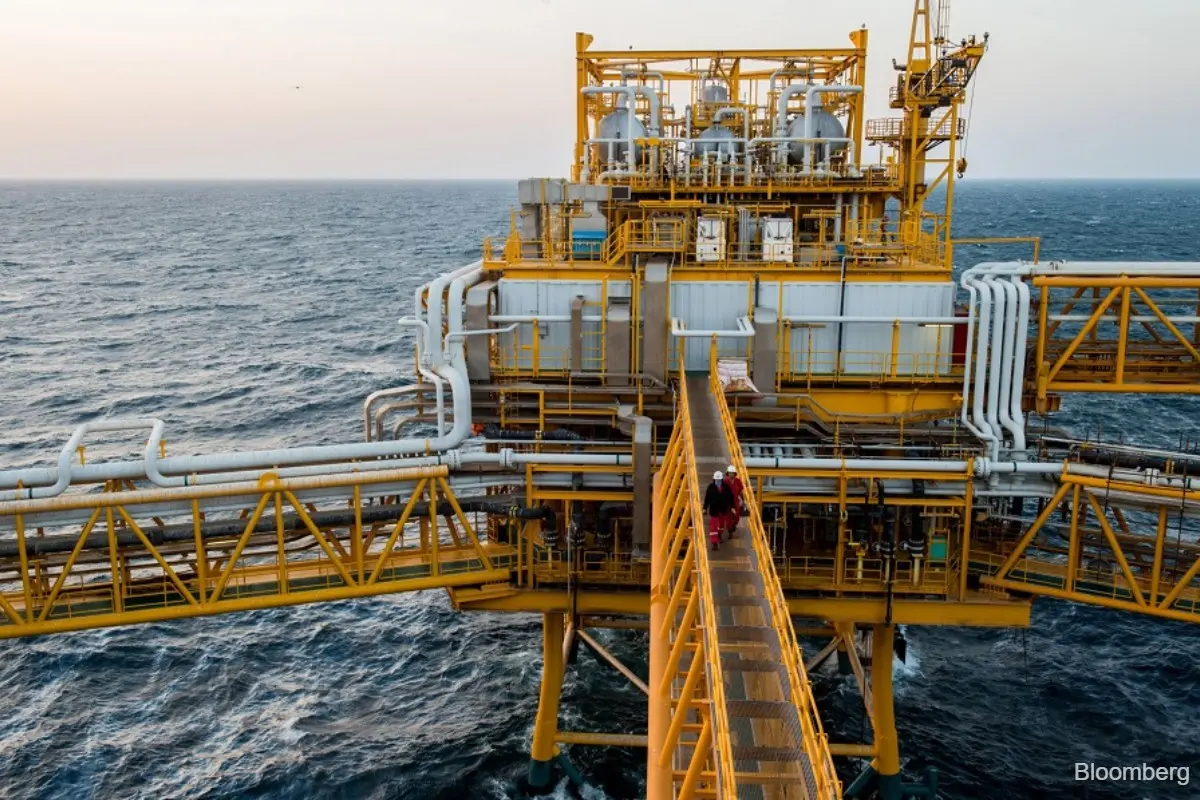
Malaysia has positioned itself as a safe-haven investment destination amid a structural shift in global energy investment flows, capitalising on the ongoing reallocation of capital away from higher-risk regions following the escalation of Middle East tensions.
Citing the Malaysia Bid Round 2026 — officially launched by Petroliam Nasional Bhd (PETRONAS) with nine exploration blocks offered across the country — MBSB Research said the initiative aims to draw investors looking for more stable and diversified energy assets.
Malaysia, for its part, is targeting annual upstream investments of between RM50 billion and RM60 billion to ensure a steady flow of exploration and development projects.
“The initiative represents a strategic effort to position Malaysia as a preferred 'safe haven' investment destination, capitalising on the ongoing reallocation of capital away from higher-risk regions. The offering is structured to appeal to a broad spectrum of investors by combining lower-risk mature assets with higher-impact frontier exploration opportunities,” said the house in a note on Wednesday.
The nine exploration blocks are being offered across Malaysia, covering high-impact frontier assets in the Sandakan Basin, high-potential emerging blocks in the West Sarawak Basin, and near-field mature assets in the Malay Basin.
Additionally, six discovered resource opportunities are available, providing ready-to-develop pathways for monetisation, supported by extensive subsurface data and technical insights.
The structural shift in global energy investment has been triggered by the escalation of Middle East tensions, which pushed Brent crude prices above US$100 per barrel due to disruptions to the Strait of Hormuz.
Prior to the conflict, crude oil prices had traded within a relatively stable range of US$60-US$70 per barrel, reflecting ample global supply despite the ongoing Russia-Ukraine war.
The closure of the Strait of Hormuz — a vital chokepoint for global oil shipments — combined with attacks on key energy infrastructure, has materially reduced effective supply availability and introduced a substantial geopolitical risk premium into crude prices.
The magnitude of the price increase suggests that the movement was driven not by incremental demand strength, but rather by a structural tightening of supply conditions and heightened uncertainty surrounding the continuity of global energy flows.
An estimated 13 million barrels per day of supply is at risk from the Middle East, prompting accelerated investment in regions capable of delivering near-term production.
Within Southeast Asia, countries such as Vietnam and Malaysia are gaining traction as attractive investment destinations, reinforced by recent offshore discoveries and stable investment-friendly markets.
MBSB Research maintained a positive stance on the energy sector, underpinned by structurally tighter global supply conditions and elevated geopolitical risk premiums.
Other oil majors’ capex plans
In response to elevated geopolitical risks, energy firms are increasingly diversifying investments away from Gulf-centric exposure towards more stable regions such as West Africa, South America, Asia, and North America.
Global exploration spending is projected to reach approximately US$55 billion in 2026, with close to US$30 billion allocated to non-Gulf regions.
Chevron plans to increase annual capital expenditure by about 50% over the next few years, focusing on the US Gulf of Mexico, South America, West Africa, and the Mediterranean.
BP has doubled its annual exploration budget to around US$1 billion, with significant emphasis on developments such as the Bumerangue discovery in Brazil.
ExxonMobil continues to maintain consistent exploration spending of approximately US$1 billion per annum, leveraging its established position in Guyana where discoveries have exceeded 11 billion barrels.
TotalEnergies is strengthening its presence in Namibia, particularly following recent discoveries such as Mopane and Venus, while Murphy Oil has announced a 2026 capital expenditure of US$1.1 billion-US$1.3 billion targeting Vietnam and Côte d'Ivoire.
Beyond international oil majors, national oil companies and state-owned enterprises are also increasing capital expenditure to reduce structural dependence on Middle Eastern supply.
Source: TheEdge
Share:

<p>Time: November 2025<br /> By: WTO and International Trade Group, Legal Department – VCCI</p>
