

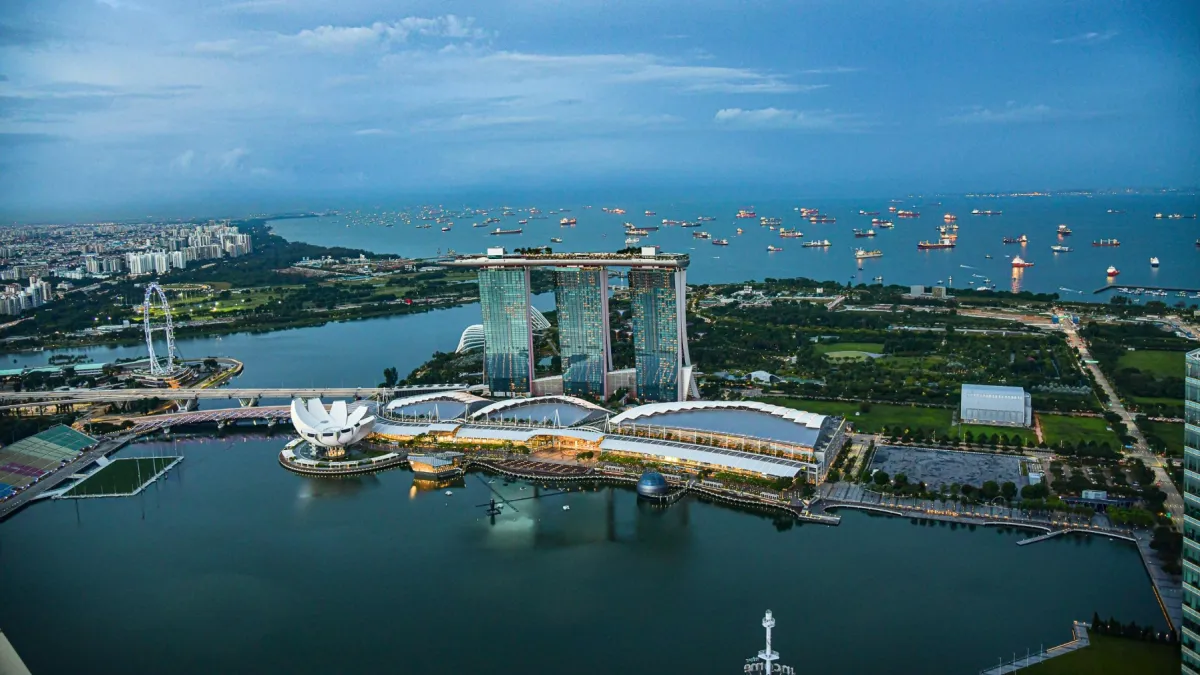
SBF said Singapore’s policies are not “unreasonable” or “discriminatory” and do not restrict US commerce.
The Singapore Business Federation (SBF) has responded to US trade scrutiny, telling the United States Trade Representative (USTR) that Singapore’s policies do not breach Section 301 standards.
In submissions prepared with 10 Singapore-based trade groups, SBF argued that the country's policies are neither “unreasonable” nor "discriminatory" and do not restrict US commerce.
It pointed instead to a long-standing economic relationship anchored by the US-Singapore Free Trade Agreement (USSFTA).
The group also highlighted the US trade surplus with Singapore, which it said reached about $34.3b (US$27b) in 2024 and widened to roughly $42.3b (US$33.3b) in 2025, undermining claims that US firms are disadvantaged.
Around 6,600 US companies operate in Singapore, reflecting deep supply chain and investment links.
On excess capacity, SBF rejected the premise of the probe. It said Singapore’s manufacturing base is commercially driven, with high costs limiting the risk of state-backed overproduction or below-cost pricing.
Trade flows, it added, largely reflect Singapore’s role as a re-export hub rather than domestic output expansion.
Tariffs targeting Singapore would raise costs for US firms and disrupt regional supply chains that rely on the city-state as a logistics base.
On forced labour, SBF said Singapore already has enforceable legal prohibitions backed by criminal penalties and anti-trafficking measures.
It noted that the US Department of State ranks Singapore as Tier 1 in its 2025 trafficking report, indicating top-tier compliance.
The federation added that there is no Singapore-specific evidence of forced-labour-linked exports entering the US, and warned that unilateral import bans would be difficult to implement without common verification standards.
In both submissions, SBF urged that any concerns related to excess capacity or labour be handled through established cooperative mechanisms, including the USSFTA Joint Committee and rules‑based multilateral frameworks.
($1 = US$0.78)
Source: SBR
Share:
<p>Time: November 2025<br /> By: WTO and International Trade Group, Legal Department – VCCI</p>
