

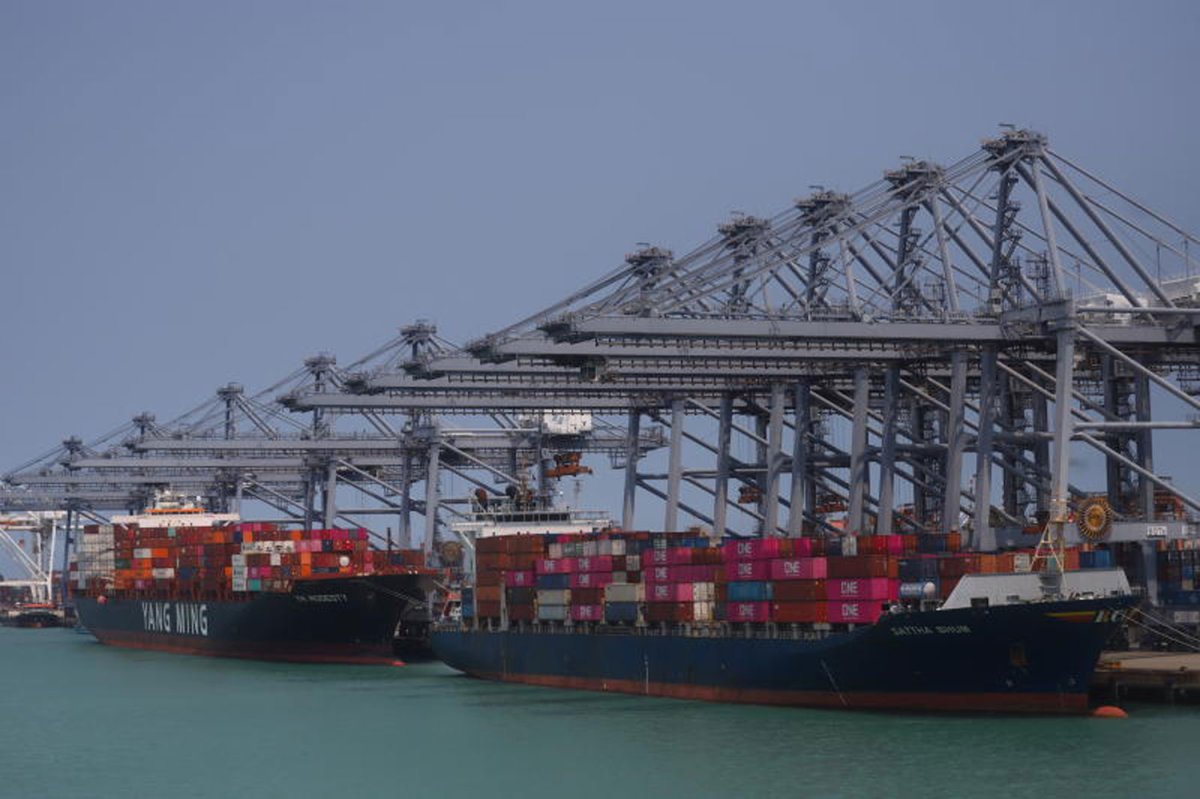
The reopening of the Strait of Hormuz with fee collection as proposed by Iran, together with high oil prices, is dampening the prospects for Thai exports and may push overseas shipments into contraction this year, economists say.
Poonyawat Sreesing, senior economist at the SCB Economic Intelligence Center (SCB EIC), said the conflict in the Middle East has caused supply chain disruptions, affecting both exports and imports.
Imports of raw materials, especially fertiliser and petrochemicals, have faced delays, affecting Thai manufactured goods for export, he said.
At the same time, demand for Thai products in the Middle East has shrunk, particularly for automobiles and food. The Middle East is one of the major export markets for these products.
SCB EIC expects Thai exports to expand marginally this year, growing in a range of 0-1%. The expected increase in US import duties could also hamper Thai shipments, particularly in the second half of the year.
"The estimated 0-1% growth is the base case," said Mr Poonyawat. "In the worst case, exports might experience a contraction this year."
Suwat Wattanapornprom, head of the research division at Krungsri Securities (KSS), said the main issue for Thailand in relation to the Middle East war is the opening of the Strait of Hormuz, the world's major waterway for oil shipments.
Iran has signalled that it may conditionally allow a broader reopening of the strait, with tolls to be collected on vessels passing through it, as part of its proposal to end the conflict with the US and Israel.
The market has cautiously awaited the outcome of talks in Islamabad between delegations from both parties this weekend. President Donald Trump's side indicated that the discussions in Pakistan would be held behind closed doors.
"I personally view that it is good enough that the Strait of Hormuz remains partially open and is not blocked entirely," Mr Suwat said.
KSS has so far maintained its oil price estimate of US$79 per barrel, compared to the year-to-date's average of $85. "We see that there is room for global oil prices to come down to around $80 per barrel later this year," said Mr Suwat.
Amonthep Chawla, chief economist at CIMB Thai Bank (CIMBT), said that while oil prices have fallen below copy00, they have remained well above $70-80 per barrel since before the war erupted.
"Elevated oil prices have driven transportation costs higher, resulting in increases in the prices of several products. Clearly, we are going to see inflation escalate in the coming months," Mr Amonthep noted.
He believes that an oil price of copy00 a barrel is acceptable. "Such a rate could trim Thailand's GDP growth by 0.4% to 1.3% this year, from 1.7% that we forecast earlier, as capital allocation for investment and construction might be put on hold," he said.
CIMBT expects the Thai economy to be "very fragile" in the second quarter. Developments in the Gulf region over the next two weeks are vital and need close monitoring, Mr Amonthep added.
Source: BangkokPost
Share:


<p>Time: November 2025<br /> By: WTO and International Trade Group, Legal Department – VCCI</p>
