

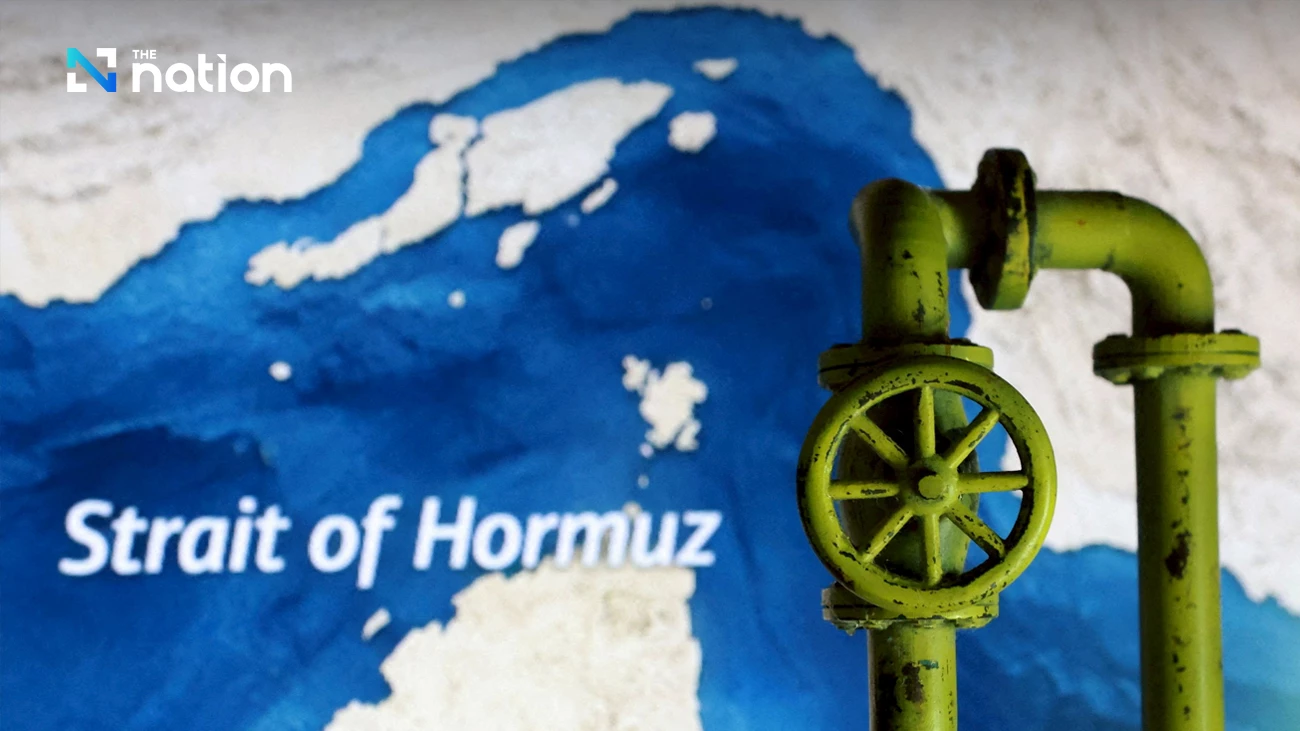
Thailand is among the most exposed economies in East Asia and the Pacific, the World Bank says, as compounding external shocks test the resilience of an export-dependent region — though a rebound is forecast for 2027.
Thailand is forecast to grow at just 1 to 2% this year, a figure the World Bank attributes in significant part to a failure to advance structural reforms — even as the broader East Asia and Pacific region grapples with an energy shock, rising trade barriers, and a pervasive climate of policy uncertainty that is suppressing investment and eroding the quality of jobs.
The warnings came on Wednesday as the World Bank released its latest East Asia and Pacific Economic Update, which projects regional growth will decelerate from 5.0% in 2025 to 4.2% in 2026 before recovering to around 5.0% in 2027 as geopolitical tensions ease.
For Thailand, the picture is more sobering. The country is identified as one of the more exposed economies in the region, facing higher energy import costs, a direct hit from US sectoral tariffs on auto parts, and limited room to manoeuvre on fiscal and monetary policy.
Thailand in the crossfire
The conflict in the Middle East has pushed up oil and gas prices significantly, with futures markets suggesting prices could remain as much as $20 higher per barrel than before the crisis began. Thailand, as a net energy importer, is acutely exposed.
The World Bank estimates that a sustained 50% increase in fuel prices could reduce household incomes across the region by 3 to 4%, with the heaviest burden falling on lower-income households, who devote a larger share of their spending to energy.
On trade, Thailand faces a specific vulnerability through its auto parts industry, which is directly in the line of fire from US tariffs.
The Bank estimates that the tariff impact could shave around 0.5 percentage points or more off Thailand's GDP.
Overall, US tariffs on East Asian and Pacific economies now stand roughly nine percentage points higher on average than in 2024, at around 14%, following successive rounds of US measures, legal challenges and new impositions.
The Thai baht has depreciated by approximately 5% amid the broader regional financial turbulence, while capital outflows and widening bond spreads are adding to financing pressures across the region.
The deeper problem, however, is one of the country's own making.
"A country like Thailand is growing today at 1 to 2% because there have been no significant structural reforms," said Aaditya Mattoo, the World Bank's director of Research, who presented the findings at a media briefing.
He pointed to the failure to liberalise the services sector as a particularly costly missed opportunity, noting that targeted services reform in Vietnam had simultaneously lifted productivity in both services and manufacturing.
Thailand's financial sector remains heavily restricted to foreign investment, and competition in transport services is constrained in ways that raise costs for downstream industries.
The World Bank also noted that Thailand has ambitions to transition its automotive industry — in which it has been a significant regional player — away from internal combustion engines and towards electric vehicles.
Whether it can execute that shift successfully will depend in part on the structural and skills investments it makes in the near term.
Source: TheNation
Share:


<p>Time: November 2025<br /> By: WTO and International Trade Group, Legal Department – VCCI</p>
