

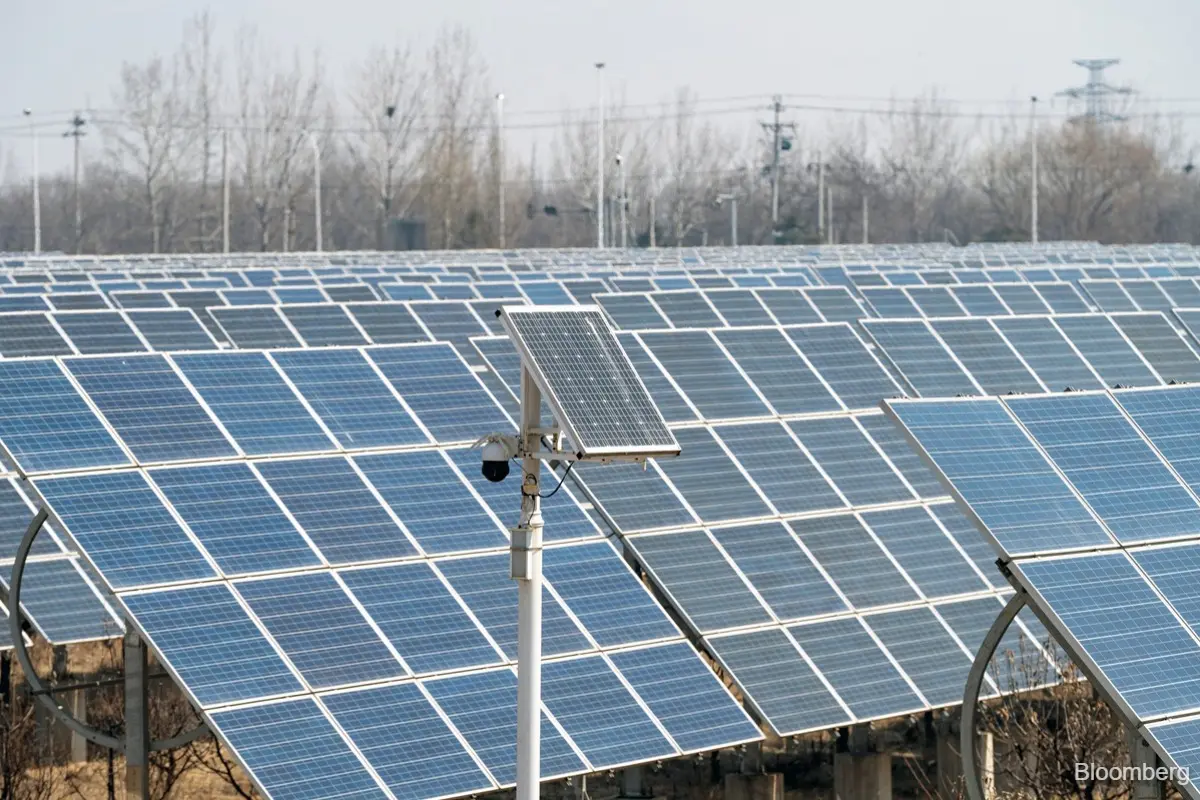
The closure of the Strait of Hormuz is forcing governments across Southeast Asia to seriously ask what their energy future looks like if supplies from the Middle East become increasingly fragile.
For Raksit Pattanapitoon, vice-president of renewables and power for Asia-Pacific at Rystad Energy, Southeast Asian economies must move towards greater energy independence rather than continuing to depend on cheap fossil fuels.
"The recent conflicts in the Middle East have shown economies in Southeast Asia a hard truth, that being dependent on fossil fuel is increasingly fragile. That exposure is unlikely to fade with a ceasefire alone. Instead, it is embedding a more durable shift in thinking, echoing the reset seen in Europe after 2022," he said.
For most of the region, Raksit said that is an uncomfortable reality, as unlike Europe or North America, the majority of Southeast Asian economies do not produce enough energy to meet their own needs. They buy it, and much of it has historically come through a single narrow waterway in the Persian Gulf.
The disruption has sent LNG prices sharply higher, with countries like Singapore, Thailand and the Philippines among the most exposed, given how heavily they rely on imported gas for their power mix, said Raksit, who was speaking at the Offshore Technology Conference Asia 2026, held from March 31 to April 2 at the Kuala Lumpur Convention Centre.
Malaysia is relatively insulated from direct supply disruption but is not immune to elevated global LNG prices filtering through to consumers.
He compared the situation to what happened in Europe after Russia invaded Ukraine in 2022, when countries were suddenly forced to rethink where they sourced their energy.
What that shift looks like in practice, he said, is a broader menu of options coming back onto the table, all driven by one common strategy which is to produce more energy at home.
Of all the options available, Raksit said solar is the most immediate.
"Renewable is the low hanging fruit here. Solar is very obvious now. It's accessible to everyone, quick, fast. If you want something quick and fast, it's a no brainer. You can firm it up with battery now, which is also quick and fast. The pricing is very competitive with current gas price levels," he said.
South East Asia currently has below 5% solar in its overall generation mix, leaving significant room to grow before the region runs into the grid management challenges that more mature markets are already grappling with.
"The next doubling is a no brainer. All the issues you hear from Europe, Australia and other more mature markets, we're not close to getting there yet. So it's not a problem you need to think about today. Today it's about maxing out your solar deployment," he said.
Raksit also pointed to China's solar and battery manufacturing overcapacity, which has pushed prices to near-historic lows, as an opportunity Southeast Asia should not pass up.
"You can get battery, solar panels, EVs from them at discount prices. Why not? It's not great for the companies, but it's great for their customers. It's a buyer's market. We should take advantage of that," he said.
Not every option on the table points towards a cleaner future however, said Raksit. Some governments are making the pragmatic calculation that existing coal capacity is too valuable to abandon.
Raksit pointed to his home country, Thailand, which has reversed a decision to decommission two units at one of its major coal plants.
"You're not burning coal every day. You only burn it when there's an emergency like this one, when gas is super expensive and you need something else. You keep it for that. You're not harming the climate that way," said Raksit.
He drew a clear distinction between keeping existing coal capacity on standby and building new plants.
"I don't think there's any appetite to build new capacity. It just takes too long. But extending the existing ones and keeping them as backup makes sense," he said.
Nuclear power, long sidelined in Southeast Asia, is also returning to the conversation. Vietnam, with power demand rising sharply on the back of rapid industrialisation, has nuclear on its long-term agenda.
Singapore, which has almost no land available for large-scale renewable generation, may eventually have little choice but to consider it, he added.
Raksit said nuclear could be a viable long-term solution for the region but is clear-eyed about the timeline.
"Nuclear is a solution for 10 years from now, maybe at the earliest in Southeast Asia. We should do it, but it's not going to help with your immediate need," he said.
On small modular reactors (SMR), often cited as a faster and cheaper alternative to conventional nuclear, he was more sceptical.
"The economics are unproven. It will definitely be more expensive than conventional nuclear and definitely more expensive than solar plus battery," he said.
The technology's success, he added, depends on global uptake that Southeast Asia cannot drive on its own.
"Whether SMR succeeds as a technology depends on whether the US, Europe and China go that route".
China's first commercial SMR is expected to come online this year, which Raksit said will be worth watching closely.
One option that has been discussed in Asean for years but made limited progress is a regional power grid that would allow electricity to flow across borders to where it is needed most.
The logic is sound, but regional politics to implement the Asean Power Grid (APG) appears to be the main issue, said Raksit.
“If you think about this only at the national level, this is a negative for the APG. Singapore might be thinking, we're already buying gas from Indonesia. Do we want to be importing electrons from Indonesia as well?” he asked.
“But a more optimistic view is that we're not thinking at the national level, but thinking more at the Asean level. Does this crisis push all the net energy importers in the region, and Malaysia and Indonesia as the two net exporters, to be closer together? Shouldn't we be looking for friends closer to home?”
Singapore is the clearest test case, as the city-state has a target of importing six gigawatts of clean energy by 2035, a very large amount relative to the size of its grid, with much of it expected to come from Indonesian islands less than 100 kilometres away.
“It remains to be seen whether there's a landing zone between these two to agree. If that one can't happen, and the economics make so much sense, and Singapore is already willing to pay a premium, then it's hard to be optimistic about the rest of the APG,” said Raksit.
Raksit said renewable energy will eventually win, but not simply because it is green. It has to win on commercial grounds. “You cannot rely on climate or decarbonisation as an argument these days. It's way in the backseat,” he said.
Source: TheEdge
Share:

<p>Time: November 2025<br /> By: WTO and International Trade Group, Legal Department – VCCI</p>
