

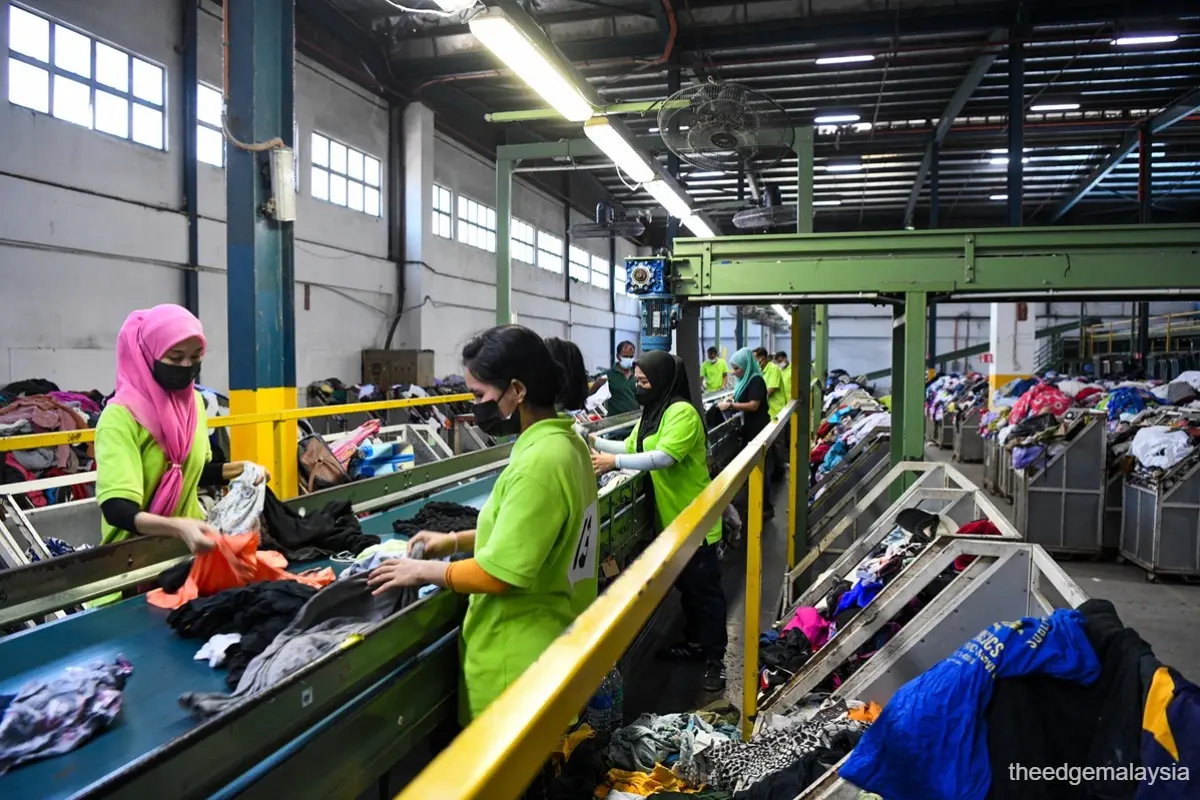
Malaysia's manufacturing sector registered an improvement in operating conditions during March, driven by fresh increases in production and employment.
The seasonally adjusted PMI climbed into expansionary territory at 50.7, up from 49.3 in February, marking the fourth improvement in the past five survey periods, according to an S&P Global statement on Wednesday.
The latest reading represented the strongest upturn in nearly four years, and based on historical relationships with official data, suggests gross domestic product (GDP) will grow approximately 5.5% year-on-year, read the statement.
Central to the headline index's recovery was a modest rise in output, which expanded at the most pronounced pace since December 2021 amid improved demand conditions and new tender wins.
Employment edged up fractionally following two consecutive months of job cuts, with firms adding full-time staff and successfully reducing backlogs that had built up in the prior month.
"While this is welcome news following the mild moderation observed midway through the first quarter, the data also highlights several concerning developments, many of which stem from the ongoing war in the Middle East," said Maryam Baluch, Economist at S&P Global Market Intelligence.
Despite the upturn in production, total new business moderated for a second straight month, though the rate of decline remained shallow and largely unchanged from February.
International demand for Malaysian manufactured goods also softened slightly, marking the first decline in export orders in three months.
Subdued demand conditions, combined with limited container availability and higher raw material prices tied to the Middle East conflict, led firms to cut purchasing activity for the first time in nine months.
Supply chain pressures intensified sharply in March, with vendor performance deteriorating to the greatest extent since May 2022, largely attributed to the ongoing war.
In response to reduced buying and extended supplier lead times, manufacturers drew down their pre-production inventories at the fastest rate in 27 months.
Finished goods holdings were also reduced for a fourth consecutive month as firms utilised existing stocks to meet production requirements.
Input costs rose for a second straight month, with inflation accelerating to its quickest pace since October 2024, driven by higher transportation, energy, and material expenses.
To protect margins amid rising costs, manufacturers raised their output prices sharply, with the rate of selling price inflation reaching a 45-month high.
Business sentiment regarding the year-ahead outlook softened to a seven-month low, as optimism about future demand was significantly dampened by concerns over the Middle East conflict.
While hopes for an improving demand environment provided some support to confidence, the ongoing geopolitical situation continued to weigh heavily on manufacturers' expectations.
Source: TheEdge
Share:


<p>Time: November 2025<br /> By: WTO and International Trade Group, Legal Department – VCCI</p>
