

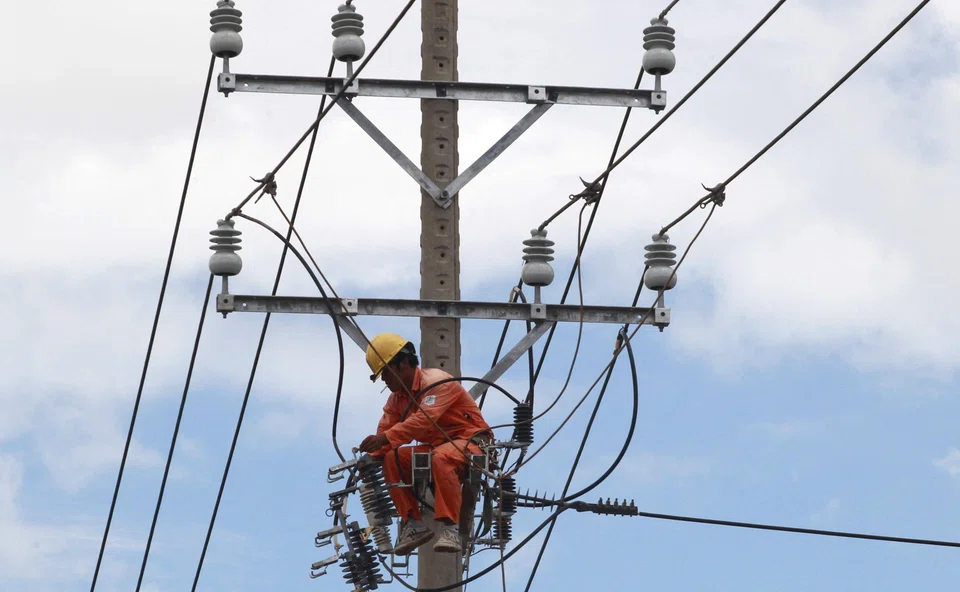
Market players say there is long-term upside in the new mechanism even as subsidy-era disputes remain unresolved
New policies and forthcoming regulatory updates are giving Vietnam’s developers of renewable energy clearer pathways to sell power directly to large consumers.
These moves push the country towards a market-based system for the generation, sale and purchase of energy from greener sources, and are a key reform aimed at unlocking investment and helping enterprises to meet environmental, social, and governance (ESG) commitments.
The Direct Power Purchase Agreement (DPPA) framework was introduced more than a year and a half ago, but take-up has been modest because energy developers and corporate offtakers (the major consumers of energy) have struggled to agree on pricing, contract terms and legal risks.
The slow progress has raised concerns because the DPPA scheme is central to Vietnam’s push to scale renewable energy, and to reduce its reliance on both state utility Vietnam Electricity (EVN) and subsidies through the old feed-in tariff (FiT) incentives.
Industry players are hailing the new policies, specified in Resolution 253 passed last December, as a breakthrough in untangling key bottlenecks; implementation is expected soon, after related decrees are amended to bring them into alignment.
Under these new policies that refine how DPPAs are implemented, electricity prices would be freely negotiated in the private market without being subject to a regulated price cap, particularly in the case of physical, or off-grid, DPPAs using private transmission lines.
Developers have long argued that regulated ceiling tariffs have constrained project viability, particularly for solar power plants, by limiting revenue potential and reducing financial flexibility.
Under the new scheme, “eligible buyers” would also expand beyond large energy consumers to include electricity retailers which can aggregate demand from smaller buyers within their operating areas, such as industrial parks, export-processing zones, urban areas and free-trade zones.
Do Quang Thinh, founder and chief executive of The Sunenergy, a Vietnam-based renewable energy consultancy, said: “These amendments will serve as a major boost, encouraging greater participation from all relevant stakeholders.
“The off-grid DPPA model is the most feasible and can be rolled out on a wider scale, as it delivers significant financial benefits and value for all parties involved.”
Some developers are optimistic about the progress towards the market-based system.
Thomas Jakobsen, managing director of Indochina Energy Partners (IEP) – a solar-power producer, investor and developer active in South-east Asia – described the DPPA legal framework as clear and bankable, and said commercial viability remains achievable for investors who properly model risks and funding costs.
“We have already signed up numerous offtakers on the DPPA,” he said, though acknowledging that there are uncertainties that “take time to evaluate and to simulate for the investors and for the offtakers”.
Sticking points
A major sticking point lies in price and charge transparency for virtual, or on-grid, DPPAs, through which renewable power is delivered through the national grid run by EVN. This enables renewable energy projects to scale without installing costly private transmission lines and making it more practical for geographically dispersed buyers.
Under this structure, generators and corporate buyers sign forward contracts and settle payments based on the gap between a pre-agreed strike price and the prevailing spot market price.
However, many participants say this mechanism remains insufficiently clear.
Pham Minh Hoang, managing partner at VSE Lawyers, said: “At present, not many energy developers or buyers – even very large electricity users – have been able to participate in virtual DPPA because pricing remains unclear.”
He noted that the lack of DPPA customers could hinder the rollout of new renewable energy projects, as investors typically require long-term power-purchase agreements to ensure a power project’s financial viability.
“Over time, this may slow Vietnam’s progress toward achieving its Net Zero 2050 target,” he said.
He specifically flagged concerns over the risk of double charging, noting that grid infrastructure costs could be embedded both in DPPA pricing and in the capacity charge under a new two-part tariff scheme that EVN has been piloting since last October for large users.
This could push overall DPPA costs to levels that match or even exceed standard retail tariffs, slowing negotiations as enterprises hesitate over the higher expenses.
Thinh echoed this view, noting that electricity purchased through the DPPA mechanism remains “unattractive” under the current cost structure.
“Users’ demand for renewable energy typically stems from emissions-reduction targets and the need to achieve cost savings,” he said. “In both cases, price remains the decisive factor.”
A survey conducted last September by the Asia Clean Energy Coalition (ACEC), which gathered 141 responses from corporate buyers, found that about half of them expected total DPPA costs to exceed EVN’s standard retail tariffs once transmission, balancing and system service fees were factored in.
More than a third remained neutral, citing ongoing negotiations and uncertainty over tariff structures.
The ACEC report also pointed out that such uncertainty in pricing and charges in virtual DPPA, particularly the difference clearing cost, was the main hurdle to the adoption of DPPA because it compromised buyers’ ability to budget and developers’ capacity to secure financing.
Contract tenor mismatch is also a problem, complicating negotiations and reducing bankability. Developers typically require long-term power-purchase agreements – often lasting 20 years – to secure loans, while corporate buyers prefer contracts of five to 10 years, the report added.
Meanwhile, securing an electricity operation licence for power projects also remains challenging. Hoang from VSE noted that the relevant regulations overlap and lack consistency, creating confusion and practical difficulties for developers.
Industry players broadly agree that more time is needed for stakeholders to fully understand the associated risks and implications.
“DPPA implementation reflects system maturity rather than delay. Sometimes it is the tortoise that wins the race,” IEP’s Jakobsen said. “We’re no longer in a situation that if everything goes wrong, we can just say the utility will pay.”
Not-yet-settled legacy disputes
The transition comes against the backdrop of a prolonged compliance dispute tied to Vietnam’s earlier FiT regime.
Between 2017 and 2020, investors poured billions into solar and wind projects under policies that guaranteed fixed and generous tariffs for two decades, paid for by EVN.
A 2023 government review of eligibility conditions subsequently flagged 173 projects, collectively worth around US$13 billion, for missing construction completion approvals. This development placed EVN’s payments on hold and raised fears that FiT rates could be revoked.
Last November, Singapore’s SP Group and more than 20 Asian power companies urged Hanoi to engage in urgent talks, warning that payment delays following regulatory adjustments had pushed some investors to the brink.
No resolution has been announced so far, although there are indications that only “administrative penalties” may be imposed – a far less severe outcome than a potential reduction in FiT rates for affected projects.
Jakobsen said the previous FiT regime fuelled “too fast” renewable expansion and also exposed structural risks by encouraging development beyond official planning targets.
“It was very clear early on that this type of FiT, as seen in many other countries, would end in heartbreak,” he said.
He argued that the burden of the excessive costs would ultimately fall on the state utility and Vietnamese taxpayers, even as some “inexperienced” and “speculative” investors now face legal and commercial uncertainties for their projects.
IEP and other investors chose not to participate in FiT-era projects from the beginning, instead throwing their support behind DPPAs as a more sustainable, market-based alternative, he noted.
“Investors who stayed disciplined during the FiT era are now well positioned to continue investing in Vietnam’s renewable sector through DPPAs to meet the country’s goal,” he said.
Source: BusinessTimes
Share:




<p>Time: November 2025<br /> By: WTO and International Trade Group, Legal Department – VCCI</p>
