

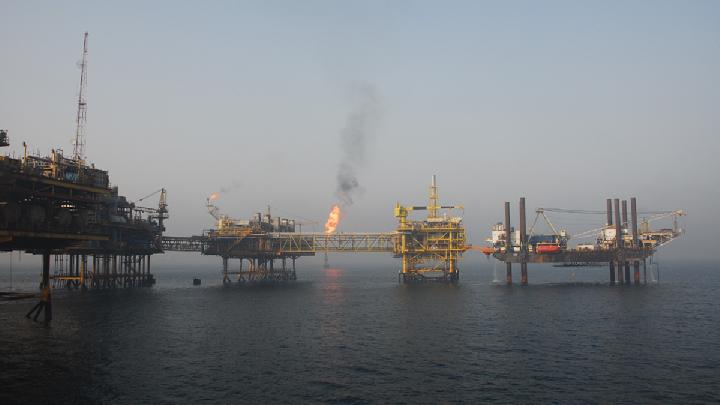
Data from Statistics Indonesia (BPS) and the Indonesia Eximbank Institute show that Indonesia's exports to the Middle East account for only about 4.2 percent of the total national exports, with main commodities including palm oil (HS 1511), jewelry (HS 7113), as well as cars and other motor vehicles (HS 8703).
"Escalation of conflicts in the Middle East risks the surge of global energy price volatility and international trade logistics costs," said Rini Satriani, Head of the Indonesia Eximbank Institute, in an official statement quoted on Saturday, March 21, 2026.
But the direct impact of the war on Indonesia's trade is expected to be relatively limited, given the small trade exposure with the region. Rini explained that Indonesia's imports from the Middle East account for about 3.9 percent of the total national imports and are dominated by energy commodities, particularly oil. This trade structure indicates that Indonesia's direct trade exposure to conflict-ridden regions is relatively limited.
Based on the latest data, most of Indonesia's exports flow to other regions such as East Asia (36.4 percent), Southeast Asia (20.8 percent), North America (11.5 percent), South Asia (9.6 percent), and Western Europe (5.7 percent).
Thus, according to Rini, the economic dynamics in these regions continue to be a determining factor for national export performance.
Rini emphasized that the development of conflicts and their implications for global trade is continuously monitored, especially those related to the stability of international energy routes. Indonesia Eximbank carefully monitors the dynamics in the Middle East, including the security of strategic shipping routes such as the Strait of Hormuz, a major trade shipping route.
The region plays a strategic role in the global energy system as it contributes to more than 30 percent of the world's oil production, while around 20-30 percent of global oil trade passes through the Strait of Hormuz. Disruptions in this route can quickly affect international energy prices and raise global trade logistics costs.
Although Indonesia's oil imports do not directly come from the Middle East, the impact can still be felt through regional trade routes. Approximately 75 percent of Indonesia's oil imports come from Singapore and Malaysia, which are major oil trading and processing centers in Asia.
These countries also import crude oil from the Middle East, so supply disruptions in the region can lead to increased energy prices faced by Indonesia.
The Indonesia Eximbank Institute also monitors the impact of changes in global energy distribution on major oil-importing countries in the Middle East such as China, Japan, India, and South Korea.
These countries are major energy consumers from the Gulf region and important export markets for Indonesia. Higher energy costs are likely to suppress industrial activities in these countries and affect the demand for Indonesian export products.
Source: TEMPO.CO
Share:

<p>Time: November 2025<br /> By: WTO and International Trade Group, Legal Department – VCCI</p>
