

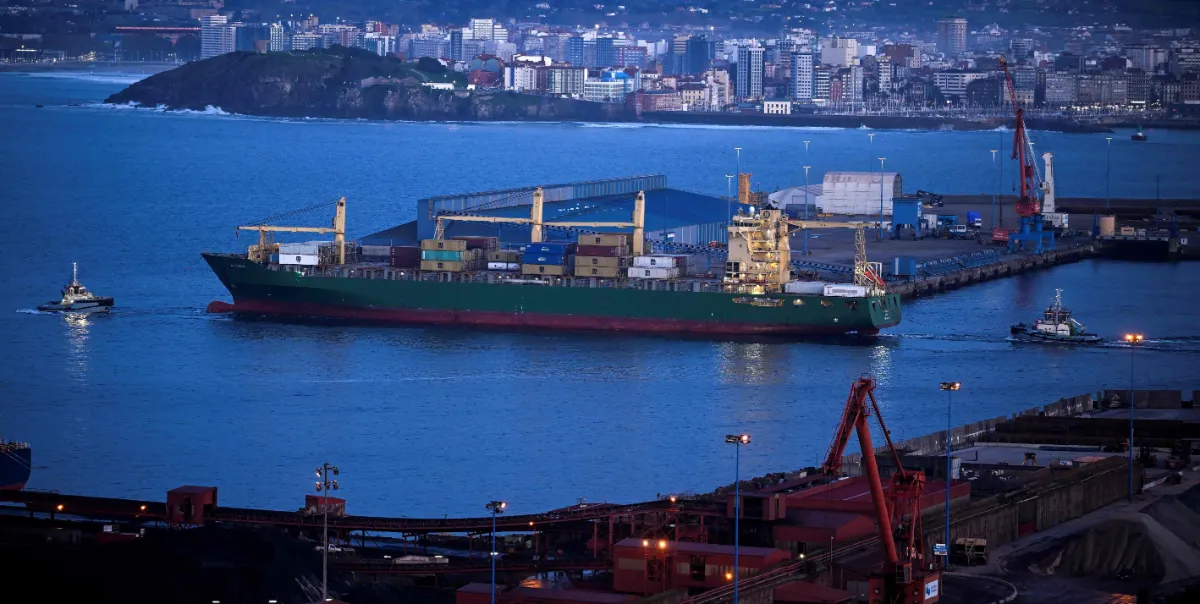
While January and February exports were strong (+15.2%), escalating geopolitical tensions in the Middle East – including supply disruptions from the closure of the Strait of Hormuz and recent attacks on oil and gas facilities across the Gulf states pose material near term risks to global trade flows.
UOB Global Economics and Markets Research, in a note, said the Middle East was Malaysia’s 10th largest export market in 2025, accounting for 3.4% of total shipments (Iran: 0.1%), with key exports comprising iron and steel, animal and vegetable oils and fats, aluminium, electrical machinery and equipment, coins, rubber, copper, and various chemical products.
The bank-backed research firm said Malaysia’s exports to Iran were concentrated in animal and vegetable oils and fats, man made staple fibres, and organic chemicals.
On the import side, the Middle East ranked as Malaysia’s sixth largest source in 2025 (5.1% of total imports), led by mineral fuels, plastics, organic chemicals, aluminium, edible fruits and nuts, ores, slag and ash, and machinery, including nuclear reactors and boilers. Imports from Iran were negligible at 0.02% of total imports.
“Specifically on oil, Malaysia relies on imported crude petroleum and refined oil products for (about) 34% of its oil sales, of which 70.9% for crude petroleum and 13.5% for refined oil products are imported from the Middle East,“ the firm said.
Exports grew for the third straight month but at a slower pace of 10.8% in February (down from 19.6% in January), missing expectations, while imports picked up to 8.2%, leading to a smaller trade surplus of RM16.7 billion compared to RM22 billion previously.
The growth was mainly driven by strong demand for electronics, especially from the AI boom, along with stronger mining exports, which helped offset a sharp drop in agriculture.
Without electronics, exports would have fallen, even as demand remained solid across major markets such as the US, Europe and China, UOB Global Economics and Markets Research said.
The research firm also noted Prime Minister Datuk Seri Anwar Ibrahim has assured that Malaysia’s petroleum product supplies are secured at least until May, while coordinated measures are in place to support supply continuity from Jun onwards, according to the country’s national oil company.
“Beyond energy, rising input costs and potential shortages of non oil and gas raw materials, such as fertilisers, are expected to weigh on export orders in the coming months,“ the research firm said.
The Strait of Hormuz handles roughly one third of the global fertiliser shipments of essential raw materials such as urea, sulfur, and ammonia, as well as a critical route for aluminium and sugar.
UOB Global Economics and Markets Research also noted that further pressure comes from the new US Section 301 tariff investigations covering 60 countries, including Malaysia.
It noted that the US Trade Representative will conduct hearings on these investigations from April 28 to May 1. The shift to Section 301 follows a recent US Supreme Court ruling that invalidated earlier tariffs imposed under the IEEPA (International Emergency Economic Powers Act), rendering the 2024 Reciprocal Trade Agreement between Malaysia and the US no longer applicable.
“Therefore, Malaysia remains exposed to potential US trade actions should Section 301 findings indicate breaches of US trade rules.
“Pending greater clarity on these developments, we maintain our 2026 full year export growth forecast at 2.5% for now, with risks tilted to the downside.
“Based on our simulation, every US$10/bbl increase in Brent crude prices will reduce Malaysia’s external trade by 0.7ppt. As of March 20, Brent crude price is trading at US$102.34/bbl, its highest level since mid-2022,“ the research firm said.
Source: The Sun
Share:

<p>Time: November 2025<br /> By: WTO and International Trade Group, Legal Department – VCCI</p>
