

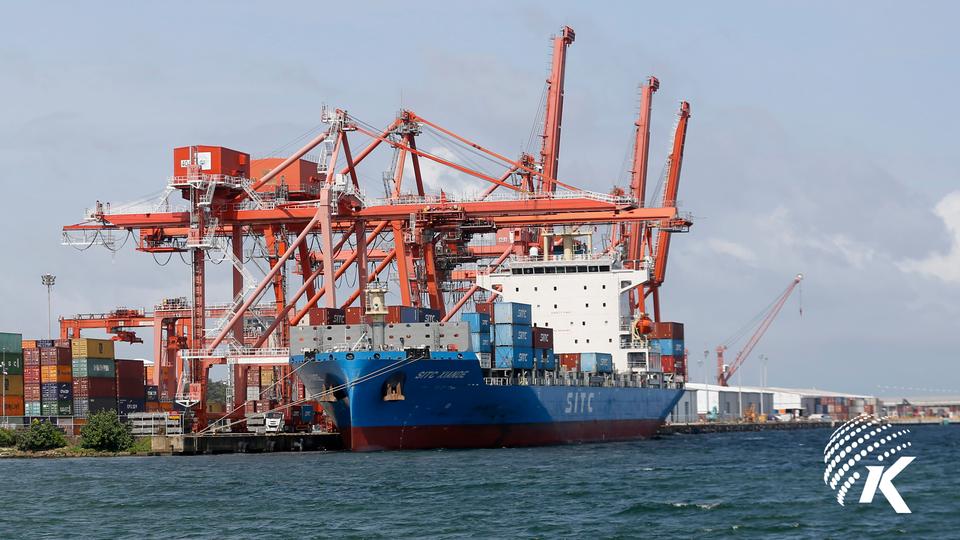
In this commentary, Arnaud Darc says Cambodia is not responsible for the global manufacturing overcapacity now under investigation by the US. But argues the probe exposes a deeper vulnerability: an export model heavily concentrated in a single market and a narrow set of products
The United States has placed Cambodia alongside China, the European Union, Japan and India in a sweeping investigation into global manufacturing overcapacity. On the surface, this looks odd. Cambodia is not a major industrial power.
Yet Cambodia’s presence on that list reveals something important, not about Washington’s trade policy, but about Cambodia’s own economic structure.
For three decades, Cambodia has built an export success story few developing economies can match. Factories producing garments, footwear and travel goods have transformed the country’s economy, drawing investment creating jobs and integrating Cambodia into global supply chains. Today more than 900,000 Cambodians work in export factories.
But this success rests on a model that carries an increasingly visible risk. Cambodia’s manufacturing platform is built on concentration.
Roughly 38 percent of the country’s exports are absorbed by a single market: the US. In 2024, Cambodia exported about $12.6 billion worth of goods to American buyers. Most of those exports come from three industries, garments, footwear and travel goods, which together account for more than half of the country’s export earnings.
This level of dependence is unusually high, even among comparable manufacturing economies. Bangladesh, a larger garment exporter, sent approximately 17 percent of its total exports to the US in 2024. Vietnam directed roughly 27 percent of its exports to the same market. Cambodia, with about 38 percent, is the most exposed of the three.
In effect, Cambodia has succeeded by becoming a highly efficient node in buyer driven global supply chains. International brands design and market products while Cambodian factories assemble them for export.
This model worked well in an era of expanding trade. But it leaves small manufacturing platforms exposed to shocks they neither cause nor control.
That is what the current US investigation illustrates.
The Section 301 probe launched on March 11 targets structural overcapacity in sectors such as steel and electric vehicles. Much of the concern centres on economies where industrial policy has expanded manufacturing capacity faster than global demand.
Cambodia does not fit that profile. Its factories operate largely as contract manufacturers within multinational supply chains rather than as state supported industrial champions.
Yet trade policy rarely distinguishes perfectly between causes and consequences. When large economies confront one another over industrial policy, the effects ripple outward through global supply networks. Smaller export platforms often find themselves caught in the crossfire.
The vulnerability here is structural rather than behavioural. Cambodia is not accused of distorting global markets. But because its economy depends so heavily on a single export channel, disruption to that channel carries outsized consequences.
For much of the past 30 years, globalisation rewarded specialisation. Countries like Cambodia focused on labour intensive manufacturing, while advanced economies concentrated on higher value sectors. Trade expanded, supply chains deepened and production networks stretched across continents.
That environment is now shifting.
Industrial policy has returned. Governments are increasingly concerned about supply chain resilience, domestic production capacity and geopolitical risk. Trade policy is becoming more interventionist, not less.
For economies built around contract manufacturing for global brands, this creates a new challenge. Their success depends on markets they do not control and policies they do not shape.
Cambodia’s response should begin with recognition rather than reassurance.
The country must demonstrate that its exports reflect genuine value added production rather than transshipment from elsewhere. Credibility on rules of origin will matter increasingly in future trade disputes.
But the larger adjustment is structural. Cambodia’s export model cannot rely indefinitely on a single dominant market and a narrow cluster of industries.
The investigation now underway in Washington will include consultations and hearings beginning on May 5. Cambodia will have an opportunity to explain that difference.
But the more important question lies beyond that hearing.
Cambodia did not create the trade tensions now reshaping the global economy. But small economies rarely get to choose the moment their structural assumptions are tested.
The investigation is a signal, not a verdict. The real test is whether Cambodia’s export economy is built for the trading system of the next 30 years, not the last.
Source: Kiri Post
Share:



<p>Time: November 2025<br /> By: WTO and International Trade Group, Legal Department – VCCI</p>
