

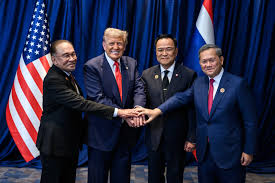
The landmark US Supreme Court ruling on February 20, 2026, has thrown Southeast Asian trade into a state of "strategic recalculation." By striking down the legal basis for broad reciprocal tariffs, the court forced ASEAN leaders to decide whether to cling to existing deals or wait for a new US policy to emerge.
Malaysia: Holding the line
Prime Minister Anwar Ibrahim is maintaining the Agreement on Reciprocal Trade (ART) signed in October 2025. Despite the court ruling, Malaysia views the 19% negotiated rate as a necessary shield against the even greater uncertainty of the new 15% global baseline tariff and potential future Section 301 investigations.
Indonesia: Treaty vs. volatility
Indonesia recently signed its "New Golden Age" pact on February 19, 2026. While some domestic critics argue the deal should be scrapped because it locks Indonesia into a 19% rate (higher than the current 15% US global baseline), the government in Jakarta is treating the treaty as a binding strategic alliance that transcends temporary shifts in US trade law.
Thailand: The pragmatic pivot
Commerce Minister Suphajee Suthumpun has taken a more cautious path. Thailand is monitoring the "checks and balances" in Washington and has assigned the Department of Trade Negotiations to conduct a full impact assessment. Suphajee’s strategy is to avoid rushing into a permanent deal while the US legal landscape remains in flux.
Viet Nam: The peace dividend
Viet Nam remains a unique outlier. Despite facing 20% tariffs and a massive trade surplus, it has avoided a formal trade deal. Instead, General Secretary To Lam has secured Viet Nam’s standing by joining the Gaza Peace Council as a founding member. This high level diplomatic "proximity" to the Trump administration serves as a buffer, protecting Vietnamese exports through political leverage rather than a rigid trade treaty.
Cambodia: The peace broker's leverage
Prime Minister Hun Manet has leveraged Cambodia’s role in the Kuala Lumpur Accord, the historic peace deal brokered by the US to end the border conflict with Thailand, to shield its economy. By positioning Cambodia as a key diplomatic partner in the region and even nominating the US President for the Nobel Peace Prize, Hun Manet has secured a "wait and see" status. Cambodia currently faces a 15% tariff baseline but remains exempt from the more aggressive reciprocal demands faced by its neighbors, using its diplomatic goodwill as an economic safeguard.
Source: Indonesia Business Post
Share:

<p>Time: November 2025<br /> By: WTO and International Trade Group, Legal Department – VCCI</p>
