

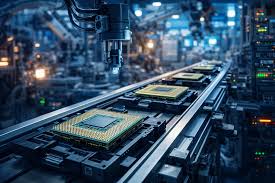
Indonesia is accelerating its "downstreaming" agenda through a new strategic partnership with India, focusing on the metals industry, semiconductor manufacturing, and AI infrastructure. The move signals a definitive shift from raw mineral exports toward the production of high-value capital goods and microchips.
Deputy Minister of Energy and Mineral Resources (ESDM) Yuliot Tanjung confirmed that the partnership will prioritize the development of industrial equipment and capital goods.
“Our next steps involve deep downstreaming in the metal sector, specifically for the production of equipment that can be developed locally,” Yuliot stated on Friday, February 27, 2026, following a series of high-level meetings with Indian officials, as quoted by Katadata.co.id.
The ‘silica-to-chip’ strategy
A key pillar of the discussions involves Indonesia’s vast reserves of silica sand, a primary raw material for silicon wafers used in semiconductor fabrication.
Deputy Minister of Communication and Digital Affairs Nezar Patria emphasized that Indonesia’s mineral wealth is the foundation for a national chip ecosystem.
“Silica sand represents a major potential that we must transform into high value-added products,” Nezar said on February 23, 2026.
To bridge the technology gap, Indonesia is courting major Indian industrial players:
Expanding collaboration with the ‘Ministry of Steel’
The bilateral cooperation was solidified during a meeting on February 24 between Yuliot and India’s Secretary General of the Ministry of Steel, Sandeep Poundrik.Key areas of the upcoming Memorandum of Understanding (MoU) include:
“India is expected to submit a draft MoU shortly. We will consult with the Ministry of Foreign Affairs, followed by a formal signing between our Minister of Energy and India’s Minister of Steel,” Yuliot added.
Strategic outlook
For international observers, this partnership represents a significant move within the "China Plus One" strategy. By aligning with India's "Make in India" initiative and Tata’s semiconductor ambitions, Indonesia aims to position itself as a secondary hub for global electronics supply chains, leveraging its domestic mineral security to attract high-tech Foreign Direct Investment (FDI).
Source: Indonesia Business Post
Share:



<p>Time: November 2025<br /> By: WTO and International Trade Group, Legal Department – VCCI</p>
