

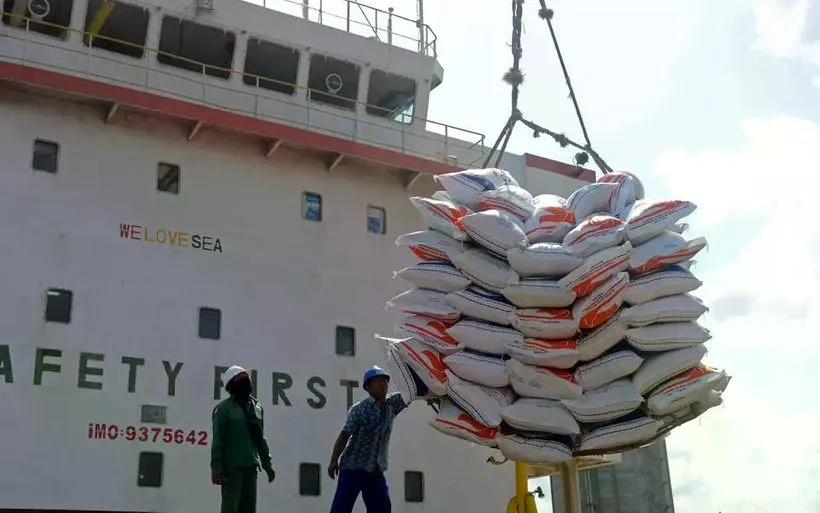
Indonesia has committed to purchasing at least 1,000 tons of US rice as part of a $4.5 billion import package of US agricultural products, including rice, wheat, soybeans, corn, and fresh fruit.
Indonesia will import a minimum of 1,000 tons of rice from the United States under the recently signed bilateral trade agreement, even though President Prabowo Subianto had previously pledged to stop importing the commodity and aim for complete self-sufficiency in domestic food supply.
According to the agreement, Indonesia committed to purchasing at least 1,000 tons of US rice as part of a $4.5 billion import package of US agricultural products, including rice, wheat, soybeans, corn, and fresh fruit.
This provision is part of the bilateral trade agreement recently signed by the two countries and contradicts President Prabowo's earlier statement that Indonesia had achieved rice self-sufficiency, banning the import of regular rice and tightening controls on businesses suspected of importing rice into the country.
The Indonesian government has reassured the public about the move, stating that the purchase of the rice from the US would not have a significant impact on the domestic market.
According to Haryo Limanseto, spokesperson for the Ministry of Economic Coordination, the 1,000 tons of rice purchased from the US accounts for only about 0.00003% of the country's total rice production, estimated at 34.69 million tons last year. Therefore, it will not affect the domestic market or the goal of food self-sufficiency.
In return, Indonesia enjoys significant tariff advantages when exporting to the US market.
Specifically, 172 food items from this country are subject to a 0% import tax, including key export products such as bananas, pineapples, mangoes, durian, coffee, tea, spices, as well as strategic items such as crude palm oil, palm kernel oil, cocoa, cassava, and processed sago flour.
Furthermore, the trade agreement between the two countries also includes a clause excluding Indonesia from violations if it fails to import the agreed-upon annual volume of US agricultural products, provided that Washington verifies this failure was not intentional.
According to Mr. Haryo, easing import permits for US agricultural products is expected to help Indonesian businesses access a more stable supply of raw materials to maintain production, thereby contributing to strengthening national food security.
Besides rice, several other items in the agreement, such as wheat and soybeans, are also considered important inputs for Indonesia's food industry.
Source: VTV
Share:


<p>Time: November 2025<br /> By: WTO and International Trade Group, Legal Department – VCCI</p>
