

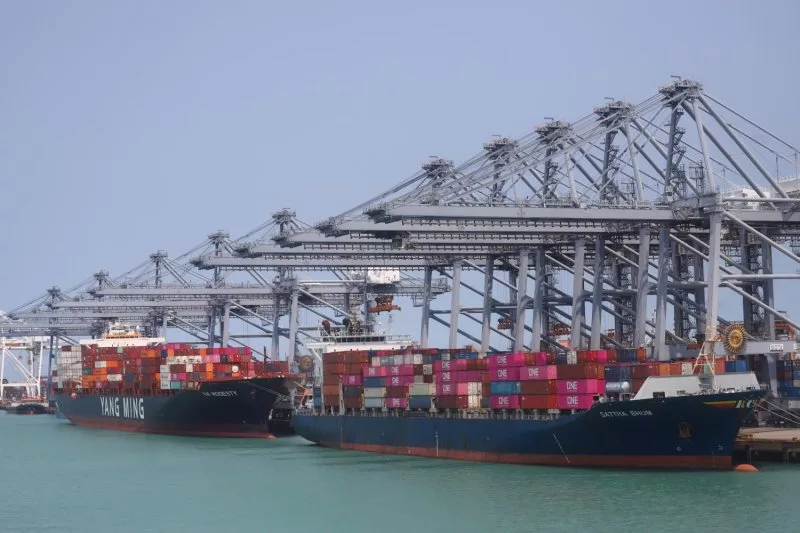
European measure accelerates shifts in corporate strategy, regulation and long-term planning
The European Union's Carbon Border Adjustment Mechanism (CBAM) is sending ripples of concern throughout global trade, unsettling exporters of certain products while raising broader questions about its long‑term impact on industries not yet covered by the measure.
More than a tariff, CBAM represents a new kind of regulatory frontier -- one that forces businesses to reckon with the environmental cost of their operations.
In Thailand, analysts and business leaders have been debating the implications since last year. Some warn the mechanism will reshape not only profit margins, but also the very way companies conduct business.
The conversation has shifted from short‑term calculations of exports and revenues to deeper reflections on sustainability, competitiveness and survival in a carbon‑conscious world.
This shift underscores a growing urgency: businesses must pay closer attention to the environmental dimensions of their products and services.
For the Thai government, the push towards a climate change law is not only about achieving its net-zero target, but also about aligning with international efforts to curb the increasingly severe natural disasters linked to global warming.
NEW CALCULATION
CBAM is forcing Thai businesses to adopt a new calculation that goes beyond profits and losses, requiring them to measure and disclose their carbon footprints, said Treethep Palakavong Na Ayudhya, chief executive of Global Carbon Corporation, a local greenhouse gas management consultancy.
The mechanism is a non-tariff barrier that applies to products with high carbon emissions during production. The initial list covers iron and steel, aluminium, cement, fertiliser, electricity and hydrogen.
From 2026, importers must disclose the greenhouse gas emissions associated with their products and purchase CBAM certificates to offset them, meaning they will have to pay levies if their production processes emit carbon dioxide.
Analysts at Kasikorn Research Center estimate CBAM will affect 3.8% of Thailand's exports to the EU in 2026, valued at roughly 28 billion baht.
Iron, steel and aluminium are expected to face the earliest and most direct impact. In 2024, Thailand exported iron and steel worth US$95.1 million to the EU, while aluminium shipments totalled $56.7 million.
CBAM initially focuses on large industries, and the capital and personnel resources required should not exceed the capabilities of those companies.
Yet analysts warn enforcement will eventually expand across a wider range of businesses and spread to other regions, particularly developed countries such as Japan and Australia. This will require more businesses to calculate their CO2 emissions, which will become part of their operating costs.
Carbon footprint calculations will not be limited to original equipment manufacturers or auto and electronic parts makers. Even small businesses will be required to examine their emissions, said Mr Treethep.
Investment in carbon reduction technology, once voluntary, will become essential.
Growing awareness of global warming among the public is also driving change, he said.
Climate change awareness is making people more conscious of the greenhouse gases released during their daily lives through consumption, travel and other activities.
The most significant greenhouse gases include CO2 from burning fossil fuels, deforestation and industrial processes; methane from livestock farming, rice cultivation and decomposing organic matter in landfills; and fluorinated gases used in refrigeration and air conditioning.
Campaigns promoting reforestation, garbage separation and recycling and rooftop solar panel installation are aimed at reducing greenhouse gas emissions.
"But some scientists argue these activities often promote the image of rak lok, or earth conservation, without setting clear goals," said Mr Treethep, adding a more serious assessment and calculation of their impact on emissions is required.
LEGAL TOOL
Thailand is turning to a new legal tool -- the climate change bill -- to strengthen its efforts to curb greenhouse gas emissions and reshape the business landscape, he said.
The legislation, approved by the cabinet on Dec 2, 2025, will be Thailand's first legal framework addressing greenhouse gas emissions reporting, financial support for measures that combat global warming, and the application of the polluter‑pays principle, said Mr Treethep.
According to the bill, authorities plan to introduce a carbon tax on certain products, to be collected by the Excise and Customs departments. Subordinate laws are to be drafted to determine rates and methods consistent with fiscal discipline.
Another legal tool is the implementation of an Emissions Trading System (ETS), widely known as cap and trade.
Under an ETS, the government sets a limit on the amount of greenhouse gases that can be emitted by specific industries. If a company emits less than its limit, it can sell its remaining allowances for a profit.
Other measures in the bill include the establishment of a climate fund, with revenue from various carbon‑related instruments to support investment and climate adaptation across different sectors.
The law also paves the way for the creation of a national greenhouse gas database, along with reduction and national adaptation plans to ensure all government agencies work towards the same goal.
Penalties are included to add teeth to the law, targeting organisations that fail to report emissions or provide false information.
The bill calls for the creation of four panels, led by the National Climate Change Policy Committee, which would determine strategies, goals and Thailand's stance in international forums.
Sponsorship from developed countries in Thailand's efforts to fight global warming is crucial, said Mr Treethep.
"Authorities can earn financial support from the international community to support measures dealing with the impact of global warming," he said.
DISASTER-PRONE
Thailand's growing fear of disasters reflects the reality that climate change is a pressing threat to lives, businesses and the economy, said Mr Treethep.
"Over the past two years, disasters have struck all regions of Thailand, from the northernmost province of Chiang Rai to the Deep South, with Hat Yai inundated last November," he said.
Hat Yai, the main economic district of Songkhla province, recorded a record 630 millimetres of rainfall in just 72 hours, according to media reports.
The high-intensity downpour -- an event estimated to occur once every 300 years -- devastated businesses within hours.
The government was financially affected, as it has spent several billion baht on recovery and rehabilitation efforts.
"The flooding in Hat Yai underscored the escalating impact of climate change," said Phirun Saiyasitpanich, director‑general of the Department of Climate Change and Environment.
Thailand climbed to 17th among nations most at risk from extreme weather, according to the 2026 Climate Risk Index (CRI), released late last year by Germanwatch, a non-profit organisation advocating for sustainable global development.
Thailand jumped from 72nd in 2022 to 17th in 2026, reflecting a sharp rise in vulnerability.
Long-term risk has also worsened, with Thailand now ranked 22nd, up from 30th in the previous index.
The CRI, compiled from international data spanning 1995-2024, recorded more than 9,700 extreme weather events globally, affecting nearly 5.7 billion people and causing more than 832,000 deaths.
Heatwaves and storms accounted for 66% of fatalities, while economic losses exceeded $4.5 trillion, or 144 trillion baht.
Thailand is developing a domestic CRI to guide provincial planning, in addition to pushing forward the climate change bill to reinforce long‑term adaptive capacity, said Mr Phirun.
The findings have prompted accelerated upgrades to early warning systems and an emphasis on a more integrated resilience framework, he said.
Source: Bangkok Post
Share:



<p>Time: November 2025<br /> By: WTO and International Trade Group, Legal Department – VCCI</p>
