

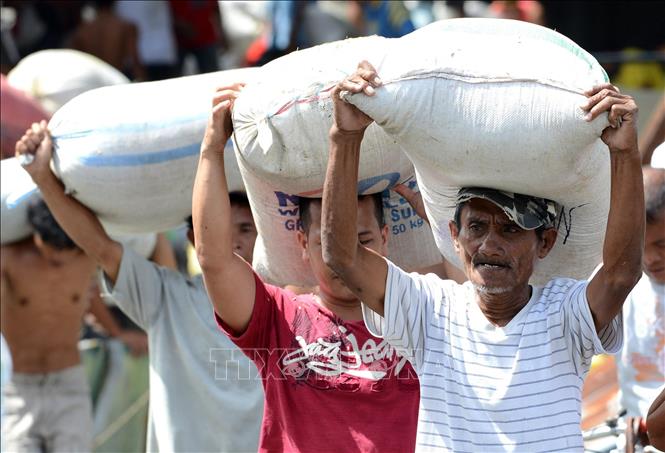
The Philippine Department of Agriculture said that approximately 300,000 tons of imported rice must be brought into the country by February 28 at the latest, otherwise late shipments will be forced to return to the exporting country.
According to the Vietnam News Agency correspondent in Southeast Asia, speaking to the press on January 22, Assistant Minister of Agriculture Arnel de Mesa said that imported rice needs to arrive at ports before the aforementioned deadline to avoid overlapping with the peak rice harvest season in the country in March and April.
Mr. De Mesa emphasized: "Imported rice must arrive before the end of February so as not to affect the peak harvest in March and April." According to him, this measure aims to ensure that imports do not significantly negatively impact domestic rice production, which peaks during the main harvest season.
Imported rice shipments arriving after the stipulated deadline will not be cleared through customs and must be returned to the exporting country, with all costs borne by the importing company.
This move comes after the Philippines lifted its four-month ban on rice imports, which began last September, officially marking its return to the international rice market earlier this year.
Earlier, Agriculture Secretary Francisco Tiu Laurel worked with stakeholders and secured commitments from traders to continue purchasing rice from farmers at a minimum price of 17 pesos/kg (US$0.29/kg) for fresh rice and 21 pesos (US$0.36)/kg for dry rice, depending on quality.
Minister Tiu Laurel stated that the Philippines aims to prevent a sharp drop in rice prices at the farm gate during the peak harvest season. He said, “Farmers’ rice prices are non-negotiable. Regardless of the agreed import level, farmers must be protected.”
Harvesting has already begun in some areas such as Nueva Ecija and Nueva Vizcaya, while Pangasinan, Ilocos, Bulacan, and La Union provinces are expected to start harvesting next month. A large harvest is projected to begin in mid-March, with milling activity continuing to increase sharply in April. In this context, the Philippine Department of Agriculture has stated it will closely regulate rice imports to stabilize supply without harming farmgate prices.
According to Minister Tiu Laurel, the initial import volume of approximately 300,000 tons for February is still under review and may be adjusted depending on market developments.
According to the latest figures, as of mid-January, approximately 178,000 tons of imported rice had arrived at Philippine ports. With the resumption of rice imports, Mr. De Mesa predicts that rice prices will tend to rise, mainly due to the weakening peso against the US dollar. “Rice prices will increase slightly, but not significantly, because production in India and Vietnam is good, even reaching record harvest levels,” he said.
According to the latest price monitoring report from the Philippine Department of Agriculture, imported milled rice is currently priced at 42 pesos/kg, up from 40 pesos/kg at the end of last year, while imported finely milled rice has decreased from 45 pesos/kg to 44 pesos/kg during the same period.
Source: Tin Tuc News
Share:



<p>Time: November 2025<br /> By: WTO and International Trade Group, Legal Department – VCCI</p>
