

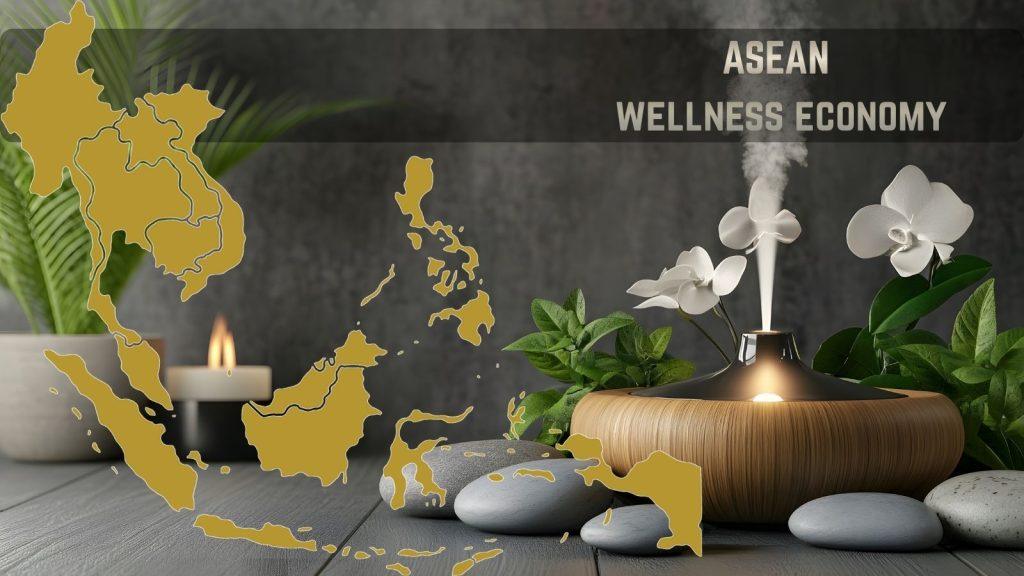
The ASEAN wellness economy shows uneven but resilient growth, with Malaysia, Thailand, Indonesia, and the Philippines shaping a diversified regional landscape across tourism, lifestyle, and health sectors.
The ASEAN wellness economy forms a strategically important sub-region within Asia-Pacific, combining large populations, rising middle-income consumption, and strong links between wellness, tourism, and urban development. In 2024, ASEAN markets collectively represented a wellness economy exceeding US$177 billion, based on aggregated country data from the Global Wellness Institute.
Within ASEAN, Malaysia leads in relative economic penetration, with wellness accounting for 7.57% of national GDP, while ranking 10th in Asia-Pacific by total market size. Its strength lies in personal care and beauty, healthy eating, wellness tourism, and fast-growing wellness real estate, reflecting a balanced domestic-and-export model.
Thailand, by contrast, is more heavily weighted toward wellness tourism and spas, supported by long-established hospitality infrastructure and strong inbound demand. While Thailand’s total wellness economy (US$42.7 billion in 2024) exceeds Malaysia in absolute size, wellness contributes a lower share to national GDP, indicating a stronger dependence on international travel flows within its wellness model.
Indonesia represents the largest ASEAN market by population, with a wellness economy of approximately US$55.8 billion in 2024. Growth is primarily driven by personal care, physical activity, and traditional and complementary medicine, supported by domestic demand rather than inbound tourism. Indonesia’s scale positions it as a long-term volume market rather than a high per-capita wellness destination.
The Philippines shows a smaller but increasingly diversified wellness economy, valued at US$47.3 billion in 2024. Consumption is concentrated in personal care, nutrition, and physical activity, while wellness tourism remains comparatively underdeveloped, suggesting future upside as infrastructure and accessibility improve.
Across ASEAN, per capita wellness spending remains below North American and European benchmarks, but growth rates consistently outpace global GDP expansion. The ASEAN wellness economy is therefore characterised by structural diversity: Malaysia demonstrates policy-aligned integration, Thailand leverages destination wellness tourism, Indonesia scales domestic consumption, and the Philippines advances gradual sector diversification.
For travel, hospitality, and real-estate stakeholders, ASEAN functions less as a single wellness market and more as a portfolio of differentiated national models, each responding to local demographics, health systems, tourism maturity, and investment frameworks. This diversity underpins ASEAN’s resilience within the broader Asia-Pacific wellness economy and reinforces its relevance in medium-term regional planning.
Source: Travel Daily News
Share:


<p>Time: November 2025<br /> By: WTO and International Trade Group, Legal Department – VCCI</p>
