

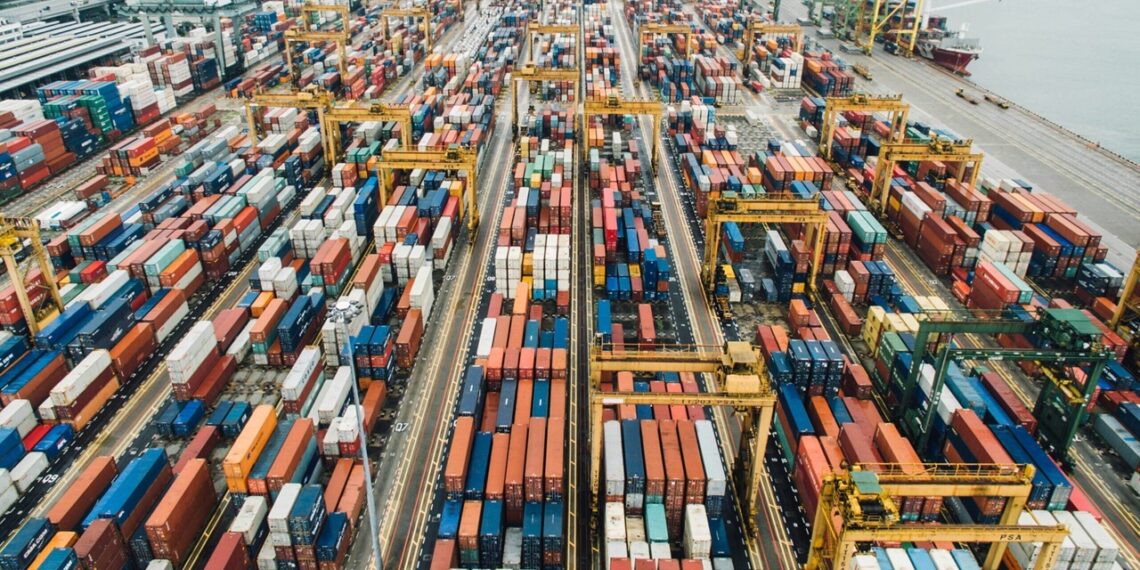
GLOBAL trade has deteriorated sharply due to a surge in trade tariffs and the shipping diversion from the Red Sea continuing to weigh down on global trade, especially the Asia-Europe routes.
The diversion from the Suez Canal to the Cape of Good Hope has resulted in longer voyages for the Asia-Europe route, reducing the frequency of calls that shipping lines could make at WPRTS’s ports as well all other ports in the region.
“The WTO in October 2025 cut its projection for 2026 global merchandise trade volume growth to 0.5% (from 1.8%) quoting surge in trade tariffs and potential escalation of Middle-East conflicts,” said Kenanga.
In the latest announcement, high tariff levels remain central, but tariff rates and scopes are being adjusted through ongoing trade talks and reciprocal trade frameworks.
This approach aims to boost U.S. industry and balance trade, but creates uncertainty in markets and mixed reactions internationally.
Closer to home, the WTO cited an emerging trend of connecting economies or countries that benefited from the trade diversion on US-China trade tensions.
Malaysia, Singapore, India and Viet Nam’s growth are surging due to their emerging role as “connecting” economies, trading across geopolitical blocs, thereby potentially mitigating the risk of trade fragmentation.
Based on the latest Malaysia’s external trade in October, exports to the US fell by 2.6% year-on-year (YoY) amid higher US tariff.
However, the US remained Malaysia’s second largest export destination behind Singapore during the month.
“We expect domestic logistic sector growth to remain steady going into 2026, which is a beneficiary of the booming e-commerce, supported by the global tech up-cycle led by AI demand, a resilient US economy, and potential trade diversion amid US-China trade tensions,” said Kenanga.
Presently, the US is now Malaysia’s third largest export destination (after Singapore and China) as higher US tariff kicks in.
Kenanga believes that Malaysia will benefit from the trade diversion as the global trade reposition itself around the higher US tariff barriers.
Note that, during the 12-month period for the trade war from Feb 2018, we saw local listed port operators’ share prices trading sideways except for BIPORT which took a dive due to its largest exposure to China, its biggest LNG export market.
China, the biggest export destination for Malaysia in 2019−2022 (Singapore took first place starting 2022), saw a double whammy (US tariff hike and ports closure due to the pandemic lockdown).
Overall, Malaysian ports’ container growth volume is expected to remain in low single-digit growth, partially benefitting from the potential trade diversion amid US-China trade tensions while the biggest beneficiary in the long-run could be BIPORT due to its largest exposure to China as its biggest LNG export market. Kenanga maintains NEUTRAL on the sector.
Source: Focus Malaysia
Share:

<p>Time: November 2025<br /> By: WTO and International Trade Group, Legal Department – VCCI</p>
