

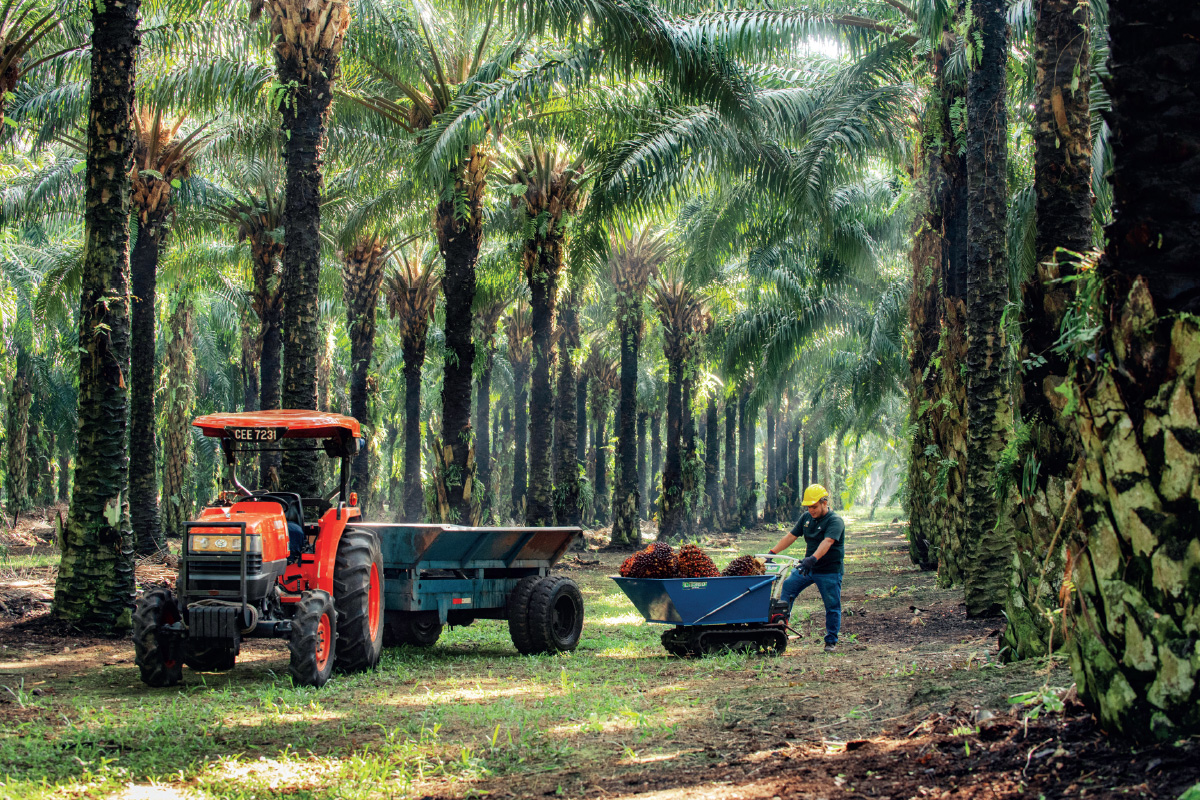
The Malaysian palm oil industry has a unique opportunity to decarbonise and turn these actions into a revenue stream via the carbon markets. This would enable industry players to contribute to global climate mitigation, while providing a much-needed boost for the emerging technologies and solutions to be implemented.
Carbon markets facilitate the trading of carbon credits. Each carbon credit represents one tonne of carbon dioxide or its equivalent in greenhouse gas (GHG) removed, reduced or avoided. Entities seeking to offset their emissions do so by purchasing these credits.
The role of carbon markets in the global transition towards net zero emissions is increasingly important, and various efforts are ongoing in the global and national levels to establish robust governance and trading mechanisms.
Negotiations under Article 6 of the Paris Agreement at the United Nations Conference of Parties to allow country-to-country transfer of carbon credits, for instance, are advancing. In the past year, Malaysia signed memorandums of understanding with South Korea and Singapore to explore such collaborations.
Additionally, the International Civil Aviation Organization (ICAO) has developed the Carbon Offsetting and Reduction Scheme for International Aviation (CORSIA), mandating airlines to reduce or offset emissions with high-quality carbon credits.
Domestically, Bursa Malaysia Bhd established the Bursa Carbon Exchange in 2022, which is the world’s first shariah-compliant carbon exchange. Regionally, the Asean Common Carbon Framework was launched last year, comprising major industry players and associations that are potential buyers and generators of carbon credits, to explore a unified carbon market for Southeast Asia.
Many available decarbonisation solutions
There are multiple ways for the Malaysian palm oil industry to benefit from these developments.
It is the biggest plantation industry in Malaysia, contributing 3% to the nation’s gross domestic product. According to the Malaysian Palm Oil Council’s (MPOC)’s previously released Towards Net-Zero Emissions Report (2024), jointly produced with Swinburne University of Technology Sarawak Campus, the biggest source of emissions comes from palm oil mill effluent (POME) degradation, followed by biomass degradation and energy consumption at the mill.
Various decarbonisation solutions are already adopted, including mulching of oil palm fronds, using palm mesocarp fibre and palm kernel shells (PKS) in combined heat and power systems, POME anaerobic digestion to generate biogas and energy, and direct co-firing of PKS in coal power plants.
Yet many decarbonisation solutions remain within reach, and some of these could be utilised to generate carbon credits, allowing plantation owners to earn extra revenue.
Initial findings from a soon-to-be-completed joint study by MPOC, Swinburne University, and Sunway University on voluntary carbon markets (VCMs) finds that several technology-based solution decarbonisation pathways, particularly direct biomass combustion in combined heat and power systems, biomass briquetting and pelletisation, are some of the most cost-effective carbon abatement potentials.
Another example is biochar, generated from pyrolysis of empty fruit bunches, which permanently stores carbon. It can be used by farmers to improve soil quality — thus avoiding as much use of chemical fertilisers — and removes carbon by storing it in the ground. Although the production cost is high (estimated at between US$52 and US$113/t CO-eq), biochar production fetches a premium price on the carbon market.
Demand for biochar carbon credits in VCMs globally has been increasing in recent years, driven by interest from big technology companies such as Google and Microsoft.
Earlier this year, Google signed its largest-ever biochar carbon removal agreement with India’s Varaha and the US’ Charm Industrial, to purchase a total of 200,000 tonnes of carbon credits by 2030.
These solutions can accelerate the industry’s push towards net zero emissions, and the revenues generated from the sales of carbon credits could support the development of emerging technologies.
Of course, to generate high-quality carbon credits accepted by global markets, project operators must abide by the standards of major carbon credit verification companies, such as Verra and Gold Standard, and the requirements of CORSIA, if they choose to tap that market.
The Core Carbon Principles by the Integrity Council for the Voluntary Carbon Market, which is a multi-stakeholder led governance body, could be referred to as a benchmark for high-quality carbon credits.
Leveraging demand for carbon credits
According to the United Nations (UN) Environment Programme’s Emissions Gap Report 2025, even if all the climate targets (in the form of nationally determined contributions submitted to the UN) are fully implemented, global average temperatures are still expected to rise by 2.5°C over this century.
Reductions of annual emissions of 35% and 55%, compared with 2019 levels, are needed by 2035 to align with the Paris Agreement goal to limit warming to below 2°C and 1.5°C.
Clearly, more action is needed to decarbonise and more support has to be given to emerging technologies and solutions. The report, in fact, highlights the significant upfront investments required for the technologies as a hurdle.
Carbon markets could provide financial support to bridge this gap, while also helping companies, especially those in hard-to-abate sectors, achieve their net zero targets.
According to Accenture’s Destination Net Zero 2025 report in November 2025, a steadily increasing number of companies are setting net zero targets, encompassing Scope 1, 2 and 3 emissions.
To help the palm oil industry to quantify and reduce emissions, the Malaysian Sustainable Palm Oil scheme has introduced a GHG calculator.
To accelerate progress in this area, MPOC’s VCM joint study, now in its final stages, also recommends the prioritisation of early mover pilot projects in POME biogas, biochar and briquetting, supported by stronger monitoring, reporting, and verification capacity and clearer guidance on additionality and regulatory surplus.
As 2050 — the net zero emissions deadline set by many countries, including Malaysia, and companies — draws near, the demand for carbon credits could increase. These are developments that could drive the demand for carbon credits going forward. The Malaysian palm oil industry is in a good position to leverage this demand and contribute to global decarbonisation efforts in a sustainable manner.
Source: The Edge Malaysia
Share:



<p>Time: November 2025<br /> By: WTO and International Trade Group, Legal Department – VCCI</p>
