

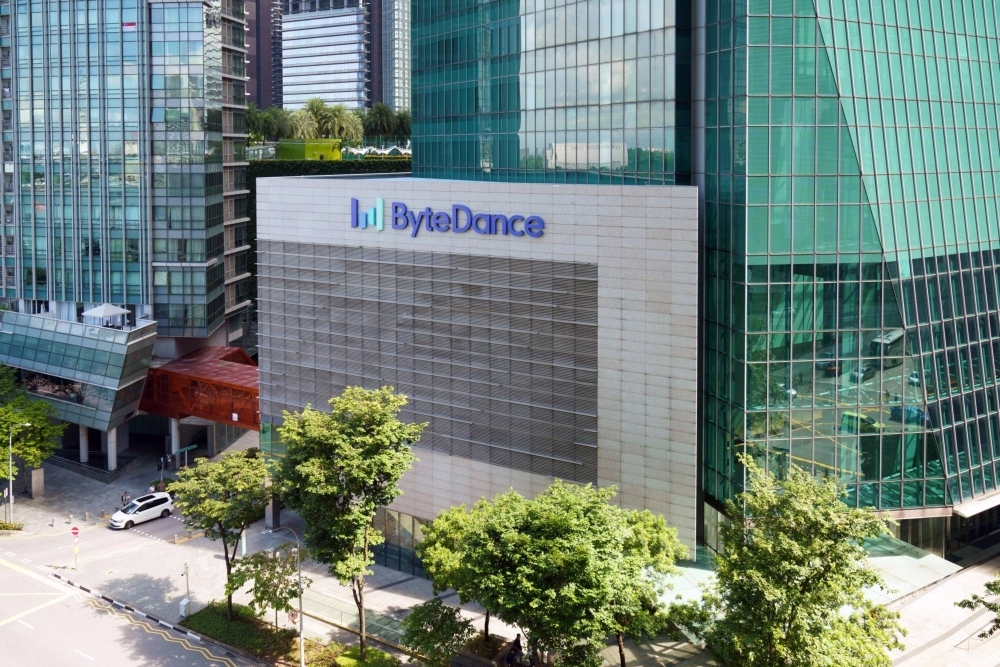
Increasingly more countries are getting caught up in the geopolitical and geo-economic tussle between the United States and China — in most cases by accident and, in a few others, by choice.
Based on the recent drama surrounding the probe in the U.S. into the social media TikTok, it is becoming apparent that Singapore is inserting itself in the crossfire.
In late January, the U.S. Senate Judiciary Committee questioned Shou Zi Chew, CEO of TikTok, about his allegiances, the platform's practices and its connections to the Chinese Communist Party. Chew dismissed any connections to China's ruling party, citing his Singaporean citizenship. He even referenced his service in the Singaporean military.
However, do these facts negate the possibility that the CCP is influencing TikTok? Until recently, staffers at parent company ByteDance in China had access to data from TikTok users around the world.
At the crux of the issue is the question: Is TikTok a Chinese or Singaporean company?
The answer is that TikTok is as Singaporean as Starbucks, Google, Facebook or Apple are Irish.
Companies taking domicile in tax havens to avoid what they deem as excessive taxes elsewhere is not a new phenomenon. However, foreign companies registering offshore to avoid scrutiny, tariffs and sanctions is a recent trend, emerging largely in response to Washington’s targeting of Chinese enterprises deemed to be national security risks or serious human rights violators.
Earlier this month, Bloomberg reported on the largest-ever catch of laundered money and artifacts in Singapore, valued at over $2.8 billion. Interestingly, all of the accused were from mainland China.
While Singapore is no stranger to serving as a hub for money laundering, it is increasingly becoming a gateway into the U.S. for Chinese companies. The city-state is also becoming a haven for Chinese enterprises that are under investigation or deemed national security threats by Washington. Around 500 firms, including Shein, Nio and TikTok, have registered in Singapore over the last few years.
The phenomenon has become so pervasive that in the private equity and asset management industries it is often characterized as “Singapore-washing” — whereby Chinese firms relocate their headquarters or parent companies to mitigate the geopolitical risks and scrutiny they face at home.
It is no secret that Chinese companies use third countries that have free trade agreements with the U.S. to circumvent trade restrictions and even capitalize on subsidies offered under American industrial policies, such as the Inflation Reduction Act.
As I wrote in The Japan Times last year, China has mastered the practice of routing through third countries that have strong economic ties or are part of economic blocs with the U.S., including Mexico, South Korea and Morocco.
Chinese companies' relative success in routing trade flows in this way or operating by proxy through offshore accounts has largely been facilitated or advocated for by three types of American organizations: industry associations, lobbying firms and manufacturers with dependencies on Chinese parts.
For example, in the U.S., the Biden administration’s decision to lift a ban on solar panel imports from Cambodia, Malaysia, Thailand and Vietnam was criticized by Republicans for the perceived softening of its position toward China — but was backed by industry associations. Abigail Ross Hopper, president of the Solar Energy Industries Association in the U.S., spoke of President Joe Biden's decision to lift the tariffs as "a much-needed reprieve from this industry-crushing probe."
Automakers from Ford and Chrysler to Tesla have all faced scrutiny for their reliance on Chinese parts. There are several instances of U.S. and Western companies, particularly auto ones, finding roundabout ways to work with Chinese manufacturers, therefore enabling their deceptive trade practices. Examples include a battery manufacturing deal between Ford and Chinese battery maker Contemporary Amperex Technology, a proposed battery plant by another Chinese battery maker, Gotion, in Michigan — which faced protests — and, more recently, Tesla boss Elon Musk inviting Chinese manufacturers to set up shop in Mexico and Volkswagen facing scrutiny for sourcing parts manufactured using forced labor in Xinjiang.
In the case of TikTok, it is K Street, Washington’s premier lobbying firms, giving it the proverbial nine lives. While the social media is banned in China, India and a few other countries, with lawmakers in yet others expressing national security concerns, the firm has found a way out. Plus, diplomats of third nations, such as Singapore’s ambassador to the U.S., Lui Tuck Yew, are beginning to speak on behalf of Chinese companies.
The ambassador dismissed American lawmakers' line of questioning at the Senate hearing as ignorant, deflecting from the fact that Singapore is playing the role of go-between for several Chinese enterprises. Furthermore, by labeling it as a race issue, netizens in Singapore and progressives in the U.S. have shifted attention away from the issue of Beijing potentially accessing TikTok data and influencing its users.
The social media company has spent over $13 million in lobbying in Washington to promote its interests, according to OpenSecrets, a nonprofit research organization.
While Singapore is not alone in playing intermediary to Chinese companies, it is the sheer number of companies in question, their size and the Singaporean government's recent decision to step in by criticizing the U.S. — expressing concerns over its image and the way it is perceived globally — that make it stand out.
Singapore should be concerned, but about developing an image as a haven for money launderers and companies sanctioned for human rights violations. Furthermore, like other American partners in Asia, it has strong economic linkages with China as well as deep military ties with the U.S. It would be wise not to sabotage one for the other — signaling which side it chooses in this cold war.
Alternatively, Singapore should clamp down on Chinese companies using it as a gateway to the American and other markets. If not, its reputation as a trusted financial and trade hub could be in jeopardy. In late 2023, a money laundering case involving Chinese nationals spurred a review of the island nation’s finance laws, with its parliament vowing to reform legal frameworks. Singapore should adopt a similar approach to Chinese enterprises.
Every time the U.S. puts up a tall fence, the CCP finds a taller ladder — often supported by America’s own firms and partners. Singapore would be better served by not becoming the rungs of this ladder.
Source:Japan Times
Share:
<p>Time: November 2025<br /> By: WTO and International Trade Group, Legal Department – VCCI</p>
