


Asean is now the third largest economy in Asia (in terms of 2020 GDP $2.9 trillion) after China ($15.5 trillion) and Japan ($5.1 trillion) and one estimate suggests that by 2030, it can become the fifth largest economy in the world.
It is also home to some of the world’s fastest-growing markets, with rapidly rising middle class and established manufacturing base that will continue to drive growth in consumption and investment in the coming years.
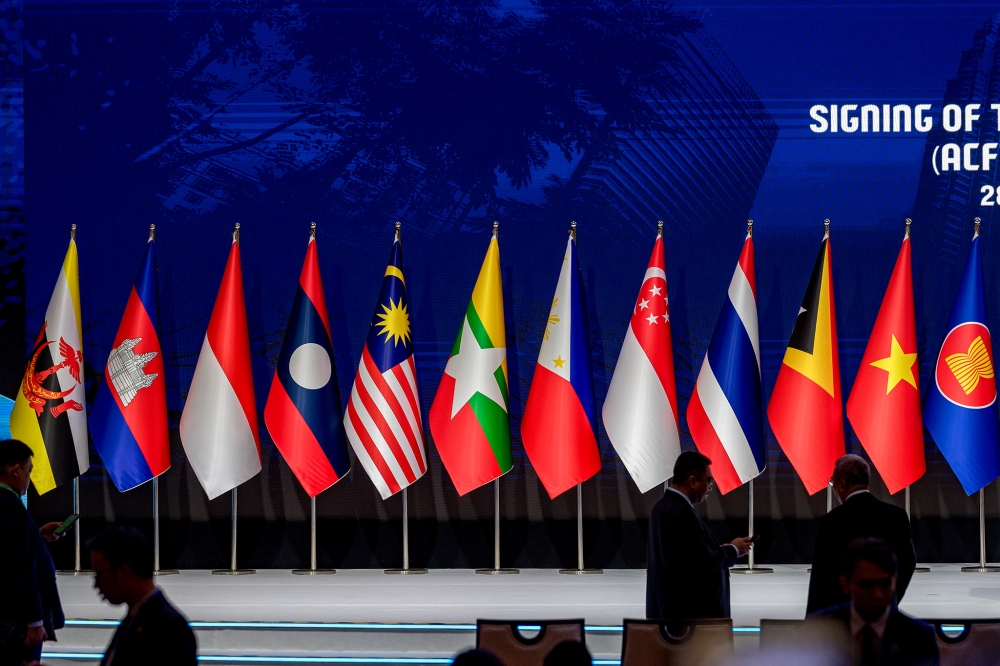
The launching of the ASEAN Economic Community (AEC) on December 31, 2015, is hailed as the biggest step towards the economic integration of the 10-member regional grouping and in a short span of time, it has achieved a lot towards the goal despite facing stiff challenges in the form of non-tariff barriers.
Asean is now the third largest economy in Asia (in terms of 2020 GDP $2.9 trillion) after China ($15.5 trillion) and Japan ($5.1 trillion) and one estimate suggests that by 2030, it can become the fifth largest economy in the world, according to the Economic Research Institute for ASEAN and East Asia (ERIA).
Asean is also home to some of the world’s fastest-growing markets, with rapidly rising middle class and established manufacturing base that will continue to drive growth in consumption and investment in the coming years.
Asean’s average economic growth of 4.6 percent over the last decade (2010-2020) exceeds the global average of 3.1 percent. In 2022, despite current global uncertainties and geopolitical tensions, growth of 4.9 percent in the region is expected to outpace the world economic growth of 3.2 percent and that of emerging and developing Asia’s 4.4 percent.
Asean’s average economic growth of 4.6 percent over the last decade (2010-2020) exceeds the global average of 3.1 percent.
This growth momentum has been largely facilitated by AEC which envisions Asean as a single market and production base, a highly competitive region, with equitable economic development, and fully integrated into the global economy.
The history of AEC can be traced back as far as 1992 when the Asean leaders mandated the creation of the ASEAN Free Trade Area (AFTA). Since then, efforts were intensified to broaden the region’s economic potential. The adoption of ASEAN Vision 2020 by the leaders in 1997 has further envisaged the grouping as a highly competitive region with a free flow of goods, services, investment, a freer flow of capital, equitable economic development and reduced poverty and socio-economic disparities.
In 1998, the leaders adopted the Hanoi Plan of Action (HPA). It chartered out a set of initiatives for economic integration to realize the ASEAN Vision 2020. The AEC Blueprint 2015 was adopted in 2007 as a coherent master plan guiding the establishment of the AEC in 2015.
Immediately after that, a new AEC Blueprint 2025 was developed to set the strategic directions for the next phase of Asean’s economic integration agenda. The AEC Blueprint 2025 is envisaged to further deepen economic integration and achieve a more integrated economic community with the following characteristics — A Highly Integrated and Cohesive Economy; A Competitive, Innovative and Dynamic ASEAN; Enhanced Connectivity and Sectoral Cooperation; A Resilient, Inclusive, People-Oriented and People-Centred ASEAN, and a Global ASEAN.
Aladdin D Rillo, Senior Economic Advisor with ERIA, told Khmer Times that the Asean model of economic integration is a unique model and it is different from the European Union (EU), in the sense that the ultimate goal of AEC is to create a single integrated market with free flow of goods, services, capital and labour, but not a monetary union.
“Asean takes a unique approach to regional economic integration, which while slower in terms of pace, is more sustained in terms of political dynamics. What is expected in the medium- to long-term is deeper and integrated markets with an advanced level of trade and financial integration, greater connectivity with extensive infrastructure networks and harmonized regulations, and greater market efficiency and contestability with a significant reduction in trade costs,” Aladdin said.
According to him, the Asean economic integration has deepened over years as evident in the ability of the region to achieve greater competition and market contestability despite the different levels of economic development among the Member States.
“In terms of competition, tariffs on 98 percent of goods traded are almost eliminated, while significant improvements in standards, trade facilitation and competition network have been achieved. Market efficiency in the region has also been strengthened by improving transparency wherein information is transmitted perfectly, completely and instantly for no cost,” he noted.
Under the AEC, various agreements that enhance the region’s rules-making process across different sectors of the economy — from trade to finance, agriculture, energy, transport and MSMEs have also been put in place. For example, Asean is committed to putting in place sound regulatory practices in the region, where countries are encouraged to address regulatory barriers and ensure that national policies are aligned with regional priorities to facilitate trade and investment.
Asean recognizes that achieving an integrated market is not easy, given the dynamism of the markets as well as the increasing geopolitical tensions and social challenges in the region. That is why an integral part of market integration in Asean is to make sure that AEC continues to remain resilient, inclusive, and people-oriented.
For example, within the AEC, there are major measures that support financial inclusion and integration of MSMEs in regional production networks and value chains. Sustainable development strategies are also incorporated into the region’s economic policies and programmes, like the development of the first regional framework on the circular economy and its implementation plan.
According to Aladdin, to achieve these long-term results, it is crucial for Asean to continue to advance trade and investment facilitation by tackling non-tariff barriers, promoting participation in global value chains, leveraging on the rising importance of services and developing strategies on new and emerging issues such as digitalization and sustainability.
“Given the challenges of post-pandemic recovery and post-2025 agenda, the quality of implementation of AEC measures as well as the ability to establish appropriate monitoring and governance mechanisms for integration must be prioritized. This is crucial in order for the benefits of the AEC to be widely recognized and enjoyed,” he said.
Asean itself is a huge market for the world considering that it has a population of nearly 670 million. Trade agreements such as Regional Comprehensive Economic Partnership (RCEP) have opened it to a wider world. Initially, there were concerns that such FTAs would negatively impact domestic industries in the Least Developed Countries (LDCs).
But Aladdin said there are specific provisions in RCEP that promote a level playing field for LDCs like having differentiated timelines. “For example, under the RCEP the LDCs of Asean were able to negotiate different timelines to implement certain commitments.
Source: Khmer Times
Share:
<p>Time: November 2025<br /> By: WTO and International Trade Group, Legal Department – VCCI</p>
