

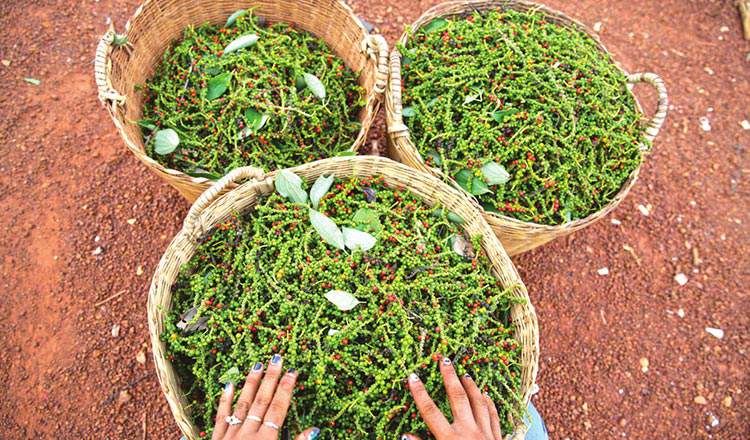
Cambodia and China are about to conduct negotiations to develop phytosanitary protocols for seven kinds of Cambodian fruits for exports to China, a move to take advantage of the Cambodia-China Free Trade agreement.
Currently, Cambodia exports rice, cassava, fresh mangoes, fresh bananas, longan and cashew nuts to China. Of these fruits, Cambodia has signed with China protocols on phytosanitary requirements for three kinds, including banana, mango, and longan as well as ‘Pra’ fish.
Cambodia has not yet signed the protocols on phytosanitary requirements for pepper, fragrant coconut, durian, edible bird’s nest, pineapples, jackfruits, and lotus grain, which is required to make negotiation to develop phytosanitary protocols, said Dith Tina, Minister of Agriculture, Forestry, and Fisheries.
“Cambodia will soon negotiate access to the China market for export of a number of agricultural products including pepper, fragrant coconut, durian, edible bird’s nest, pineapples, jackfruits, and lotus grain etc,” Tina said last week.
Cambodia exported more than 0.83 million tons of agricultural products to China last year, earning a gross revenue of $700 billion, according to the ministry’s report.
In the first nine months of this year, some 580,000 tons of Kingdom’s agricultural products were exported to China, begging $491 million.
“This statistics shows that China still has a wide potential which is able to import more agricultural products and the two countries have yet to advance their potential in this sector,” Tina said.
He also invited Chinese investors to inject and increase investment in Cambodia’s agriculture sector to take benefit from the Cambodia-China Free Trade Agreement and expand China’s market for more agricultural products.
Chinese ambassador to Cambodia Wang Wentian applauded the cooperation between China and Cambodia, giving a big boost to Cambodia’s fruit exports to China.
Cambodian agricultural products are quality and they are in huge demand in the China market, he said.
“Due to more Cambodian agricultural products being allowed to export to China, this sector has provided more job opportunities to farmers in Cambodia and promoted farmers’ income living standard, and provided mutual benefit to people of the two countries,” Wang said.
Source: Khmer Times
Share:



<p>Time: November 2025<br /> By: WTO and International Trade Group, Legal Department – VCCI</p>
